 Back
Cellular Respiration and Fermentation: Pathways of Energy Harvest
Study Guide - Smart Notes
 Tailored notes based on your materials, expanded with key definitions, examples, and context.
Cellular Respiration and Fermentation
Introduction to Cellular Respiration
Cellular respiration is a central metabolic pathway that enables cells to extract energy from organic molecules, primarily glucose, to produce ATP. This process is essential for powering cellular activities such as movement, biosynthesis, and active transport. The energy stored in food molecules ultimately originates from sunlight, captured by photosynthetic organisms and transferred through ecosystems.

ATP (adenosine triphosphate) is the main energy currency of the cell.
Energy flows into ecosystems as sunlight and exits as heat, while chemical elements are recycled.
Cellular respiration links the breakdown of organic molecules to ATP synthesis.
Catabolic Pathways and ATP Production
Catabolic Pathways
Catabolic pathways break down complex molecules into simpler ones, releasing stored energy. This energy is harnessed to synthesize ATP, which powers cellular work. The main catabolic processes include aerobic respiration, anaerobic respiration, and fermentation.
Aerobic respiration: Uses oxygen as the final electron acceptor; highly efficient.
Anaerobic respiration: Uses substances other than oxygen as electron acceptors.
Fermentation: Partial degradation of sugars without the use of an electron transport chain or oxygen.
The overall equation for aerobic respiration of glucose is:
This reaction is exergonic ( kcal/mol), meaning it releases free energy.
Redox Reactions: Oxidation and Reduction
Energy is released from organic molecules via redox (oxidation-reduction) reactions, where electrons are transferred from one molecule to another.
Oxidation: Loss of electrons from a substance.
Reduction: Gain of electrons by a substance.
Redox reactions often involve the transfer of hydrogen atoms (electrons and protons).
Example (generalized redox reaction):
The electron donor is the reducing agent; the electron acceptor is the oxidizing agent.
Electron Carriers: NAD+ and FAD
During cellular respiration, electrons are transferred to electron carriers such as NAD+ (nicotinamide adenine dinucleotide) and FAD (flavin adenine dinucleotide), which shuttle electrons to the electron transport chain.
NAD+ is reduced to NADH, storing energy for later ATP production.
FAD is reduced to FADH2 in the citric acid cycle.
Stages of Cellular Respiration
Overview of the Three Main Stages
Cellular respiration consists of three main stages:
Glycolysis: Occurs in the cytosol; splits glucose into two pyruvate molecules.
Pyruvate Oxidation and the Citric Acid Cycle: Occurs in the mitochondrial matrix; completes the breakdown of glucose to CO2.
Oxidative Phosphorylation: Includes the electron transport chain and chemiosmosis; produces most ATP.

Glycolysis
Pathway and Energy Yield
Glycolysis is the process of splitting glucose (6C) into two molecules of pyruvate (3C each). It occurs in two phases:
Energy investment phase: 2 ATP are consumed.
Energy payoff phase: 4 ATP and 2 NADH are produced.
Net yield per glucose: 2 ATP, 2 NADH, and 2 pyruvate.

Glycolysis does not require oxygen and occurs in nearly all organisms.
Pyruvate Oxidation and the Citric Acid Cycle
Pyruvate Oxidation
Pyruvate is transported into the mitochondrion and converted to acetyl CoA, releasing CO2 and generating NADH.
Acetyl CoA enters the citric acid cycle.

The Citric Acid Cycle (Krebs Cycle)
The citric acid cycle completes the oxidation of glucose derivatives, generating NADH, FADH2, ATP (or GTP), and CO2.
For each acetyl CoA: 3 NADH, 1 FADH2, 1 ATP (or GTP), and 2 CO2 are produced.
Since each glucose yields 2 acetyl CoA, the totals per glucose are doubled.

Oxidative Phosphorylation
Electron Transport Chain (ETC)
The ETC is a series of protein complexes embedded in the inner mitochondrial membrane. Electrons from NADH and FADH2 are transferred through the chain, releasing energy used to pump protons (H+) across the membrane, creating a proton gradient.
Oxygen is the final electron acceptor, forming water.
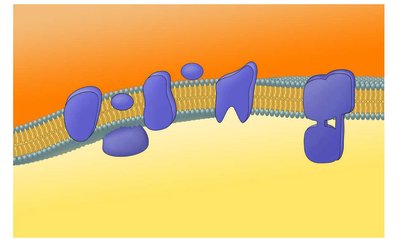
Chemiosmosis and ATP Synthase
The proton gradient drives protons back through ATP synthase, a molecular machine that synthesizes ATP from ADP and inorganic phosphate.
This process is called chemiosmosis.
Most ATP from glucose catabolism is produced by oxidative phosphorylation.
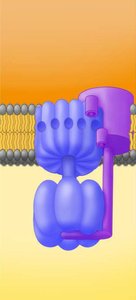
ATP Yield from Cellular Respiration
Stage | ATP Produced (per glucose) |
|---|---|
Glycolysis | 2 (substrate-level) |
Citric Acid Cycle | 2 (substrate-level) |
Oxidative Phosphorylation | ~26–28 |
Total | ~30–32 |
Additional info: The exact ATP yield varies depending on the shuttle systems and cell type.
Fermentation and Anaerobic Respiration
Fermentation
Fermentation allows ATP production in the absence of oxygen by regenerating NAD+ for glycolysis. Two common types are:
Alcohol fermentation: Pyruvate is converted to ethanol and CO2.
Lactic acid fermentation: Pyruvate is reduced to lactate without CO2 release.

Fermentation yields only 2 ATP per glucose, much less than aerobic respiration.
Anaerobic Respiration
Some prokaryotes use electron transport chains with final electron acceptors other than oxygen (e.g., sulfate), enabling ATP production without O2.
Connections to Other Metabolic Pathways
Catabolic Intersections
Glycolysis and the citric acid cycle are central hubs for the catabolism of carbohydrates, fats, and proteins. These macromolecules are broken down into intermediates that enter these pathways at various points.

Fats are broken down by beta oxidation to acetyl CoA.
Proteins are deaminated and their carbon skeletons enter glycolysis or the citric acid cycle.
Anabolic Pathways and Biosynthesis
Intermediates from glycolysis and the citric acid cycle are also used as precursors for biosynthesis (anabolism) of amino acids, nucleotides, and fatty acids.
Regulation of Cellular Respiration
Feedback Mechanisms
Cellular respiration is tightly regulated by feedback inhibition and allosteric enzymes, ensuring metabolic balance according to the cell’s energy needs.
Phosphofructokinase is a key regulatory enzyme in glycolysis, inhibited by ATP and citrate, and activated by AMP.

Summary Table: Comparison of Pathways
Pathway | Final Electron Acceptor | ATP Yield (per glucose) | Location |
|---|---|---|---|
Aerobic Respiration | O2 | ~30–32 | Cytosol & Mitochondria |
Anaerobic Respiration | Other molecules (e.g., SO42–) | Varies | Cytosol & Plasma Membrane (prokaryotes) |
Fermentation | Organic molecule (e.g., pyruvate) | 2 | Cytosol |
Evolutionary Significance of Glycolysis
Glycolysis is a highly conserved pathway, present in nearly all organisms, and likely evolved early in the history of life before the accumulation of atmospheric oxygen.
