 Back
BackChapter 1: Introduction—Evolution and the Foundations of Biology
Study Guide - Smart Notes
 Tailored notes based on your materials, expanded with key definitions, examples, and context.
Introduction to Biology and Evolution
Studying Life and Its Diversity
Biology is the scientific study of life, focusing on the diversity of organisms and their adaptations to environments. Evolution is the central process that explains the variety of life forms on Earth, as organisms change over time to better fit their surroundings.
Adaptation: Organisms develop traits that enhance survival in their environment.
Evolution: The process of change leading to the diversity of organisms.
Biology: The study of living organisms and their interactions.
Unifying Themes in Biology
Major Themes for Organizing Biological Knowledge
Biology is organized around several unifying themes that help structure the vast information encountered in the field:
Organization: Levels of biological structure, from molecules to the biosphere.
Information: Genetic information and its expression.
Energy & Matter: Transformation and flow within ecosystems.
Interactions: Relationships among organisms and their environment.
Evolution: The unity and diversity of life explained by evolutionary processes.
Theme 1: Biological Organization
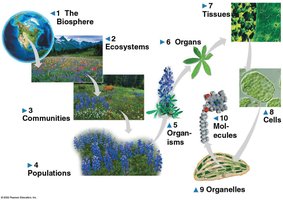
Levels of Biological Organization
Life is structured in a hierarchy, from the smallest molecules to the entire biosphere. Studying simpler components (reductionism) helps understand complex systems.
Biosphere: All life and places where life exists on Earth.
Ecosystems: Living and non-living components in a specific area.
Communities: Different populations in an ecosystem.
Populations: Individuals of a species in a defined area.
Organisms: Individual living entities.
Organs: Body parts with specific functions, made of tissues.
Tissues: Groups of cells working together for a function.
Cells: Fundamental unit of life.
Organelles: Functional components within cells.
Molecules: Chemical structures of two or more atoms.
Prokaryotic vs. Eukaryotic Cells
All cells share basic features, such as a cell membrane. However, they are classified as prokaryotic or eukaryotic based on their internal structure.
Eukaryotic cells: Contain membrane-enclosed organelles, including a nucleus.
Prokaryotic cells: Lack a nucleus and organelles; generally smaller.
Theme 2: Expression & Transmission of Genetic Information
Genetic Material and Inheritance
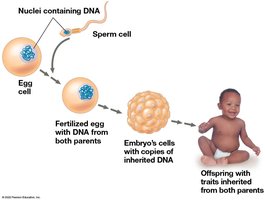
Chromosomes carry genetic material in the form of DNA. Genes are units of inheritance, transmitting information from parents to offspring. As cells grow and divide, DNA directs cell development.
DNA: Double helix structure with four nucleotide building blocks (A, T, C, G).
Genes: Specific sequences of nucleotides encoding traits.
Genome: Entire set of genetic instructions in an organism.
Genomics: Study of gene sets within and between species.
Gene Expression and the Central Dogma
Gene expression is the process of converting genetic information into cellular products. The central dogma describes the flow of information: DNA is transcribed to RNA, which is translated to protein.
Transcription: DNA to RNA.
Translation: RNA to protein.
Protein folding: Final step for functional proteins.
Equation:
Theme 3: Transformation of Energy & Matter
Energy Flow and Chemical Cycling
Life depends on the transformation of energy and matter. Energy, mainly from the sun, is converted by producers (like plants) into chemical energy, which is used by organisms to perform work. Energy flows through ecosystems, entering as light and exiting as heat, while chemical elements are recycled.
Producers: Convert sunlight to chemical energy.
Consumers: Use chemical energy for work.
Energy flow: Light → chemical energy → heat.
Chemical cycling: Elements are reused within ecosystems.
Theme 4: Interactions Among Organisms and Environment
Types of Biological Interactions
Organisms interact with each other and their environment in various ways, which can be mutually beneficial, harmful, or competitive.
Mutualism: Both species benefit (e.g., fish eating parasites off turtles).
Predation: One benefits, one is harmed (e.g., lion eating zebra).
Competition: Both are harmed (e.g., plants competing for soil resources).
Theme 5: Evolution—Unity & Diversity of Life
Evolution and Classification
Evolution is the process by which species accumulate differences from their ancestors, adapting to different environments. Organisms are classified based on similarities and relationships, with three domains of life: Bacteria, Archaea, and Eukarya. Domain Eukarya includes Plantae, Fungi, and Animalia.
Evolution: Explains both unity and diversity of life.
Classification: Grouping organisms by form and function.
Domains: Bacteria, Archaea, Eukarya.
Unity in Diversity
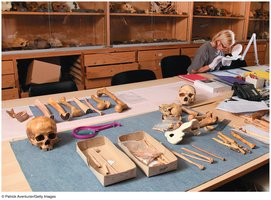
Despite diversity, all organisms share DNA as the universal genetic language. Fossils and other evidence document the evolution of life over billions of years.
Charles Darwin and the Theory of Natural Selection
Darwin's Contributions
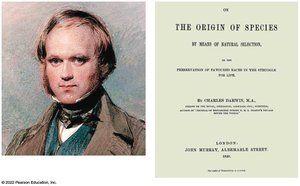
Charles Darwin proposed that species show evidence of "descent with modification" from common ancestors. Natural selection is the primary mechanism for evolutionary adaptation, where advantageous traits become more common in populations over generations.
Descent with modification: Species accumulate differences from ancestors.
Natural selection: Environment selects for advantageous traits.
Natural Selection in Action
Individuals best suited to their environment are more likely to survive and reproduce. Over time, populations become enriched with advantageous traits.
Studying Life: Scientific Method
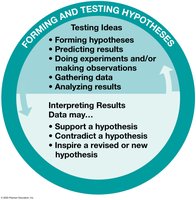
Forming and Testing Hypotheses
Biologists use careful observation and experimentation to study natural structures and processes. Data can be qualitative (descriptions) or quantitative (measurements). Inductive reasoning is used to draw conclusions from data.
Hypothesis: Testable explanation based on observations.
Experiment: Controlled test to evaluate hypotheses.
Variables: Independent (manipulated) and dependent (measured).
Controlled Experiments
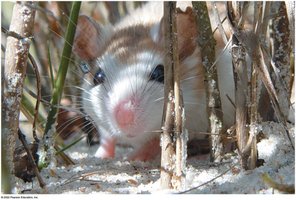
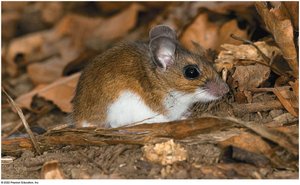
Experiments compare an experimental group to a control group, controlling unwanted variables. For example, in studies of mouse camouflage, coat color is the independent variable and predation rate is the dependent variable.
Scientific Theories
Theories are broader than hypotheses, supported by extensive evidence, and can lead to new testable hypotheses. Theories may be modified or rejected if new evidence contradicts them.
Hypothesis: Specific, testable prediction.
Theory: Broad explanation supported by evidence.
Example: The theory of natural selection explains evolutionary adaptations.
