 Back
Chapter 3: The Molecules of Cells – Structure and Function of Biological Macromolecules
Study Guide - Smart Notes
 Tailored notes based on your materials, expanded with key definitions, examples, and context.
Chapter 3: The Molecules of Cells
Introduction
Biological molecules are essential for the structure and function of living organisms. The inability to digest certain molecules, such as lactose due to the absence of the enzyme lactase, highlights the importance of these molecules in daily life. This chapter explores the diversity, structure, and function of the four major classes of biological macromolecules: carbohydrates, lipids, proteins, and nucleic acids.
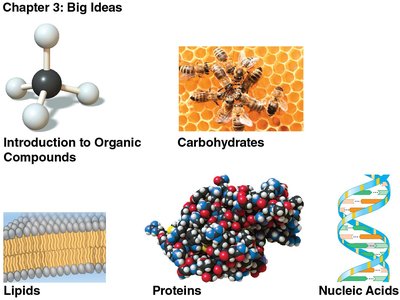
Introduction to Organic Compounds
3.1 Life’s Molecular Diversity Is Based on the Properties of Carbon
Organic chemistry is the study of carbon-containing compounds. Carbon's unique ability to form four covalent bonds allows for the construction of a wide variety of complex molecules, forming the backbone of most organic molecules.
Carbon Skeletons: Chains of carbon atoms form the framework for organic molecules.
Isomers: Compounds with the same molecular formula but different structures and properties.
Hydrocarbons: Molecules consisting only of carbon and hydrogen; they are hydrophobic and serve as energy sources.
3.2 A Few Chemical Groups are Key to the Functioning of Biological Molecules
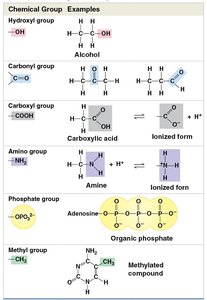
The chemical behavior of organic molecules is largely determined by functional groups attached to the carbon skeleton. These groups confer specific properties, such as polarity and reactivity, to the molecules.
Functional Groups: Common groups include hydroxyl, carbonyl, carboxyl, amino, phosphate, and methyl groups.
Hydrophilic Groups: Most functional groups (except methyl) increase solubility in water.
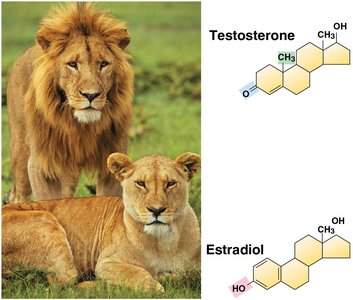
Example: Testosterone and estradiol differ only in their functional groups, yet have distinct biological effects.
Macromolecules: Polymers and Monomers
3.3 Cells Make Large Molecules from a Limited Set of Small Molecules
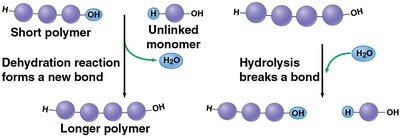
Most biological macromolecules are polymers, long chains made from repeating units called monomers. The four major classes are carbohydrates, lipids, proteins, and nucleic acids.
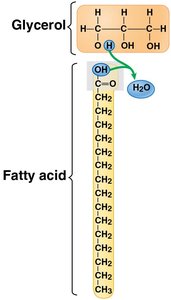
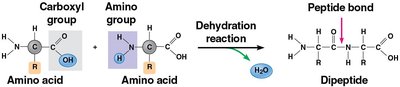
Dehydration Reaction: Monomers are joined by removing a molecule of water.
Hydrolysis: Polymers are broken down into monomers by adding water.
Enzymes: Specialized proteins that catalyze these reactions.
Carbohydrates
3.4 Monosaccharides are the Simplest Carbohydrates
Carbohydrates serve as fuel and building material. They range from simple sugars (monosaccharides) to complex polysaccharides.
Monosaccharides: Simple sugars with a general formula of (e.g., glucose, fructose).
Functional Groups: Contain hydroxyl and carbonyl groups.
3.5 Two Monosaccharides Are Linked to Form a Disaccharide
Disaccharides are formed by joining two monosaccharides via a dehydration reaction (glycosidic bond).
Examples: Sucrose (glucose + fructose), lactose (glucose + galactose).
3.7 Polysaccharides Are Long Chains of Sugar Units
Polysaccharides are large carbohydrates with storage or structural roles.
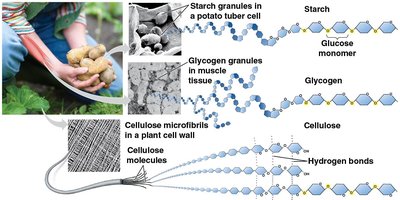
Starch: Storage form in plants; composed of glucose monomers.
Glycogen: Storage form in animals; highly branched glucose polymer.
Cellulose: Structural component of plant cell walls; glucose monomers linked differently than in starch.
Chitin: Structural polysaccharide in fungi and arthropods.
Lipids
3.8 Fats Are Lipids That Are Mostly Energy-Storage Molecules
Lipids are hydrophobic molecules, mainly composed of carbon and hydrogen. Fats (triglycerides) are the main energy storage molecules in animals.
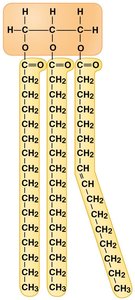
Structure: One glycerol molecule joined to three fatty acids.
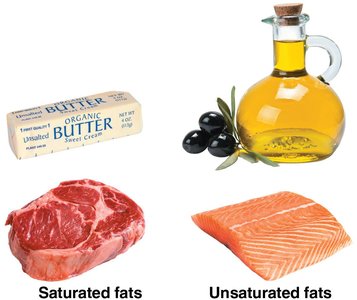
Saturated Fats: No double bonds; solid at room temperature; found in animal fats.
Unsaturated Fats: One or more double bonds; liquid at room temperature; found in plant oils and fish.
Trans Fats: Produced by hydrogenating unsaturated fats; associated with health risks.
3.10 Phospholipids and Steroids Are Important Lipids with a Variety of Functions
Phospholipids and steroids are essential for cell structure and signaling.
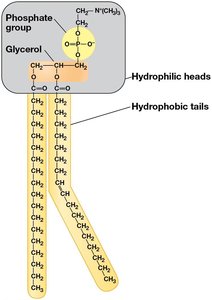
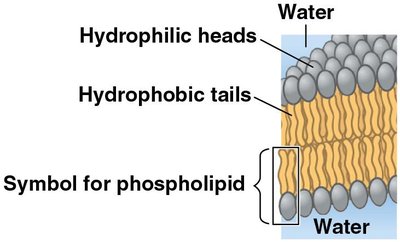
Phospholipids: Major component of cell membranes; have hydrophilic heads and hydrophobic tails.
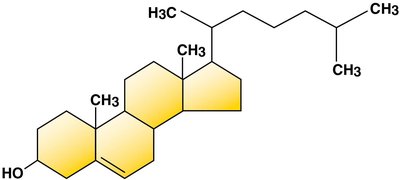
Steroids: Lipids with a carbon skeleton of four fused rings; include cholesterol and hormones.
Proteins
3.12 Proteins Have a Wide Range of Functions and Structures
Proteins are the most diverse macromolecules, performing many functions in the cell.
Functions: Enzymes, transport, defense, signaling, structure, movement, and storage.
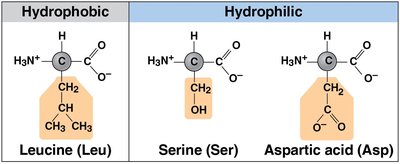
Structure: Made from 20 different amino acids.
Denaturation: Loss of protein structure leads to loss of function.
3.13 Proteins Are Made from Amino Acids Linked by Peptide Bonds
Amino acids are joined by peptide bonds to form polypeptides. The sequence of amino acids determines the protein's structure and function.
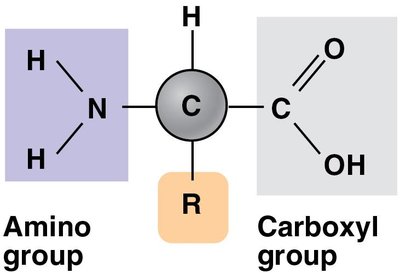
Amino Acid Structure: Central carbon bonded to an amino group, carboxyl group, hydrogen, and R group (side chain).
Peptide Bond: Covalent bond formed by dehydration reaction between amino and carboxyl groups.
3.14 A Protein’s Functional Shape Results from Four Levels of Structure
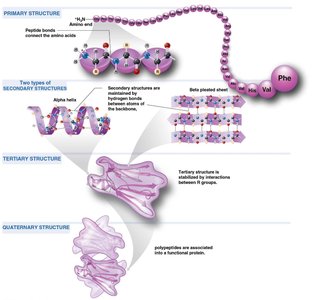
The function of a protein depends on its three-dimensional shape, which is organized into four levels of structure:
Primary Structure: Sequence of amino acids.
Secondary Structure: Coiling (alpha helix) or folding (beta sheet) stabilized by hydrogen bonds.
Tertiary Structure: Overall 3D shape due to interactions among R groups.
Quaternary Structure: Association of multiple polypeptide chains.
Nucleic Acids
3.15 The Nucleic Acids DNA and RNA Are Information-Rich Polymers of Nucleotides
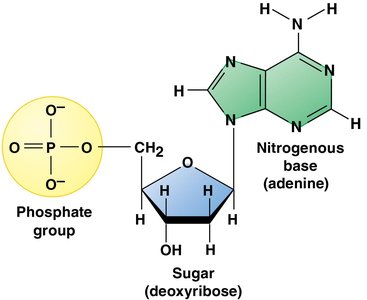
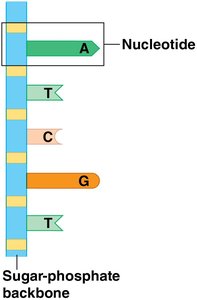
Nucleic acids store and transmit genetic information. DNA and RNA are polymers of nucleotides, each consisting of a sugar, a phosphate group, and a nitrogenous base.
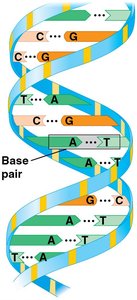
DNA: Double helix; stores genetic information; bases are adenine (A), thymine (T), cytosine (C), guanine (G).
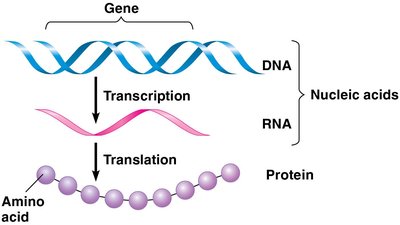
RNA: Single-stranded; involved in protein synthesis; bases are adenine (A), uracil (U), cytosine (C), guanine (G).
Complementary Base Pairing: Enables accurate DNA replication and transcription.
Summary Table: Major Classes of Biological Molecules
Class | Monomer | Polymer | Function | Example |
|---|---|---|---|---|
Carbohydrates | Monosaccharide | Polysaccharide | Energy, structure | Glucose, starch, cellulose |
Lipids | Fatty acid, glycerol | Triglyceride, phospholipid | Energy storage, membranes | Fats, oils, phospholipids |
Proteins | Amino acid | Polypeptide | Catalysis, structure, transport | Enzymes, collagen |
Nucleic Acids | Nucleotide | DNA, RNA | Genetic information | DNA, RNA |
