 Back
BackChromosomes and DNA in Somatic and Reproductive Cells
Study Guide - Smart Notes
 Tailored notes based on your materials, expanded with key definitions, examples, and context.
Chromosomes in Human Cells
Somatic Cells vs. Gametes
Human cells can be classified into somatic cells (all body cells except reproductive cells) and gametes (reproductive cells such as sperm and egg). The number and organization of chromosomes differ between these cell types.
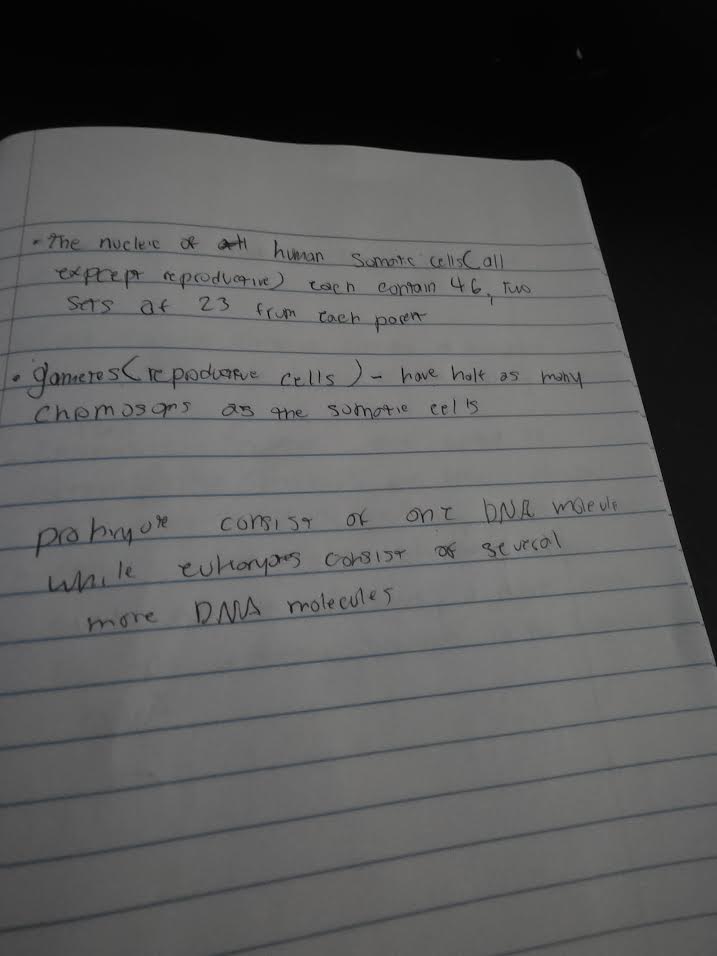
Somatic Cells: Each human somatic cell contains 46 chromosomes, organized into two sets of 23. One set is inherited from each parent.
Gametes: Human gametes contain half as many chromosomes as somatic cells, meaning each gamete has 23 chromosomes. This reduction is essential for sexual reproduction, ensuring that when gametes fuse during fertilization, the resulting zygote has the correct diploid number (46 chromosomes).
Example: A human skin cell (somatic) has 46 chromosomes, while a human sperm or egg cell (gamete) has 23 chromosomes.
DNA Organization in Prokaryotes and Eukaryotes
Comparison of Genetic Material
The structure and organization of DNA differ significantly between prokaryotic and eukaryotic cells.
Prokaryotes: Typically possess a single, circular DNA molecule that contains all the genetic information necessary for the cell's functions.
Eukaryotes: Contain multiple, linear DNA molecules organized into chromosomes. Each chromosome consists of a single, long DNA molecule associated with proteins.
Example: Escherichia coli (a prokaryote) has one circular chromosome, while human cells (eukaryotes) have 46 linear chromosomes.
Cell Type | Number of DNA Molecules | Chromosome Structure |
|---|---|---|
Prokaryote | One | Circular |
Eukaryote | Several (multiple) | Linear |
Additional info: The reduction in chromosome number in gametes is achieved through the process of meiosis, which is essential for maintaining genetic stability across generations.
