 Back
lecture 3 Circulation and Respiration: Blood Composition, Cell Differentiation, and Gas Exchange
Study Guide - Smart Notes
 Tailored notes based on your materials, expanded with key definitions, examples, and context.
lecture 3 Circulation and Respiration
Blood Composition
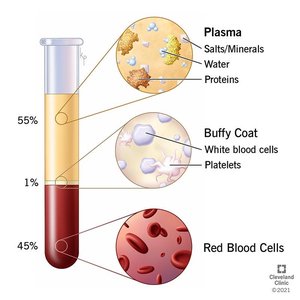
Blood is a specialized connective tissue composed of cells and fibers suspended in a liquid matrix called plasma. It plays a critical role in transport, immunity, and homeostasis.
Plasma: Makes up about 55% of blood volume and consists mostly of water, inorganic salts (electrolytes), and proteins (such as albumin, which maintains osmotic balance and pH, and is involved in lipid transport, immunity, and clotting).
Formed Elements: Suspended in plasma are erythrocytes (red blood cells), leukocytes (white blood cells), and platelets, which together constitute about 45% of blood volume.
Differentiation of Blood Cells
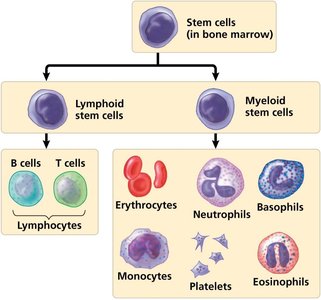
All blood cells originate from multipotent stem cells in the red bone marrow. These stem cells differentiate into various cell types to replenish the body's blood supply.
Hematopoiesis: The process by which stem cells give rise to erythrocytes, leukocytes (five main types), and platelets.
Erythropoietin (EPO): A hormone produced by the kidneys that stimulates erythrocyte production in response to low oxygen levels.
Clinical Application: Recombinant EPO is used to treat anemia and other conditions involving low red blood cell counts.
Erythrocytes (Red Blood Cells)
Erythrocytes are specialized for oxygen transport and have unique structural and functional properties.
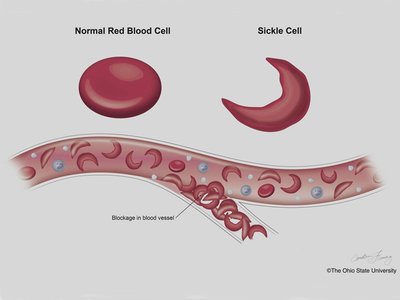
Disc-shaped, 5–10 μm in diameter, and lack nuclei and mitochondria when mature.
Packed with hemoglobin, an iron-containing protein that binds and transports oxygen.
Produced in red bone marrow; lifespan is about 120 days. Old erythrocytes are destroyed in the liver and spleen.
Production is regulated by erythropoietin in response to oxygen levels detected by the kidneys.
Sickle-Cell Disease
Sickle-cell disease is caused by abnormal hemoglobin proteins that aggregate and deform erythrocytes into a sickle shape, leading to blockages in blood vessels and impaired oxygen delivery.
Leukocytes (White Blood Cells)
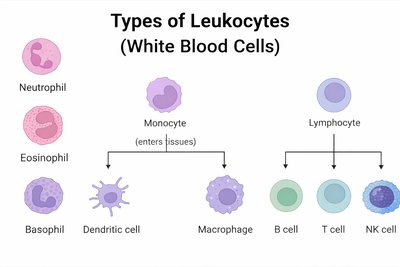
Leukocytes are essential for immune defense and are classified into several types based on their structure and function.
Neutrophils: Phagocytose bacteria; first responders to infection (50–70% of WBCs).
Lymphocytes: Adaptive immunity; B cells produce antibodies, T cells coordinate immune responses or kill infected cells, NK cells target abnormal cells (20–40%).
Monocytes: Become macrophages; involved in phagocytosis and antigen presentation (2–8%).
Eosinophils: Defend against parasites and participate in allergic responses (1–4%).
Basophils: Release histamine and heparin; involved in inflammation and allergies (<1%).
Platelets
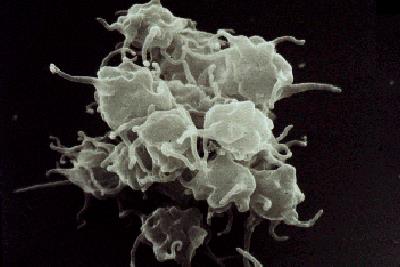
Platelets are small cell fragments derived from megakaryocytes in the bone marrow. They play a crucial role in blood clotting (hemostasis).
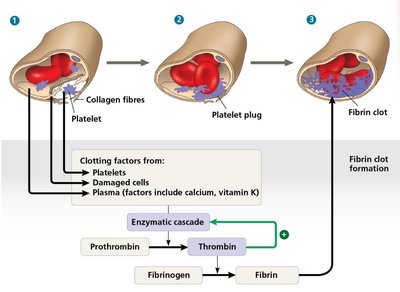
Activated by exposure to collagen fibers in damaged vessels or by thrombin.
Change shape, aggregate to form a platelet plug, and release clotting factors.

Blood Clotting (Coagulation)
Coagulation is the process by which liquid blood forms a solid clot to prevent blood loss following vessel injury.
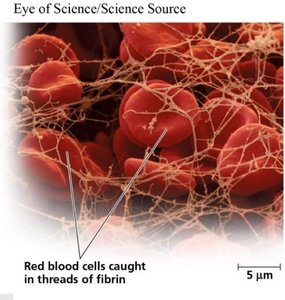
A cascade of enzymatic reactions converts the inactive protein fibrinogen into fibrin, which forms a mesh that stabilizes the clot.
A clot that forms inside a blood vessel is called a thrombus and can obstruct blood flow.
Steps in clot formation:
Vasoconstriction: Vessel constricts to reduce blood flow.
Platelet plug formation: Platelets adhere, activate, and aggregate.
Coagulation: Fibrin mesh stabilizes the plug.
Summary Table: Leukocyte Types and Functions
Leukocyte | % of WBCs | Main Function |
|---|---|---|
Neutrophils | 50–70% | Phagocytose bacteria; first responders in infection |
Lymphocytes | 20–40% | Adaptive immunity (B cells make antibodies; T cells coordinate or kill infected cells; NK cells) |
Monocytes | 2–8% | Become macrophages; phagocytosis and antigen presentation |
Eosinophils | 1–4% | Defense against parasites; involved in allergic responses |
Basophils | <1% | Release histamine and heparin; inflammation and allergies |
Additional info:
Blood is a dynamic tissue essential for transport, defense, and repair.
Disorders such as anemia, sickle-cell disease, and clotting disorders highlight the importance of proper blood cell function and regulation.
