 Back
Community Ecology: Species Interactions and Their Outcomes
Study Guide - Smart Notes
 Tailored notes based on your materials, expanded with key definitions, examples, and context.
Community Ecology: Species Interactions
Introduction to Community Ecology
Community ecology examines how groups of interacting species coexist and affect each other's abundance, distribution, and evolutionary trajectories. A community is defined as a group of interacting species living in the same place at the same time. Understanding species interactions is fundamental to predicting community structure and ecosystem function.
Classification of Species Interactions
How Scientists Classify Species Interactions
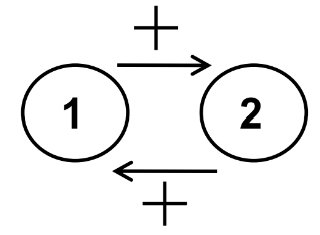
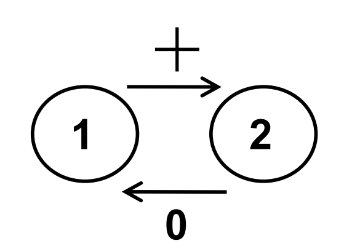
Species interactions are classified based on the effects they have on the fitness of the interacting organisms. The effects are typically categorized as positive (+), negative (−), or neutral (0). To determine these effects, scientists measure proxies for fitness such as population size, reproductive success, organismal health, death rate, and offspring survival.
Positive (+): The interaction increases fitness.
Negative (−): The interaction decreases fitness.
Neutral (0): The interaction has no effect on fitness.
These outcomes are used to define the five main types of species interactions.
Types of Species Interactions
Overview of the Five Main Types
There are five primary types of species interactions, each with distinct ecological and evolutionary consequences:
Interaction Type | Effect on Species 1 | Effect on Species 2 | Example |
|---|---|---|---|
Mutualism | + | + | Bees and flowering plants |
Commensalism | + | 0 | Epiphytic plants on trees |
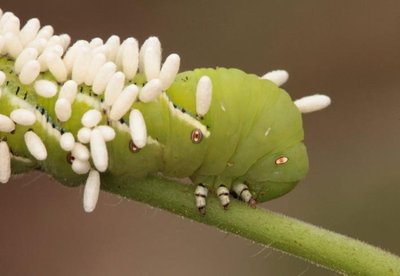
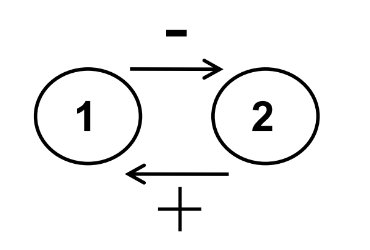
Parasitism | + | − | Wasps and caterpillars |
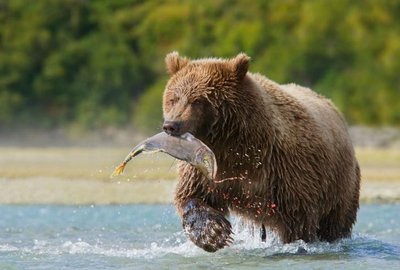
Predation | + | − | Bears eating fish |
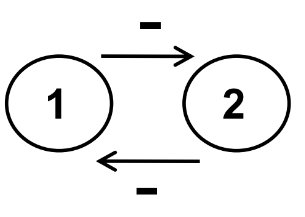
Competition | − | − | Dung beetle species competing for space |
Mutualism
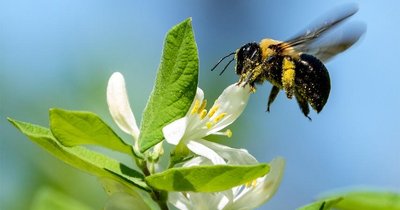
Mutualism is an interaction in which both species benefit. These relationships often involve the exchange of resources or services and can evolve over time. Mutualisms are not necessarily altruistic; individuals act in their own interest, and "cheaters" may arise if the environment changes.
Example: Bees pollinating flowers, where bees obtain nectar and flowers achieve pollination.
Commensalism
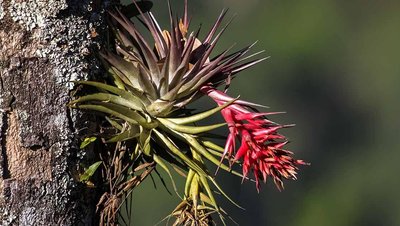
Commensalism occurs when one species benefits while the other is unaffected. This interaction is common in nature, especially among plants and animals that use others for support or transportation without harming them.
Example: Epiphytic plants (such as some bromeliads) growing on trees to access sunlight without affecting the host tree.
Parasitism
Parasitism is an interaction where one organism (the parasite) benefits at the expense of another (the host). Parasites typically live in or on their hosts and may cause disease or reduce host fitness.
Example: Parasitic wasp larvae developing inside a caterpillar, eventually killing it.
Predation
Predation involves one organism (the predator) killing and consuming another (the prey). This interaction is a major driver of evolutionary adaptations, such as defensive mechanisms in prey species.
Example: A bear catching and eating a fish.
Herbivory
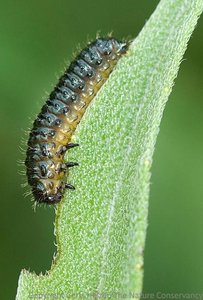
Herbivory is a specific form of predation where an animal (herbivore) feeds on plants. Plants often evolve defenses such as toxins or thorns in response to herbivory.
Example: A caterpillar feeding on a leaf.
Competition
Competition occurs when two or more species (or individuals within a species) use the same limiting resource, resulting in reduced fitness for all competitors. Competition can be direct (interference) or indirect (exploitative), and may occur within a species (intraspecific) or between species (interspecific).
Example: Two dung beetle species competing for underground space to lay eggs.
Outcomes of Competition
Competitive Exclusion Principle
The competitive exclusion principle states that two species competing for identical resources cannot coexist indefinitely. One species will outcompete and exclude the other. However, in natural communities, coexistence is common due to mechanisms that reduce competition.
Niche Partitioning and Character Displacement
Niche Partitioning: Competing species use different resources or occupy different niches to minimize competition. For example, dung beetle species may bury brood balls at different depths when in competition.
Character Displacement: Evolutionary divergence in traits (such as beak size in finches) reduces competition by allowing species to exploit different resources.
These processes often occur together: niche partitioning can drive character displacement, and vice versa.
Environmental Effects on Species Interactions
Impact of Environmental Conditions
Environmental factors such as resource availability, climate, and habitat structure can alter the outcomes of species interactions. For example, the benefits of mutualism may change if resources become scarce, or competition may intensify under limited conditions.
Species Interactions and Coevolution
Coevolution
Species interactions can drive coevolution, where two or more species reciprocally affect each other's evolution. For example, plants may evolve chemical defenses in response to herbivores, while herbivores evolve mechanisms to detoxify those chemicals.
Summary Table: Types of Species Interactions
Type | Effect on Species 1 | Effect on Species 2 | Example |
|---|---|---|---|
Mutualism | + | + | Bee and flower |
Commensalism | + | 0 | Epiphyte on tree |
Parasitism | + | − | Wasp larvae on caterpillar |
Predation | + | − | Bear eating fish |
Herbivory | + | − | Caterpillar eating leaf |
Competition | − | − | Dung beetle species |
Additional info: Symbiosis is a close physical association between two species, but not all mutualisms or parasitisms are symbiotic. For example, pollination mutualisms are not always symbiotic because the association is not always close or long-term.
