Back
BackCommunity Ecology: Structure, Interactions, and Dynamics
Study Guide - Smart Notes
 Tailored notes based on your materials, expanded with key definitions, examples, and context.
Community Structure and Interactions
Factors Influencing Community Structure
Community structure is shaped by the number, composition, and relative abundance of different species, as well as the ecological interactions among them. These interactions determine the organization and function of biological communities.
Ecological Interactions: Species interact in various ways, including competition, predation, herbivory, parasitism, mutualism, and commensalism.
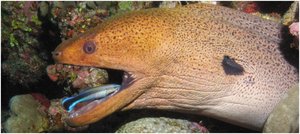
Example: The cleaner wrasse feeds on parasites inside the mouth of a moray eel, benefiting both species through mutualism.
Interspecific Interactions
Interspecific interactions are relationships between individuals of different species. These interactions can be classified based on their effects on the survival and reproduction of the participants:
Competition (–/–): Both species are harmed.
Exploitation (+/–): One species benefits, the other is harmed (includes predation, herbivory, parasitism).
Positive Interactions (+/+ or +/0): At least one species benefits, and neither is harmed (includes mutualism and commensalism).
Competition and Niche Differentiation
Competition and Competitive Exclusion
Competition occurs when species vie for resources that limit their survival and reproduction. The competitive exclusion principle states that two species competing for the same limiting resources cannot coexist permanently in the same place.
Example: Paramecium aurelia and P. caudatum cannot coexist when grown together due to competition for the same resources.
Ecological Niches
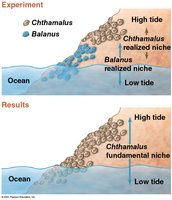
An organism’s ecological niche is the sum of its use of biotic and abiotic resources in its environment. The niche concept helps explain how similar species can coexist through resource partitioning, where niches differentiate to reduce competition.
Fundamental Niche: The full range of conditions a species can potentially occupy.
Realized Niche: The actual range occupied due to competition.
Temporal Partitioning
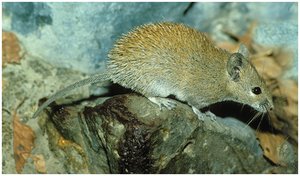
Species can partition their niches in time as well as space. For example, two species of spiny mice avoid competition by being active at different times of day where they coexist.
Exploitation: Predation, Herbivory, and Parasitism
Predation
Predation is an interaction where one species (the predator) kills and eats another (the prey). Predators have adaptations for capturing prey, while prey have evolved defenses to avoid predation.
Predator Adaptations: Acute senses, claws, fangs, poison, speed, and camouflage.
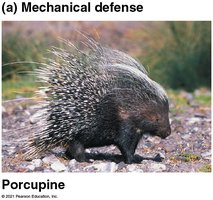
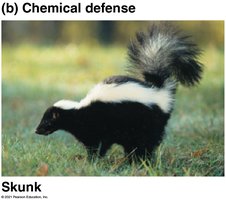
Prey Defenses: Behavioral (hiding, fleeing, herding), mechanical, and chemical defenses.
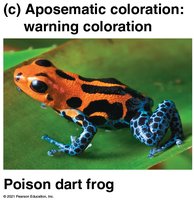
Aposematic Coloration: Bright warning coloration in toxic species deters predators.
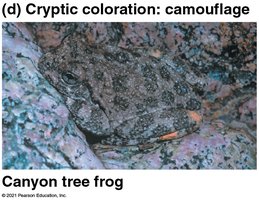
Cryptic Coloration: Camouflage makes prey difficult to detect.
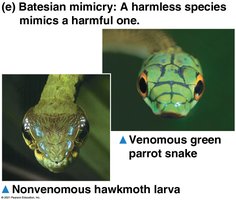
Batesian Mimicry: A harmless species mimics a harmful one to avoid predation.
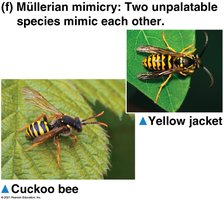
Müllerian Mimicry: Two or more unpalatable species resemble each other, reinforcing avoidance by predators.
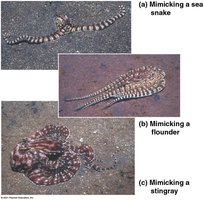
Predator Mimicry: Some predators mimic harmless species or objects to approach prey.
Herbivory
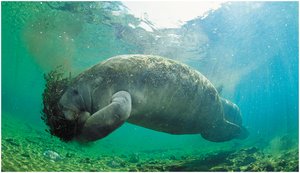
Herbivory is an interaction where an herbivore eats parts of a plant or alga. Herbivores have adaptations for feeding, and plants have evolved mechanical and chemical defenses.
Parasitism
In parasitism, one organism (the parasite) derives nourishment from another (the host), harming it in the process. Parasites can be internal (endoparasites) or external (ectoparasites) and can significantly affect host populations.
Positive Interactions: Mutualism and Commensalism
Mutualism
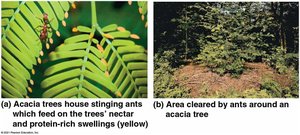
Mutualism is an interaction that benefits both species. Some mutualisms are obligate (required for survival), while others are facultative (optional).
Example: Acacia trees and ants; ants protect the tree from herbivores and competitors, while the tree provides food and shelter.
Commensalism
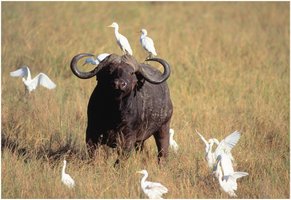
Commensalism benefits one species without affecting the other. For example, cattle egrets feed on insects flushed by grazing herbivores, sometimes providing additional benefits by removing ectoparasites.
Facilitation
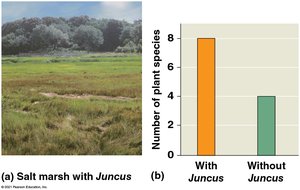
Some positive interactions, such as facilitation, can increase community diversity by making the environment more hospitable for other species.
Example: The black rush (Juncus) in salt marshes improves soil conditions for other plants.
Community Diversity and Trophic Structure
Species Diversity
Species diversity is a measure of the variety of organisms in a community, incorporating both species richness (number of species) and relative abundance (proportion of each species).
Diversity Index: The Shannon diversity index (H) is commonly used to quantify diversity: where is the relative abundance of species .
Diversity and Community Stability
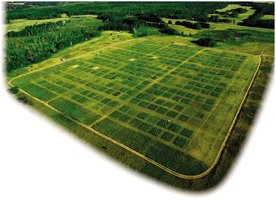
Higher-diversity communities are generally more productive, stable, and resistant to invasive species. Experimental studies, such as those at Cedar Creek Ecosystem Science Reserve, demonstrate these effects.
Trophic Structure and Food Webs
Trophic structure describes the feeding relationships among species in a community. Energy flows from primary producers to various levels of consumers and decomposers, forming food chains and complex food webs.
Trophic Levels: Primary producers, primary consumers (herbivores), secondary and higher consumers (carnivores), and decomposers.
Food Webs: Interconnected food chains showing who eats whom.
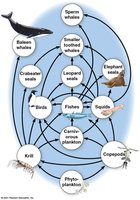
Limits on Food Chain Length
Food chains are typically short due to inefficient energy transfer (about 10% per trophic level) and the increasing size of top predators, which limits their population size.
Species with Large Impacts
Foundation Species: Have large effects due to their abundance or size (e.g., trees in a forest).
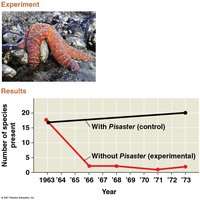
Keystone Species: Exert strong control through their ecological roles, not abundance (e.g., sea stars controlling mussel populations).
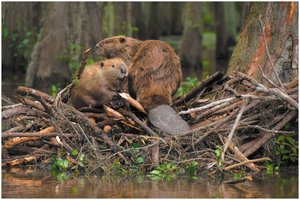
Ecosystem Engineers: Modify the environment, creating new habitats (e.g., beavers building dams).
Disturbance and Community Dynamics
Disturbance and Its Effects
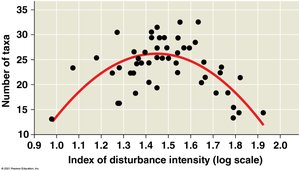
A disturbance is an event that changes a community by removing organisms or altering resource availability. The frequency and intensity of disturbances shape community structure and diversity.
Intermediate Disturbance Hypothesis: Moderate levels of disturbance foster greater diversity than high or low levels.
Example: Lodgepole pine forests in Yellowstone recover rapidly after large-scale fires.
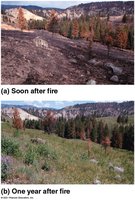
Ecological Succession
Ecological succession is the sequence of community changes following a disturbance:
Primary Succession: Occurs in lifeless areas (e.g., new volcanic islands), starting with prokaryotes and protists, followed by lichens, mosses, and eventually plants.
Secondary Succession: Occurs where a disturbance leaves soil intact (e.g., abandoned farmland).
Human Disturbance
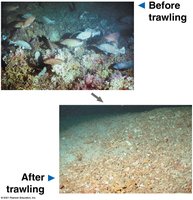
Human activities are the most significant source of disturbance in modern ecosystems, often reducing species diversity and altering community structure.