 Back
BackComprehensive Study Notes for BIOL195: The Smaller Side of Life (Augmented)
Study Guide - Smart Notes
 Tailored notes based on your materials, expanded with key definitions, examples, and context.
Science and Life
Introduction to Biology
Biology is the scientific study of life, focusing on the structure, function, interaction, and evolution of living organisms. Biologists investigate what organisms are made of, how they function, and their interactions with the environment.
Seven Basic Characteristics of Life:
Organisation: All living organisms are highly organised, with cells as the fundamental unit. Organisms may be unicellular or multicellular.
Energy Processing: Organisms require energy. Plants use sunlight (photosynthesis), animals consume other organisms.
Regulation: Homeostasis maintains stable internal conditions.
Growth and Development: Organisms grow and develop through cell division and differentiation.
Response to Environment: Organisms respond to stimuli to promote survival.
Reproduction: Organisms reproduce sexually or asexually.
Evolutionary Adaptation: Populations evolve over time, leading to adaptations.
Levels of Biological Organisation: Life is organised hierarchically from atoms to biosphere:
Atoms: Smallest unit of matter.
Molecules: Groups of atoms bonded together.
Organelles: Structures within cells.
Cells: Basic unit of life.
Tissues: Groups of similar cells.
Organs and Organ Systems: Structures with specific functions.
Organisms: Individual living entities.
Populations: Groups of same species.
Communities: Different populations together.
Ecosystems: Communities and their environment.
Biosphere: All ecosystems on Earth.
Diversity of Life, Classification, and Taxonomy
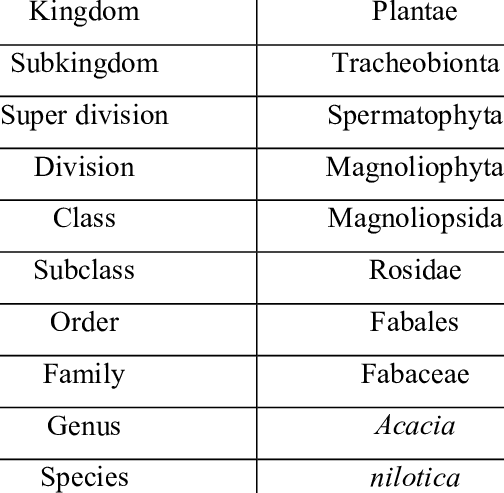
Classification helps organise the diversity of life, facilitates identification, and reveals evolutionary relationships. Carl Linnaeus developed a hierarchical system: Domain → Kingdom → Phylum → Class → Order → Family → Genus → Species. The binomial nomenclature uses Latin names for universal identification.
Domains: Bacteria, Archaea, Eukarya
Taxonomy: Science of naming and classifying organisms.
Example: Domestic dog (Canis familiaris) classification.
The Scientific Method
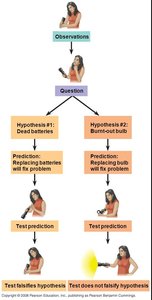
The scientific method is a logical framework for investigating natural phenomena, involving observation, hypothesis formulation, prediction, experimentation, and conclusion.
Steps:
Make observations
Ask questions & formulate hypotheses
Predict results
Experimental tests
Discuss results & draw conclusions
Hypothesis: Tentative, testable, specific, and falsifiable explanation.
Induction: Specific to general reasoning.
Deduction: General to specific reasoning.
Controlled Experiments: Use control and experimental groups to test variables.
Variables: Independent (changed), dependent (measured), controlled (kept constant).
Replication: Repeating experiments for reliability.
Confounding Factors: Minimized by good experimental design.
Biomolecules
Life's Chemical Basis
All organisms are composed of matter, made up of elements and atoms. Essential elements are required for life; trace elements are needed in small amounts.
Atoms: Composed of protons, neutrons, and electrons.
Molecules: Two or more atoms joined by chemical bonds.
Compounds: Substances with atoms of different elements.
Chemical Bonds: Ionic, covalent (polar/non-polar), hydrogen, van der Waals interactions.
Functional Groups
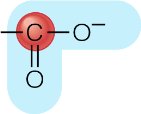
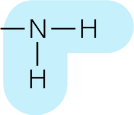
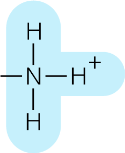
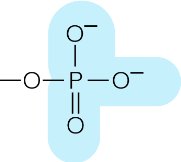
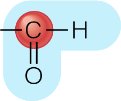
Functional groups are specific groups of atoms that confer distinct chemical properties to molecules.
Name | Function | Structure | Non-ionised | Ionised |
|---|---|---|---|---|
Carboxyl group | Acidic, can donate H+ | -COOH |
|
|
Amino group | Basic, can accept H+ | -NH2 |
|
|
Phosphate group | Energy transfer | -PO4 |
| — |
Aldehyde | Carbonyl group at end of chain | -COH |
| — |
Ketone | Carbonyl group within chain | -CO- |
| — |
Macromolecules
Macromolecules are polymers made from monomers. The four main groups are carbohydrates, lipids, proteins, and nucleic acids.
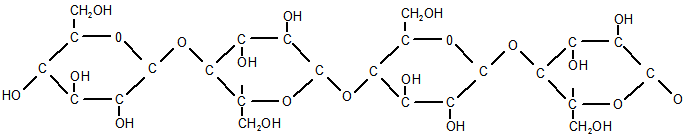
Carbohydrates: Carbon, hydrogen, oxygen in 1:2:1 ratio. Includes monosaccharides (glucose), disaccharides (sucrose), and polysaccharides (cellulose, starch, glycogen, chitin).
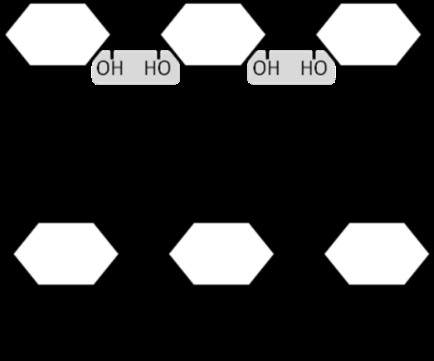
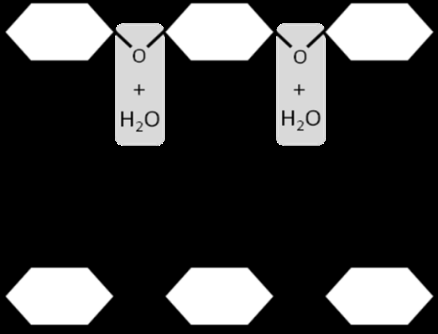
Condensation (dehydration): Forms polymers by removing water.
Hydrolysis: Breaks polymers by adding water.
Lipids
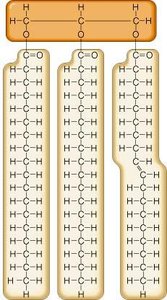
Lipids are hydrophobic carbon compounds, including fatty acids, fats (triglycerides), phospholipids, waxes, and sterols.
Saturated Fatty Acids: No double bonds, solid at room temperature.
Unsaturated Fatty Acids: One or more double bonds, liquid at room temperature.
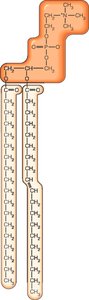
Phospholipids: Main component of cell membranes, with hydrophilic head and hydrophobic tails.
Proteins
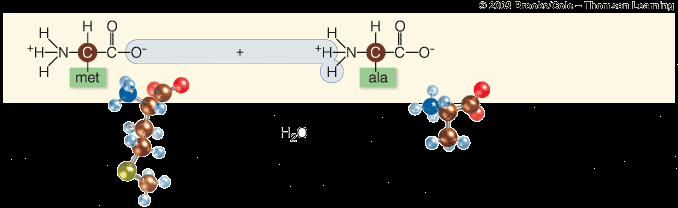
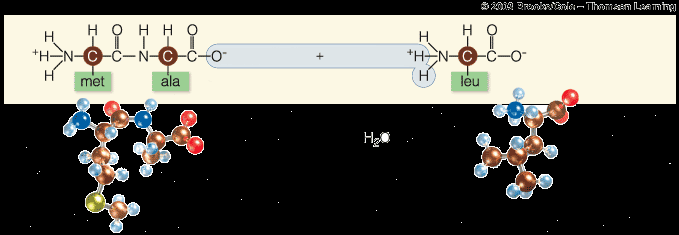
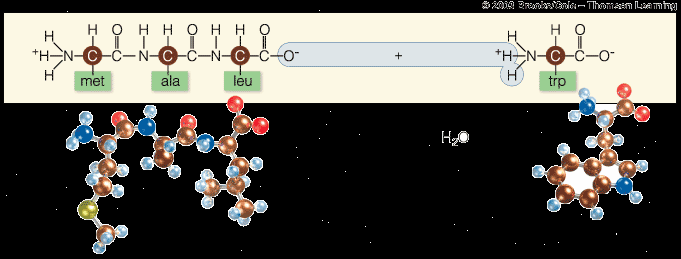
Proteins are polymers of amino acids linked by peptide bonds. They have diverse functions, including catalysis, transport, structural support, and regulation.
Levels of Protein Structure:
Primary: Sequence of amino acids
Secondary: Alpha-helix and beta-sheet (hydrogen bonding)
Tertiary: 3D folding (interactions among R groups)
Quaternary: Multiple polypeptide chains
Nucleic Acids
Nucleic acids (DNA and RNA) are polymers of nucleotides, which consist of a sugar, phosphate group, and nitrogenous base. DNA stores genetic information; RNA is involved in gene expression.
Group | Subunits | Function | Example |
|---|---|---|---|
Carbohydrates | Monosaccharides | Energy storage, structural support | Starch, cellulose, glycogen, chitin |
Lipids | Fatty acids, glycerol | Energy storage, membrane structure | Fats, phospholipids, sterols, waxes |
Proteins | Amino acids | Catalysis, transport, structure | Enzymes, keratin, haemoglobin |
Nucleic Acids | Nucleotides | Genetic information, gene expression | DNA, RNA |
Respiration and Photosynthesis
Energy Flow in Ecosystems
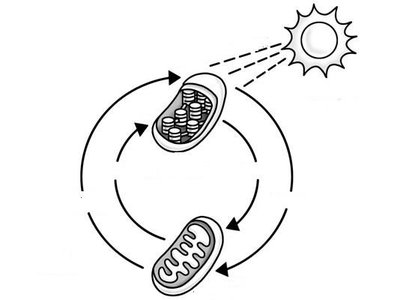
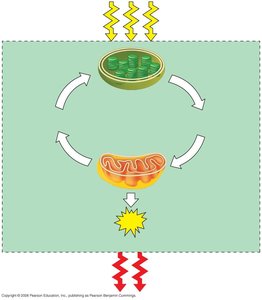
Photosynthesis and cellular respiration are complementary processes. Photosynthesis converts solar energy to chemical energy (carbohydrates), while respiration releases energy by oxidizing carbohydrates.
Photosynthesis: Occurs in chloroplasts, produces glucose and oxygen.
Cellular Respiration: Occurs in mitochondria, produces ATP, carbon dioxide, and water.
Cellular Respiration
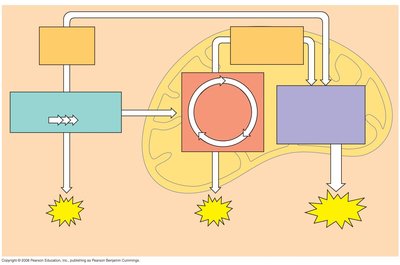
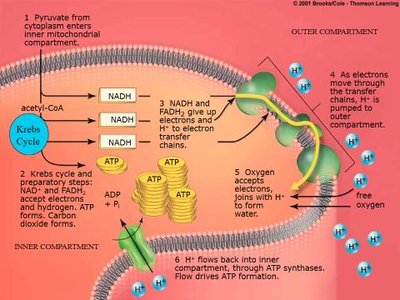
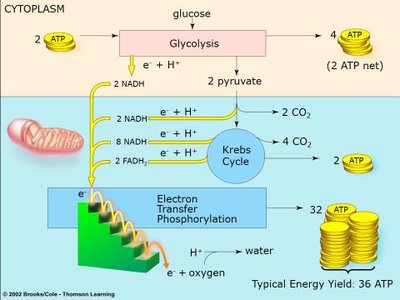
Cellular respiration is the process by which cells extract energy from glucose. It consists of three main steps:
Glycolysis: Occurs in cytoplasm, converts glucose to pyruvate, produces ATP and NADH.
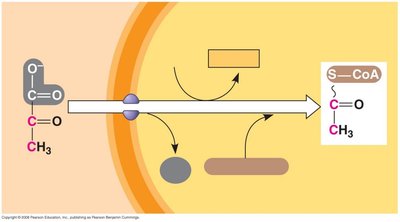
Citric Acid (Krebs) Cycle: Occurs in mitochondria, oxidizes acetyl CoA to CO2, produces NADH, FADH2, and ATP.
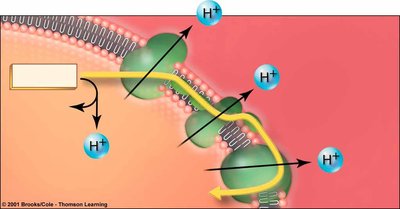
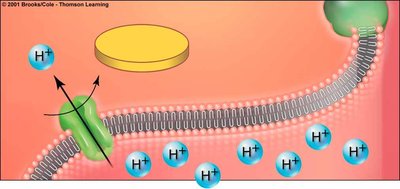
Oxidative Phosphorylation: Electron transport chain and chemiosmosis, produces most ATP.
Fermentation
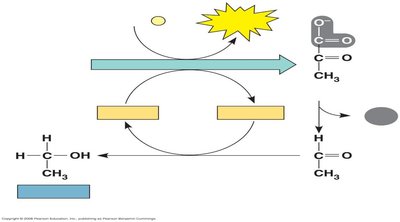
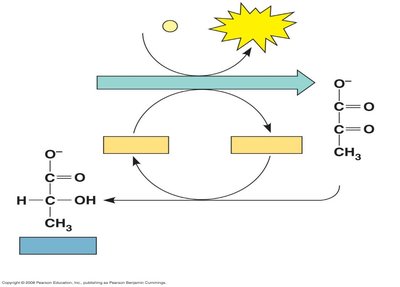
Fermentation is an anaerobic process that allows glycolysis to continue in the absence of oxygen. Pyruvate is converted to ethanol (alcohol fermentation) or lactate (lactic acid fermentation).
Photosynthesis
Photosynthesis occurs in chloroplasts and consists of light-dependent and light-independent (Calvin cycle) reactions.
Light Reactions: Occur in thylakoid membranes, produce ATP and NADPH.
Calvin Cycle: Occurs in stroma, uses ATP and NADPH to fix CO2 into sugars.
Cell Biology
Basic Cell Characteristics and Cell Theory
Cells are the smallest structural and functional units of life. All organisms are composed of cells, which can be unicellular or multicellular. Cells are highly organised, capable of metabolism, reproduction, and response to stimuli.
Cell Theory:
All living things are composed of cells.
Cells are the basic units of structure and function.
All cells arise from pre-existing cells.
Microscopy
Microscopes are essential for studying cells. Light microscopes use visible light; electron microscopes use electron beams for higher resolution.
Light Microscopes: Dissecting and compound types.
Electron Microscopes: Transmission (TEM) for internal detail, Scanning (SEM) for surface detail.
Magnification: Up to 1000x (LM), up to 1,000,000x (EM).
Resolution: Ability to distinguish adjacent objects; higher in EM.
Prokaryotes vs Eukaryotes
All cells have a plasma membrane, DNA region, cytoplasm, and ribosomes. Prokaryotes (bacteria) are simpler, lack organelles, and have DNA in a nucleoid. Eukaryotes have membrane-bound organelles and DNA in a nucleus.
Plant vs Animal Cells
Both plant and animal cells share common features but differ in certain structures:
Plant Cells: Cell wall, chloroplasts, large central vacuole.
Animal Cells: Centrioles, lysosomes, no cell wall or chloroplasts.
Endosymbiosis Theory
Mitochondria and chloroplasts originated from free-living prokaryotes engulfed by early eukaryotes, becoming permanent symbionts. They have their own DNA and replicate independently.
Cell Components
Plasma Membrane: Phospholipid bilayer with embedded proteins; selectively permeable.
Membrane Proteins: Functions include cell shape, signalling, enzymatic activity, transport, joining cells, and cell-cell recognition.
Movement Across Membranes: Diffusion, facilitated transport, active transport, exocytosis, endocytosis, osmosis.
Tonicity: Hypertonic, hypotonic, isotonic solutions affect water movement.
Osmoregulation: Regulation of water and solute balance.
Organelles
Nucleus: Contains DNA, controls cell activities.
Ribosomes: Protein synthesis.
Endoplasmic Reticulum (ER): Rough ER (protein synthesis), Smooth ER (lipid synthesis, detoxification).
Golgi Apparatus: Modifies, sorts, and packages proteins and lipids.
Vesicles: Transport and storage.
Lysosomes: Digestive enzymes.
Peroxisomes: Breakdown of fatty acids and toxins.
Vacuoles: Storage, turgor pressure in plants.
Mitochondria: ATP production via cellular respiration.
Chloroplasts: Photosynthesis in plants.
Extracellular Structures and Cytoskeleton
Cell Junctions: Plasmodesmata (plants), tight junctions, desmosomes, gap junctions (animals).
Cell Wall: Cellulose (plants), glycocalyx (animals).
Cytoskeleton: Microtubules (tubulin), microfilaments (actin), intermediate filaments (mechanical strength).
Example: Microtubules form spindle apparatus during cell division and tracks for vesicle transport.
Additional info: These notes cover foundational concepts in biology, including scientific method, biomolecules, cell structure, metabolism, respiration, and photosynthesis, suitable for exam preparation in a college-level biology course.
