 Back
BackAnimal Reproduction and Reproductive Physiology
Study Guide - Smart Notes
 Tailored notes based on your materials, expanded with key definitions, examples, and context.
Reproduction: Physiological Aspects
Overview of Reproductive Physiology
Physiologists study various aspects of reproduction, including the mechanisms and strategies by which organisms produce offspring. These include asexual and sexual reproduction, mate association, reproductive cycles, reproductive cells and organs, coordination by endocrine and neural mechanisms, parental investment, and the physiology of offspring.
Asexual vs. Sexual Reproduction: Asexual reproduction involves a single parent and produces genetically identical offspring, while sexual reproduction involves two parents and genetic recombination.
Mate Association: The process by which individuals find and select mates, often influenced by behavioral and physiological cues.
Cycles of Reproduction: Many organisms exhibit reproductive cycles regulated by hormones and environmental factors.
Reproductive Cells and Organs: Specialized cells (gametes) and organs facilitate reproduction.
Coordination by Endocrine and Neural Mechanisms: Hormones and neural signals regulate reproductive processes.
Parental Investment: The energy and resources parents invest in their offspring, varying widely among species.
Physiology of the Offspring: Includes development, nourishment, and survival strategies.
Reproductive Etymology and Terminology
Key Terms in Reproductive Biology
Understanding reproductive terminology is essential for grasping the diversity of reproductive strategies.
Partheno-: Virgin (e.g., parthenogenesis)
Genesis: Formation
Gyny: Female
Andry: Male
Ova: Egg
Vivi: Live
Pare: To bear
Hermaphrodite: An organism possessing both male and female sexual organs
Reproductive Strategies
Asexual and Sexual Strategies
Animals employ a variety of reproductive strategies to ensure survival and propagation.
Parthenogenesis: Females produce offspring from unfertilized eggs. Common in arthropods and some vertebrates (e.g., lizards, fish, salamanders).
Hermaphroditism: Individuals possess both testes and ovaries. Some species (e.g., tapeworms) are self-fertilizing, while others (e.g., earthworms) require two individuals.
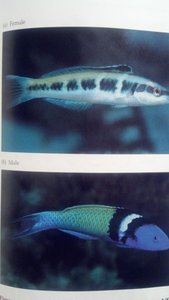
Sequential Hermaphroditism: Organisms change sex during their lifetime, often under social control. Includes protogyny (female to male) and protandry (male to female).
Example: Bluehead Wrasse
Females can turn into males, with large males often being former females.
Sex Determination
Mechanisms of Sex Determination
Sex determination varies among vertebrates and can be influenced by environmental or genetic factors.
Temperature-sensitive: In many fish and reptiles, sex is determined by incubation temperature.
Genetic: Chromosomal systems such as XX/XY (mammals), ZZ/ZW (birds, some reptiles), and TSD (temperature-dependent sex determination).
SRY Gene: In humans, the SRY gene on the Y chromosome initiates testis development.
Fertilization: External vs. Internal
Types of Fertilization
Fertilization can occur outside or inside the body, with distinct adaptations for each.
External Fertilization: Common in aquatic animals; eggs and sperm are released into the water.
Internal Fertilization: Sperm are introduced into the female reproductive tract; eggs may be encased in shells or develop within the mother.
Developmental Strategies
Oviparity: Fertilized eggs are laid outside the mother's body.
Ovoviviparity: Fertilized eggs are retained within the parent; nourishment comes from the yolk.
Viviparity: Young develop within the mother and receive nutrition from her blood.
Evolution of Internal Fertilization and Live Birth
Phylogenetic Distribution
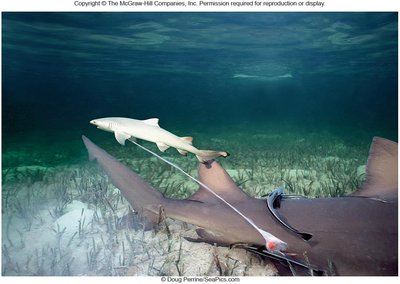
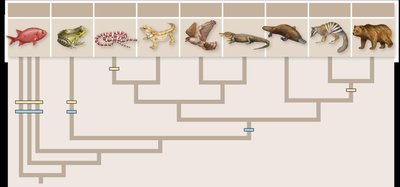
Internal fertilization and live birth have evolved multiple times in vertebrates, with varying frequency across groups.
Most bony fish use external fertilization, while cartilaginous fish use internal fertilization with specialized structures (claspers).
Amphibians and reptiles show both external and internal fertilization, with adaptations such as amniotic eggs.
Birds are oviparous with internal fertilization, often using a cloacal kiss.
Mammals exhibit three pregnancy types: monotremes (egg-laying), marsupials (pouch development), and eutherians (placental nourishment).
Human Reproductive Systems
Male Reproductive System
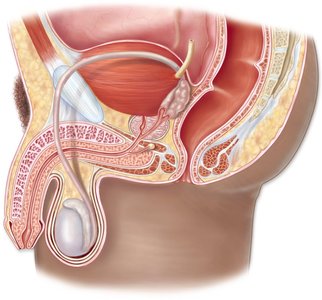
The male reproductive system is specialized for sperm production, storage, and delivery.
Seminiferous Tubules: Sites of sperm production within the testes.
Epididymis: Storage and maturation of sperm.
Vas Deferens: Transport of sperm to the urethra.
Penis: Erectile tissue facilitates sperm delivery.
Spermatogenesis
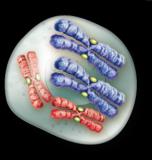
Spermatogenesis is the process by which diploid germ cells undergo meiosis to produce haploid sperm.
Meiosis I and II: Two rounds of division produce four haploid spermatids from each germ cell.
Sperm Structure: Head (nucleus and acrosome), body (mitochondria and centriole), tail (flagellum for locomotion).
Hormonal Regulation
Hormonal interactions between the hypothalamus, anterior pituitary, and testes regulate spermatogenesis and secondary sex characteristics.
GnRH: Gonadotropin-releasing hormone from the hypothalamus stimulates the pituitary.
FSH and LH: Follicle-stimulating hormone and luteinizing hormone promote sperm production and testosterone synthesis.
Inhibin: Produced by Sertoli cells, inhibits FSH to regulate sperm production.
Human Female Reproductive System
Female Reproductive Anatomy
The female reproductive system is specialized for egg production, fertilization, and gestation.
Ovary: Site of oocyte (egg) production.
Fallopian Tube: Pathway for egg transport and fertilization.
Uterus: Site of implantation and development of the embryo.
Ovarian Cycle
The ovarian cycle consists of follicular, ovulation, and luteal phases, regulated by hormones.
Follicular Phase: FSH stimulates follicle growth; estrogen promotes endometrial proliferation.
Ovulation: Release of a mature oocyte.
Luteal Phase: Corpus luteum produces hormones; if fertilization does not occur, menstruation follows.
hCG: Human chorionic gonadotropin maintains the corpus luteum during early pregnancy.
Contraception
Methods of Birth Control
Contraception encompasses various methods to prevent pregnancy, acting at different stages of reproduction.
Abstinence: No sexual intercourse; most reliable.
Sperm Blockage: Condoms, cervical caps, diaphragms prevent sperm entry.
Sperm Destruction: Douches and spermicides eliminate sperm post-ejaculation.
Prevention of Ovulation: Birth control pills contain hormone analogues to inhibit follicle development.
Prevention of Implantation: IUDs and emergency contraception (Plan B).
Sterilization: Vasectomy (male), tubal ligation (female).
Summary Table: Sex Determination Systems in Vertebrates
Comparison of Sex Determination Mechanisms
System | Organisms | Mechanism |
|---|---|---|
XX/XY | Mammals | Genetic, SRY gene on Y chromosome |
ZZ/ZW | Birds, some reptiles | Genetic, ZW female, ZZ male |
TSD | Some fish, reptiles | Temperature-dependent |
Summary Table: Developmental Strategies
Comparison of Oviparity, Ovoviviparity, and Viviparity
Strategy | Egg Location | Nourishment Source | Example Organisms |
|---|---|---|---|
Oviparity | Outside mother | Egg yolk | Birds, most reptiles |
Ovoviviparity | Inside parent | Egg yolk or cannibalism | Some fish, reptiles |
Viviparity | Inside mother | Mother's blood | Mammals, some reptiles |
Summary Table: Types of Mammalian Pregnancy
Comparison of Monotremes, Marsupials, and Eutherians
Type | Development Location | Nourishment | Example |
|---|---|---|---|
Monotreme | Egg outside mother | Egg yolk | Platypus |
Marsupial | Pouch | Milk in pouch | Kangaroo |
Eutherian | Uterus | Placenta | Human, bear |
Conclusion
Key Takeaways
Reproductive physiology encompasses a wide range of strategies and mechanisms, from asexual reproduction to complex hormonal regulation in mammals. Understanding these processes is fundamental to biology and provides insight into the diversity of life. Additional info: Academic context was added to clarify mechanisms, terminology, and comparative tables for completeness.
