 Back
Comprehensive Study Notes: Photosynthesis, Cellular Respiration, Meiosis, Mendelian Genetics, and Gene Regulation
Study Guide - Smart Notes
 Tailored notes based on your materials, expanded with key definitions, examples, and context.
Photosynthesis
Overview of Photosynthesis
Photosynthesis is the process by which green plants, algae, and some bacteria convert light energy into chemical energy stored in glucose. This process occurs primarily in the chloroplasts and is essential for producing oxygen and organic compounds that sustain life on Earth.
Key Stages: Light-dependent reactions and light-independent reactions (Calvin cycle).
Importance: Produces oxygen, provides energy for the food web, regulates atmospheric CO2, and supports ecosystems.
Light-Dependent Reactions
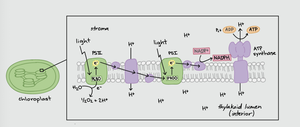
These reactions occur in the thylakoid membranes of chloroplasts and require light to produce ATP and NADPH, releasing oxygen as a byproduct.
Light Absorption: Chlorophyll absorbs sunlight, exciting electrons.
Water Splitting (Photolysis):
Electron Transport Chain: Electrons move through protein complexes, creating a proton gradient that drives ATP synthesis.
Outputs: ATP, NADPH, and O2.
Light-Independent Reactions (Calvin Cycle)
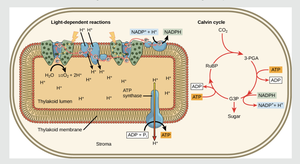
These reactions occur in the stroma of the chloroplast and use ATP and NADPH to fix carbon dioxide into glucose.
Carbon Fixation: CO2 is incorporated into organic molecules by RuBisCO.
Reduction: ATP and NADPH reduce 3-phosphoglycerate to glyceraldehyde-3-phosphate (G3P).
Regeneration: RuBP is regenerated to continue the cycle.
Outputs: Glucose, ADP, and NADP+.
Factors Affecting Photosynthesis
Light Intensity: Increases rate up to a point, then plateaus or declines.
CO2 Concentration: Higher levels can enhance rates if other factors are optimal.
Temperature: Optimal range varies by species; extremes inhibit enzymes.
Water Availability: Essential as a raw material; shortage limits process.
Cellular Respiration
Overview of Cellular Respiration
Cellular respiration is the process by which cells convert glucose into ATP, the energy currency of the cell. It occurs in both aerobic and anaerobic conditions, with aerobic respiration being more efficient.
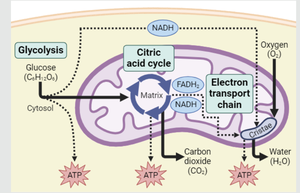
Stages: Glycolysis, Pyruvate Oxidation, Citric Acid Cycle, Oxidative Phosphorylation.
Overall Equation:
Key Stages of Cellular Respiration
Glycolysis: Occurs in cytoplasm; glucose split into 2 pyruvate, 2 ATP (net), 2 NADH produced.
Pyruvate Oxidation: In mitochondrial matrix; pyruvate converted to acetyl-CoA, producing NADH and CO2.
Citric Acid Cycle (Krebs Cycle): Acetyl-CoA enters cycle, generating ATP, NADH, FADH2, and CO2.
Oxidative Phosphorylation: Electron transport chain and chemiosmosis produce most ATP; O2 is final electron acceptor, forming water.
Anaerobic Respiration
Lactic Acid Fermentation: Glucose → lactic acid + ATP (in animals, some bacteria).
Alcoholic Fermentation: Glucose → ethanol + CO2 + ATP (in yeast, some bacteria).
Meiosis and Genetic Recombination
Overview of Meiosis
Meiosis is a specialized cell division that reduces chromosome number by half, producing haploid gametes for sexual reproduction. It consists of two sequential divisions: Meiosis I (reductional) and Meiosis II (equational).
Meiosis I: Homologous chromosomes separate, reducing chromosome number.
Meiosis II: Sister chromatids separate, producing four genetically unique haploid cells.
Genetic Recombination
Crossing Over: Exchange of genetic material between homologous chromosomes during Prophase I, creating recombinant chromosomes.
Independent Assortment: Random orientation of homologous pairs during Metaphase I increases genetic diversity.
Mendelian Genetics
Monohybrid and Dihybrid Crosses
Monohybrid Cross: Inheritance of a single trait (e.g., pea color: Y = yellow, y = green).
Dihybrid Cross: Inheritance of two traits (e.g., seed color and shape: YyRr x YyRr).
Punnett Square: Tool for predicting genotype and phenotype ratios.
Cross | Genotypic Ratio | Phenotypic Ratio |
|---|---|---|
Monohybrid (Yy x Yy) | 1 YY : 2 Yy : 1 yy | 3 yellow : 1 green |
Dihybrid (YyRr x YyRr) | 1:2:2:4:1:2:1:2:1 | 9 yellow, round : 3 yellow, wrinkled : 3 green, round : 1 green, wrinkled |
Gene Linkage and Sex-Linked Inheritance
Gene Linkage: Genes close together on the same chromosome tend to be inherited together; recombination frequency estimates their distance.
Sex-Linked Genes: Genes on sex chromosomes (especially X-linked) show unique inheritance patterns, such as X-linked recessive traits (e.g., color blindness).
Y-Linked Genes: Passed exclusively from father to son; rare and mostly related to male sex determination.
Gene Regulation: The Lac Operon
Structure and Function of the Lac Operon
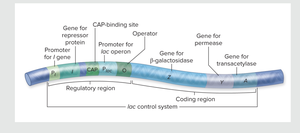
The lac operon in E. coli is a classic example of gene regulation, controlling the metabolism of lactose. It consists of structural genes (lacZ, lacY, lacA), a promoter, operator, and regulatory gene (lacI).
lacZ: Encodes β-galactosidase (breaks down lactose).
lacY: Encodes lactose permease (transports lactose).
lacA: Encodes transacetylase (modifies lactose).
Promoter: Site for RNA polymerase binding.
Operator: Binding site for the lac repressor.
lacI: Encodes the repressor protein.
Regulation Mechanism
In absence of lactose: Repressor binds operator, blocking transcription.
In presence of lactose: Allolactose binds repressor, inactivating it; RNA polymerase transcribes operon genes.
Summary Table: Key Processes
Process | Main Location | Inputs | Outputs |
|---|---|---|---|
Photosynthesis (Light-dependent) | Thylakoid membrane | Light, H2O | ATP, NADPH, O2 |
Photosynthesis (Calvin cycle) | Stroma | CO2, ATP, NADPH | Glucose, ADP, NADP+ |
Cellular Respiration | Cytoplasm, mitochondria | Glucose, O2 | ATP, CO2, H2O |
Meiosis | Germ cells | Diploid cell | 4 haploid gametes |
Additional info: These notes integrate foundational concepts from cell biology, genetics, and molecular biology, providing a comprehensive overview suitable for exam preparation in a college-level biology course.
