 Back
BackLESSON 7: Diseases and the Immune System: Innate and Adaptive Immunity, MHC, and Immune Disorders
Study Guide - Smart Notes
 Tailored notes based on your materials, expanded with key definitions, examples, and context.
Diseases and the Immune System
Overview of the Immune System
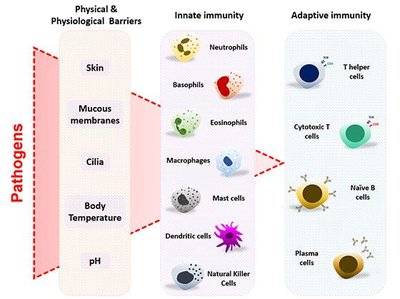
The immune system protects the body from pathogens such as bacteria, viruses, and fungi. It is divided into two main branches: innate immunity and adaptive immunity. Each branch has distinct mechanisms and cellular components that work together to defend the body.
Innate Immunity: Provides a rapid, non-specific response to a wide range of pathogens using physical barriers and immune cells.
Adaptive Immunity: Provides a slower, highly specific response using lymphocytes and the production of antibodies.
Innate Immunity
Innate immunity is the first line of defense and is present in all animals. It includes physical barriers and cellular responses that recognize common features of pathogens.
Physical and Physiological Barriers: Skin, mucous membranes, cilia, body temperature, and pH prevent pathogen entry.
Cellular Defenses: Phagocytic cells (e.g., macrophages, neutrophils), natural killer cells, dendritic cells, and mast cells.
Antimicrobial Proteins: Proteins such as lysozyme and complement proteins attack pathogens directly.
Inflammatory Response: Localized response to infection or injury, recruiting immune cells to the site.
Adaptive Immunity
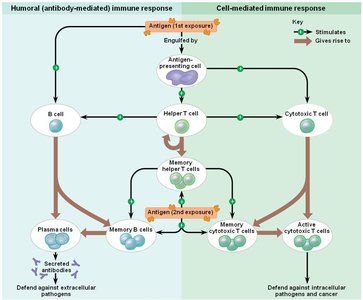
Adaptive immunity is found only in vertebrates and provides a specific response to pathogens. It involves the recognition of unique antigens and the generation of immunological memory.
Lymphocytes: B cells (produce antibodies) and T cells (mediate cellular responses).
Humoral Response: Antibodies produced by plasma cells neutralize pathogens in body fluids.
Cell-Mediated Response: Cytotoxic T cells destroy infected or abnormal cells.
Major Histocompatibility Complex (MHC) and Antigen Presentation
MHC Molecules
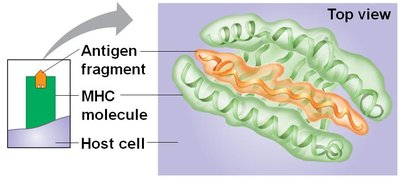
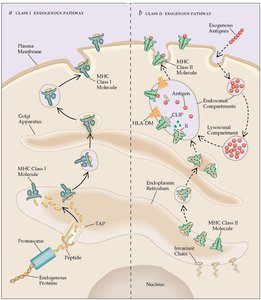
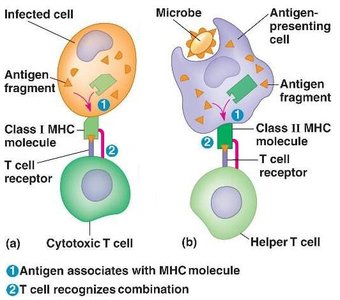
The major histocompatibility complex (MHC) is a set of cell surface proteins essential for the acquired immune system to recognize foreign molecules. There are two main classes:
MHC Class I: Present on all nucleated cells; present endogenous (intracellular) antigens to cytotoxic T cells (CD8+).
MHC Class II: Present only on antigen-presenting cells (APCs); present exogenous (extracellular) antigens to helper T cells (CD4+).
Antigen Presentation and T Cell Activation
Antigen-presenting cells (APCs) such as dendritic cells, macrophages, and B cells process and present antigens using MHC molecules. This process is crucial for activating T cells and initiating adaptive immune responses.
MHC I + CD8: Activates cytotoxic T cells to kill infected cells.
MHC II + CD4: Activates helper T cells, which stimulate B cells and other immune cells.
Immune System Disorders
Rejection After Organ Transplantation
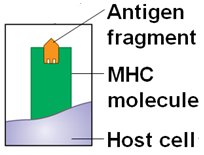
Organ transplantation can trigger an immune response if the MHC (called HLA in humans) molecules of the donor and recipient do not match. The recipient's immune system recognizes the donor organ as non-self and attacks it, leading to rejection.
MHC/HLA Diversity: Each individual has a unique set of MHC molecules, making matching for transplantation challenging.
Allergies
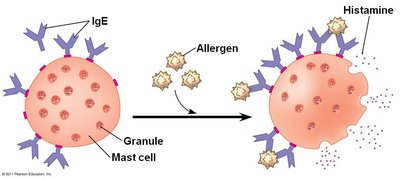
Allergies are exaggerated immune responses to harmless substances (allergens). The most common type is Type I hypersensitivity, mediated by IgE antibodies and mast cells.
First Exposure: Allergen is presented by APCs, leading to B cell activation and IgE production.
Second Exposure: IgE binds allergen and triggers mast cells to release histamine, causing allergic symptoms.
Hypersensitivity Type | Alternative Name | Antibodies/Mediators | Example |
|---|---|---|---|
I | Allergy | IgE | Asthma |
II | Cytotoxic | IgM or IgG | Type I diabetes |
III | Immune complex | IgG | Rheumatoid arthritis |
IV | Cell-mediated | Helper T cells | Celiac disease |
Autoimmune Diseases
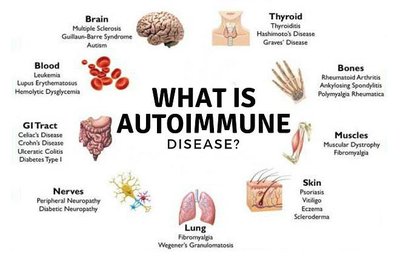
Autoimmune diseases occur when the immune system attacks the body's own cells, mistaking self-antigens as foreign. This loss of self-tolerance can affect various organs and tissues.
Examples: Type 1 diabetes mellitus, multiple sclerosis, celiac disease.
Mechanism: Antibodies or T cells target self-antigens presented in MHC I or II.
Blood Groups and Immune Response
Blood Group Antigens and Antibodies
Blood groups are determined by the presence of specific antigens (A, B, AB, O) on the surface of red blood cells. The immune system can produce antibodies against non-self blood group antigens, leading to transfusion reactions if incompatible blood is received.
Example: A rabbit injected with human blood type AB will produce antibodies against both A and B antigens.
Celiac Disease: An Example of Autoimmunity
Mechanism of Celiac Disease
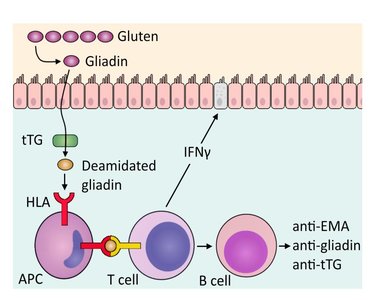
Celiac disease is an autoimmune disorder triggered by gluten (specifically gliadin) in genetically predisposed individuals. The immune system mounts an inappropriate response to deaminated gliadin, leading to intestinal inflammation and tissue damage.
Step 1: Gliadin is taken up by enterocytes in the gut.
Step 2: Tissue transglutaminase (tTG) deaminates gliadin.
Step 3: APCs present deaminated gliadin via HLA (MHC II) to T cells.
Step 4: T cell activation leads to inflammation (IFNγ release) and B cell activation.
Step 5: Plasma cells produce antibodies against gliadin and tTG.
Summary Table: Key Immune Concepts
Concept | Innate Immunity | Adaptive Immunity |
|---|---|---|
Speed | Rapid | Slower |
Specificity | Broad | Highly specific |
Memory | None | Present |
Main Cells | Phagocytes, NK cells | B cells, T cells |
Key Molecules | Pattern recognition receptors | Antibodies, T cell receptors |
Additional info: These notes are based on Campbell Biology and cover core concepts from chapters on the immune system, cell signaling, and immune disorders, as outlined in the course syllabus.
