Back
BackDisruption of the Cell Cycle and Cancer: Study Notes
Study Guide - Smart Notes
 Tailored notes based on your materials, expanded with key definitions, examples, and context.
When the Cell Cycle is Disrupted
Overview of the Cell Cycle
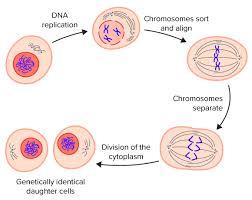
The cell cycle is a series of events that cells undergo to grow and divide. It is tightly regulated to ensure healthy tissue maintenance and repair.
Stages of the Cell Cycle:
Interphase: Includes G1 (cell growth), S (DNA synthesis), and G2 (preparation for mitosis).
Mitosis: Consists of Prophase, Metaphase, Anaphase, and Telophase, followed by cytokinesis.
Checkpoints:
G1/S Checkpoint: Ensures cell size, nutrient availability, and DNA integrity before replication.
G2 Checkpoint: Verifies completion and integrity of DNA replication before mitosis.
External Regulation: Hormones, growth factors, and environmental cues (nutrients, oxygen, cell contact) regulate cell division, preventing uncontrolled growth.
Consequences of Cell Cycle Disruption
When cell cycle control fails, abnormal cells may continue to divide, leading to disease.
Causes of Disruption:
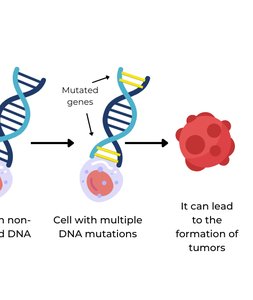
Mutations in DNA (from radiation, chemicals, viruses, genetic inheritance, or replication errors).
Mutations can activate genes that promote tumor formation.
Effects:
Cells may survive and replicate in conditions unsuitable for normal cells.
Uncontrolled growth leads to tumor formation.
Cancer Development
Mechanisms of Cancer Formation
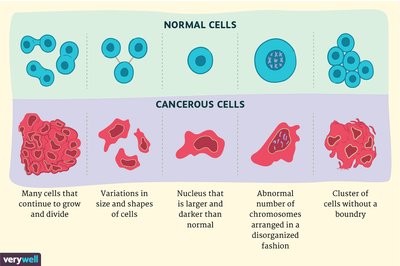
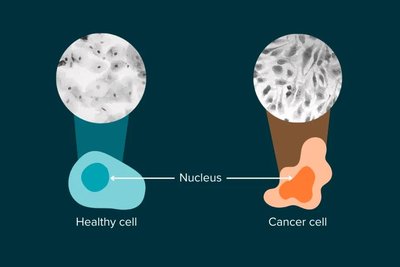
Cancer arises from uncontrolled cell proliferation due to mutations affecting cell cycle regulation.
Key Points:
Mutated receptors fail to detect stop signals.
Faulty signaling pathways send constant 'divide' signals.
Tumor suppressor genes fail to halt division.
Tumor Types:
Benign: Localized, non-invasive.
Malignant: Invasive, can metastasize (spread to other tissues).
Cancer Cell Adaptations: Can survive in low-oxygen (hypoxic) environments.
The Role of Apoptosis
Apoptosis: Programmed Cell Death
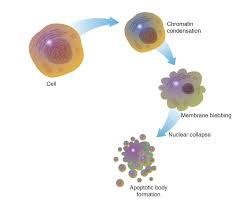
Apoptosis is a vital process that removes damaged or unnecessary cells, preventing the accumulation of abnormal cells.
Functions:
Eliminates cells with DNA damage or those no longer needed.
Failure of apoptosis allows mutated cells to survive and proliferate.
Cancer cells often ignore apoptosis signals, leading to tumor formation.
Cytology Screening
Principles and Applications
Cytology is the study of individual cells under a microscope, used to detect early abnormal changes and prevent cancer.
Key Points:
Early detection of abnormal cells allows for timely intervention.
Commonly used in cancer prevention and diagnosis (e.g., cervical screening).
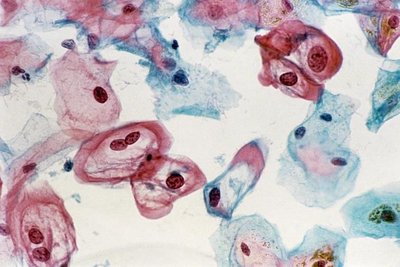
Cervical Screening Example
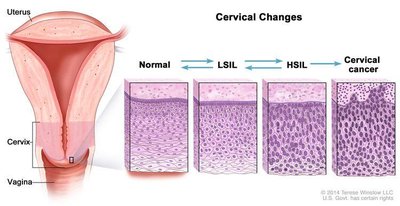
Cervical screening examines cells from the cervix for changes associated with HPV infection and early cancer development.
Benefits of Early Treatment:
Tumors are smaller and more responsive to treatment.
Fewer mutations, less likelihood of metastasis.
Less impact on quality of life.
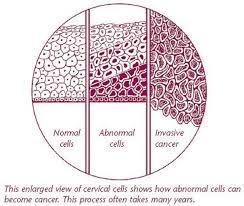
Management of Abnormal Cytology Results
Steps Following Abnormal Cervical Smear
An abnormal result does not necessarily indicate cancer, but signals potential risk.
Causes: Often due to HPV infection.
Follow-up Steps:
Borderline/mild changes: Repeat smear or HPV test after a few months.
Moderate/severe changes: Referral for colposcopy (microscopic examination of cervix).
If abnormal areas are confirmed: Biopsy or immediate treatment.
Follow-up testing ensures abnormal cells are removed.
Early detection and treatment prevent cervical cancer development.
Benefits and Limitations of Cytology Screening
Benefits:
Early detection of precancerous changes.
Enables early intervention.
Reduces cancer mortality.
Limitations:
False positives/negatives possible.
Requires trained experts.
Regular testing is necessary.
Case Study Example
Scenario: Abnormal Cervical Smear in a 32-Year-Old Woman
Interpretation: Indicates cell changes, not necessarily cancer.
Next Steps: Repeat testing, colposcopy, possible biopsy or treatment.
Prevention: Early intervention prevents progression to cancer.
Review Questions
What is apoptosis?
What happens if a cell ignores stop signals?
What is cytology screening used for?
Give one example of a cytology test.
Exam Questions
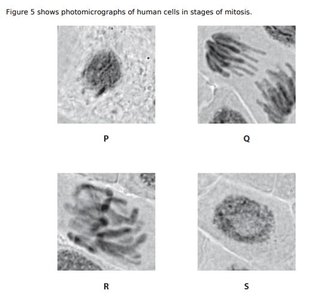
Question Number | Answer | Mark |
|---|---|---|
a(i) | phospholipid | 1 |
a(ii) | R is not a polymer because it is not made of monomers/repeating units; consists of three types of molecule (fatty acid, phosphate, glycerol) | 2 |
b | cholesterol | 1 |