 Back
Back10.1 Ecosystem Services and Ecosystem-Based Management: Concepts and Applications
Study Guide - Smart Notes
 Tailored notes based on your materials, expanded with key definitions, examples, and context.
Managing for Ecosystem Services
Introduction to Ecosystem Services
Ecosystem services are the natural processes and functions provided by ecological systems that sustain human life. These services depend on the integrity and health of natural systems and are often irreplaceable or costly to replicate artificially. Understanding and managing ecosystem services is fundamental to modern ecology and conservation biology.
Ecosystem services: Natural processes that sustain human life, such as water purification, pollination, and climate regulation.
Many ecosystem services cannot be duplicated by artificial means, or are much more expensive to replicate.
Maintaining ecosystem integrity is essential for continued delivery of these services.
Classification of Ecosystem Services
Ecosystem services are commonly classified into four categories based on their function and benefit to humans:
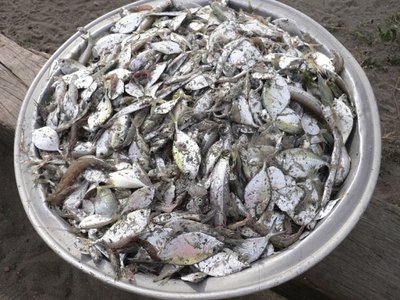
Provisioning services: Production of food, water, and other resources.
Regulating services: Control of climate, disease, and other environmental conditions.
Supporting services: Nutrient cycling, soil formation, and other processes that maintain ecosystem health.
Cultural services: Spiritual, recreational, and aesthetic benefits provided by nature.
Examples of ecosystem services:
Water purification
Generation and maintenance of soil
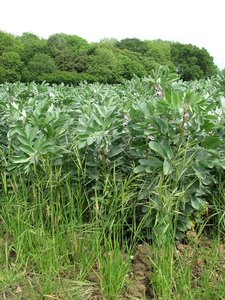
Pollination of crops
Climate regulation
Buffering from storms
Seed dispersal
Erosion protection
Air purification
Decomposition of wastes
Nutrient cycling
Disease regulation
Control of agricultural pests

Water Purification as an Ecosystem Service
Natural Water Purification Processes
Wetlands and riparian areas play a crucial role in purifying water by removing contaminants, sediments, and excess nutrients. These natural systems are highly effective and often more economical than artificial water treatment facilities.
Wetlands can remove 20-60% of metals, 80-90% of sediments, and 70-90% of nitrogen from water.
They also reduce human pathogens, contributing to public health.
Example: New York City invested $1 billion in watershed restoration, avoiding $8 billion in water treatment facility costs.
Threats to Water Purification
Several human activities threaten the effectiveness of natural water purification:
Paved roads increase contamination and flooding.
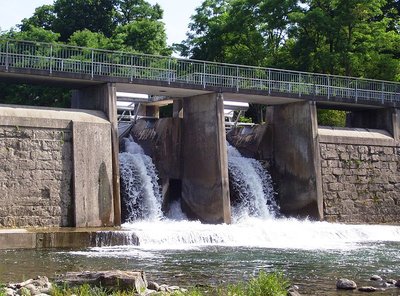
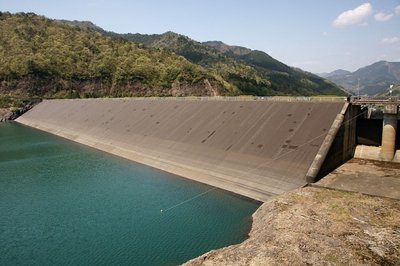
Altered waterways (e.g., dams, diversions) disrupt natural filtration.
Loss of riparian areas and wetlands reduces purification capacity.
Invasive species can decrease water filtration efficiency.
Nitrogen pollution leads to hypoxic waters and affects aquatic communities.




Storm Protection as an Ecosystem Service
Natural Buffers Against Storms
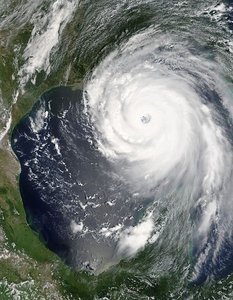
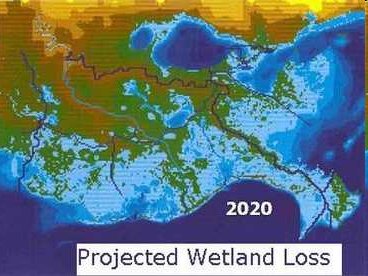
Coastal ecosystems such as mangroves and wetlands provide natural protection against storms, reducing the impact of hurricanes and flooding. Loss of these habitats increases vulnerability to natural disasters.
Mangroves and wetlands absorb storm energy and reduce coastal erosion.
Louisiana wetland loss has made the region more susceptible to hurricane damage.
Ecosystem-Based Management (EBM)
Definition and Goals
Ecosystem-based management (EBM) is an integrated approach to managing natural resources that aims to maintain healthy ecosystems and sustain the long-term delivery of ecosystem services. EBM represents a shift from traditional management, which often focuses on single species or sectors, to a holistic approach that considers multiple sectors, scales, and cumulative impacts.
EBM seeks to protect a suite of ecosystem services rather than focusing on individual services.
It involves reframing management goals to conserve ecosystem function and integrity.
EBM requires considering the combined impacts of human activities on land, coasts, and oceans.
Key Principles of EBM
Managing in an ecosystem context, including humans as integral components.
Recognizing connections among ecosystem components.
Involving stakeholders in management decisions.
Focusing on cumulative impacts of all key activities and sectors.
Adopting an integrated approach rather than managing one activity or sector at a time.
Paradigm Shift in Management
EBM represents a fundamental change in resource management:
Traditional Management | Ecosystem-Based Management |
|---|---|
Individual species | Ecosystems |
Single sector | Multiple sectors |
Small scales | Multiple scales |
Short-term perspective | Long-term perspective |
Managing commodities | Managing activities for system functioning |
Why "Ecosystem-Based Management"?
The term "ecosystem-based management" emphasizes managing human activities within ecosystems, rather than attempting to control entire ecosystems. EBM does not require understanding every species or interaction, but focuses on maintaining ecosystem function and resilience.
EBM is adaptive, responding to new scientific knowledge and changing conditions.
Scientific consensus supports EBM as a catalyst for dialogue among managers and policymakers.
EBM principles are increasingly incorporated into national and international policy frameworks (e.g., CBD Aichi Targets, National Ocean Policy).
Madagascar Case Study
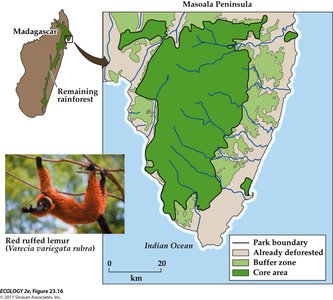
The Madagascar case study illustrates the application of EBM, with a core nature area surrounded by a buffer zone for sustainable human use. This approach balances conservation with human needs and recognizes the importance of ecosystem services.
Summary Table: Ecosystem Services Classification
Service Type | Examples |
|---|---|
Provisioning | Food, water, raw materials |
Regulating | Climate regulation, disease control, water purification |
Supporting | Nutrient cycling, soil formation, pollination |
Cultural | Recreation, spiritual value, aesthetic enjoyment |
Additional info: Ecosystem services are foundational to population ecology, community ecology, and conservation biology, and are directly relevant to topics such as ecosystem function, biodiversity, and environmental management.
