 Back
BackEvolution: Mechanisms, Evidence, and Population Genetics
Study Guide - Smart Notes
 Tailored notes based on your materials, expanded with key definitions, examples, and context.
Evolution: Foundations and Importance
Definition and Scope of Evolution
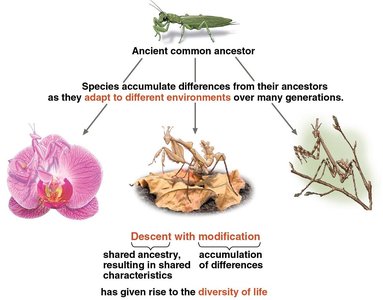
Evolution is the process by which species accumulate differences from their ancestors as they adapt to different environments over time. This concept is encapsulated by Darwin’s phrase ‘descent with modification’ and forms the basis of the theory of evolution.
Descent with modification: Species change over generations, leading to both the unity and diversity of life.
Adaptation: Inherited characteristics that enhance survival and reproduction in specific environments.
Importance in Biology: Evolution provides a framework for understanding DNA, proteins, cells, organisms, and populations, linking genotypes to phenotypes and guiding experimental design.
Historical Perspectives on Evolution
Pre-Darwinian Theories
Before Darwin, several scientists contributed to evolutionary thought:
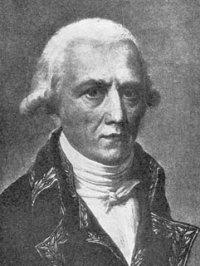
Jean-Baptiste de Lamarck: Proposed that organisms change over time through use and disuse of traits and inheritance of acquired characteristics.
Charles Lyell and James Hutton: Introduced the concept of gradual geological change, influencing Darwin’s thinking.
Thomas Malthus: Highlighted the struggle for existence due to population growth outpacing resources.
Darwin and Wallace: The Theory of Natural Selection
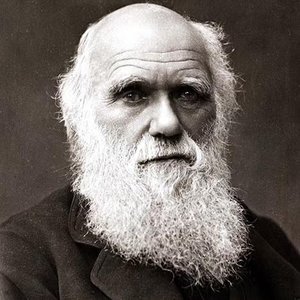
Charles Darwin and Alfred Russel Wallace independently developed the theory of evolution by natural selection, emphasizing variation and change within populations.
Natural selection: The process by which individuals with advantageous traits survive and reproduce more successfully, leading to adaptation.
Key observations: Variation exists within populations, and more offspring are produced than can survive.
Result: Over generations, favorable traits become more common in the population.
Mechanisms of Evolution
Natural Selection
Natural selection is the only evolutionary mechanism that consistently leads to adaptive evolution.
Acts on heritable variation: Only traits encoded by genes can be selected.
Population-level process: Individuals do not evolve; populations do.
Environmental context: The advantage of a trait depends on the current environment.
Genetic Variation, Gene Pools, and Allele Frequencies
Genetic variation is the raw material for evolution. It arises from mutations, gene shuffling, and other processes.
Gene pool: The total collection of alleles in a population.
Allele frequency: The proportion of a specific allele among all alleles at a genetic locus in the population.
Genotype frequency: The proportion of each genotype in the population.
Example Calculation:
Population: 500 wildflowers (320 CRCR, 160 CRCW, 20 CWCW)
CR alleles: (320 × 2) + 160 = 800
CW alleles: (20 × 2) + 160 = 200
Total alleles: 1000
p (CR) = 800/1000 = 0.8; q (CW) = 0.2
Hardy-Weinberg Equilibrium
The Hardy-Weinberg Equilibrium describes a population that is not evolving. Under certain conditions, allele and genotype frequencies remain constant from generation to generation.
Equation:
p: Frequency of one allele (e.g., CR)
q: Frequency of the other allele (e.g., CW)
p + q = 1
Genotype frequencies: p2 (homozygote 1), 2pq (heterozygote), q2 (homozygote 2)
Conditions for Hardy-Weinberg Equilibrium:
No mutations
Random mating
No natural selection
Extremely large population size
No gene flow
Microevolution: Mechanisms That Alter Allele Frequencies
Microevolution refers to changes in allele frequencies within a population over generations. The main mechanisms are:
Natural selection: Differential survival and reproduction of individuals with certain genotypes.
Genetic drift: Random fluctuations in allele frequencies, especially significant in small populations.
Gene flow: Movement of alleles between populations through migration of individuals or gametes.
Genetic Drift
Founder effect: When a few individuals establish a new population, allele frequencies may differ from the original population.
Bottleneck effect: A drastic reduction in population size can alter allele frequencies unpredictably.
Consequences: Loss of genetic variation, fixation of harmful alleles.
Gene Flow
Movement of alleles among populations tends to reduce genetic differences between populations over time.
Types of Natural Selection
Directional selection: Favors individuals at one extreme of the phenotypic range.
Disruptive selection: Favors individuals at both extremes over intermediates.
Stabilizing selection: Favors intermediate variants and acts against extremes.
Evidence for Evolution
Scientific Evidence
Fossil record: Shows patterns of change over time.
Homology: Similarities due to shared ancestry (homologous structures).
Analogy: Similarities due to convergent evolution (analogous structures).
Direct observation: Examples include changes in beak length in soapberry bugs and antibiotic resistance in bacteria.
Homologous vs. Analogous Structures
Homologous structures: Traits inherited from a common ancestor (e.g., forelimbs of mammals).
Analogous structures: Traits that evolved independently due to similar environmental pressures (e.g., wings of bats and insects).
Summary of Key Concepts
Evolution explains both the unity and diversity of life through descent with modification.
Natural selection, genetic drift, and gene flow are the primary mechanisms of evolutionary change.
Genetic variation is essential for evolution, and the Hardy-Weinberg Equilibrium provides a null model for studying evolutionary processes.
Scientific evidence from multiple fields supports the theory of evolution.
