 Back
BackEXAM 1 PREP: Evolution, Natural Selection, and the Unifying Themes of Biology
Study Guide - Smart Notes
 Tailored notes based on your materials, expanded with key definitions, examples, and context.
Evolution and Natural Selection
Introduction to Evolution
Evolution is the central unifying theme of biology, explaining both the unity and diversity of life. It is defined as the descent with gradual modifications of ancestral species to modern-day ones. The theory of evolution through natural selection provides a scientific explanation for the common characteristics and diversity observed among living organisms.
Evolution: The process by which species change over time through modifications in heritable traits.
Natural Selection: The mechanism by which individuals with advantageous traits are more likely to survive and reproduce, leading to the accumulation of those traits in a population.

Charles Darwin and the Development of Evolutionary Theory
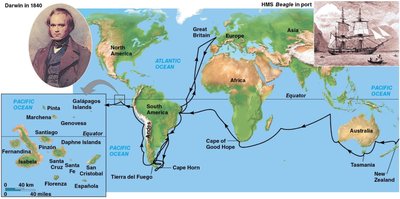
Charles Darwin, an English naturalist, developed the theory of evolution by natural selection after his voyage on the HMS Beagle. His observations and conclusions laid the foundation for modern evolutionary biology.
Darwin's Voyage: Darwin traveled around the world, collecting specimens and making observations that led to his theory.
Lamarck’s Ideas About Evolution
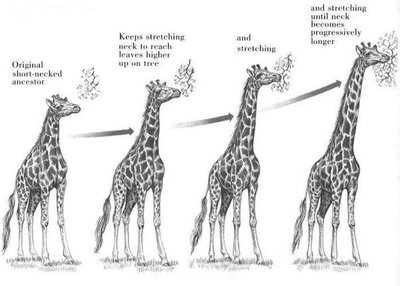
Jean-Baptiste Lamarck proposed that organisms could acquire traits during their lifetime and pass them to their offspring. This idea, known as the inheritance of acquired characteristics, was later replaced by Darwin's theory.
Darwin’s Observations and Conclusions
Darwin made several key observations that led to his conclusions about natural selection:
Observation 1: Overproduction – More individuals are born than can be supported by the environment.
Observation 2: Limited Resources – Resources such as food and space are limited and relatively constant.
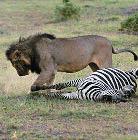
Conclusion 1: Competition – Individuals must compete for limited resources; not all survive and reproduce.
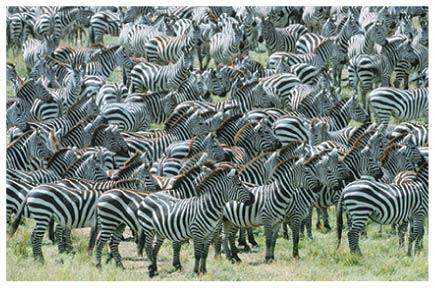
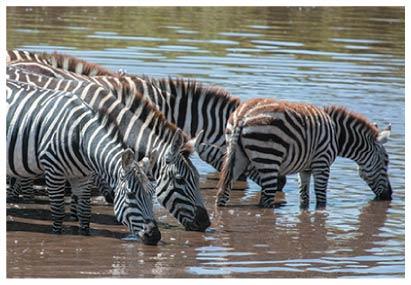
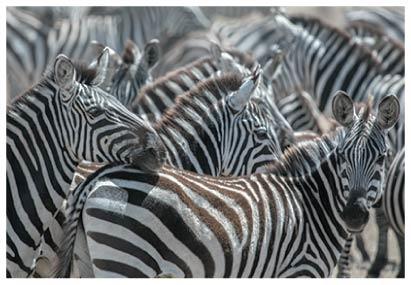
Observation 3: Variation – Individuals within a population vary in their traits.
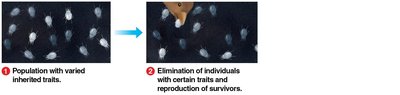
Conclusion 2: Natural Selection – Individuals with traits best suited to the environment are more likely to survive and reproduce (adaptations).
Observation 4: Heritability – Traits can be passed from parents to offspring.
Main Conclusion: Over generations, populations change, becoming better suited to their environment.
Natural Selection in Action
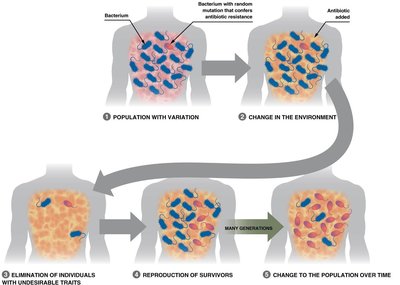
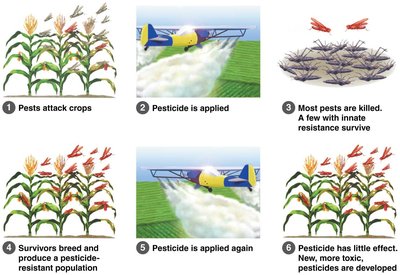
Natural selection can be observed in real-world examples, such as the development of antibiotic resistance in bacteria and pesticide resistance in insects. These cases demonstrate how populations evolve in response to environmental pressures.
Antibiotic Resistance: Bacteria with mutations that confer resistance survive and reproduce, leading to a population dominated by resistant individuals.
Pesticide Resistance: Insects with resistance genes survive pesticide application and pass these traits to their offspring.
Natural Selection in Moths: Tail Length and Sound Production
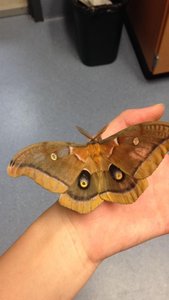
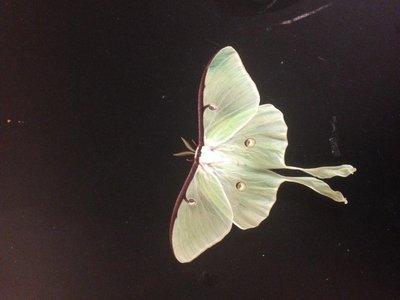
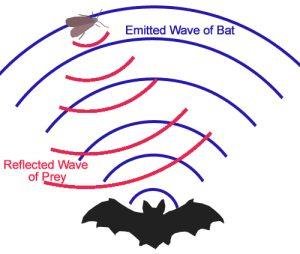
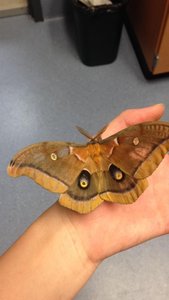
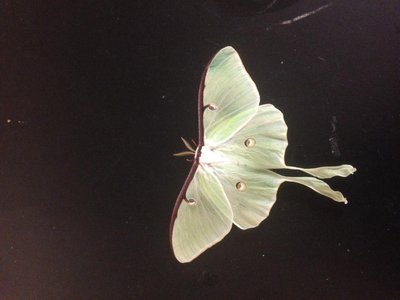
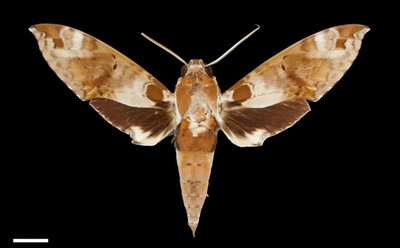
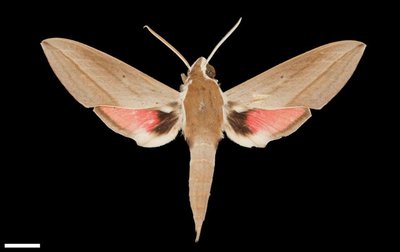
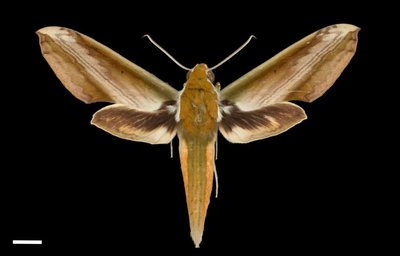
Natural selection can also drive the evolution of physical and behavioral traits, such as tail length in moths (for evading bat predation) and sound production (for acoustic mimicry).
Tail Length: Some moths have evolved elongated tails that help them evade bats using echolocation.
Sound Production: Certain moth species produce sounds to mimic other species or to interfere with bat echolocation.
Artificial Selection
Humans have influenced the evolution of many species through artificial selection, intentionally breeding plants and animals for desired traits. This process demonstrates how selection (natural or artificial) can shape the characteristics of populations over time.
Artificial Selection: The intentional breeding of organisms by humans to produce offspring with specific traits.
Examples: Domesticated crops, livestock, and pets often look very different from their wild ancestors due to artificial selection.
Key Points of Evolution
Individuals do not evolve; populations evolve over time.
Evolution does not have a predetermined goal or strive for perfection; it is a response to the current environment.
Phylogenetics
Introduction to Phylogenetics
Phylogenetics is the study of evolutionary relationships among species. Each species represents a branch on the tree of life, tracing back to common ancestors.
Phylogenetic Tree: A diagram that depicts the lines of evolutionary descent of different species from a common ancestor.
Five Unifying Themes in Biology
Theme 1: Evolution Is the Core Theme of Biology
Evolution explains both the unity and diversity of life, providing a framework for understanding the relationships among all living organisms.
Theme 2: Life Depends on the Flow of Information
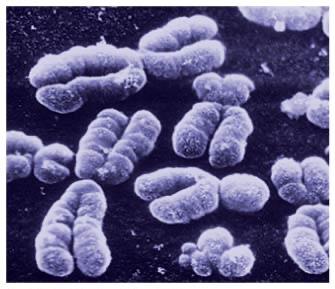
The processes of life depend on the transmission and use of information, primarily through DNA, which provides the blueprint for proteins. Organisms also respond to internal and external signals that regulate body processes and gene expression.
Theme 3: Structure and Function Are Related
Biological structures are closely related to their functions. For example, the structure of hemoglobin enables it to transport oxygen in the blood, and the structure of the human hand allows for manipulation of objects.
Theme 4: Transfer and Transformation of Energy and Matter
Life depends on the transfer and transformation of energy and matter. Energy flows through ecosystems in one direction, while matter cycles through ecosystems.
Theme 5: Interactions Between Systems
Life depends on interactions within and between systems. The properties of a system emerge from the interactions of its components, as illustrated by the assembly of bicycle parts into a functioning whole.
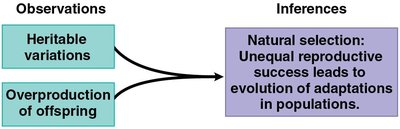
Summary Table: Darwin's Observations and Inferences
Observations | Inferences |
|---|---|
Heritable variations Overproduction of offspring | Natural selection: Unequal reproductive success leads to evolution of adaptations in populations. |
Key Equations and Concepts
Natural Selection:
Population Genetics: (Hardy-Weinberg equilibrium, where p and q are allele frequencies)
Additional info: The Hardy-Weinberg equation is a fundamental concept in population genetics, used to predict genotype frequencies in a non-evolving population.
