Back
BackFoundations of Biology: Evolution, Chemistry of Life, and Biological Molecules
Study Guide - Smart Notes
 Tailored notes based on your materials, expanded with key definitions, examples, and context.
Introduction: Evolution & Foundations of Biology
Studying Life and Evolution
Biology is the scientific study of life, focusing on how organisms adapt to their environment and the evolutionary processes that generate the diversity of life on Earth. Evolution is a central theme, describing the process of change that leads to the variety of organisms observed today.
Unifying Themes for Studying Life
Organization: Life is structured in a hierarchy from molecules to the biosphere.
Information: Genetic information is stored and transmitted through DNA.
Energy & Matter: Life requires the transformation of energy and cycling of matter.
Interactions: Organisms interact with each other and their environment.
Evolution: The process that explains both the unity and diversity of life.
Theme 1: Biological Organization
Levels of Biological Organization
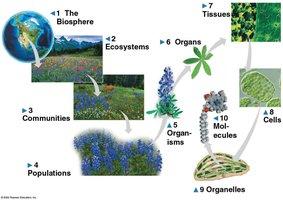
Life can be studied at different levels, from the smallest molecules to the entire biosphere. Understanding these levels helps biologists analyze complex systems by breaking them into simpler components (reductionism).
Biosphere: All life on Earth and the places where life exists.
Ecosystems: All living and non-living things in a particular area.
Communities: Different populations of organisms in an ecosystem.
Populations: All individuals of a species in a specific area.
Organisms: Individual living things.
Organs: Body parts with specific functions, made of tissues.
Tissues: Groups of cells working together for a function.
Cells: Fundamental units of life.
Organelles: Functional components within cells.
Molecules: Chemical structures of two or more atoms.
Prokaryotic & Eukaryotic Cells
All cells share basic features, such as a cell membrane. However, there are two main types:
Eukaryotic cells: Contain membrane-bound organelles, including a nucleus. Found in animals, plants, fungi, and protists.
Prokaryotic cells: Lack a nucleus and other organelles; generally smaller. Found in Bacteria and Archaea.
Theme 2: Expression & Transmission of Genetic Information
Genetic Material and Inheritance
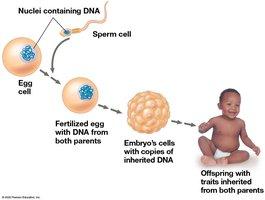
Chromosomes contain DNA, the molecule that holds genetic instructions. Genes are units of inheritance, transmitting information from parents to offspring. As cells grow and divide, DNA directs development and function.
DNA: Composed of two strands in a double helix, with four nucleotide building blocks (A, T, C, G).
Gene Expression: The process by which information from a gene is used to synthesize a functional product (usually a protein).
Central Dogma: The flow of genetic information: DNA → RNA → Protein.
Genome: The complete set of genetic instructions in an organism.
Genomics: The study of whole sets of genes and their interactions.
Theme 3: Transformation of Energy & Matter
Energy Flow and Chemical Cycling
Life depends on the transformation of energy, primarily from the sun. Producers (like plants) convert sunlight into chemical energy, which is then used by other organisms. Energy flows through ecosystems, entering as light and exiting as heat, while chemical elements are recycled.
Producers: Organisms that convert solar energy to chemical energy (e.g., plants).
Consumers: Organisms that use chemical energy from other organisms.
Theme 4: Interactions
Organism Interactions with Each Other and the Environment
All organisms interact with other organisms and with physical factors in their environment. These interactions can be mutually beneficial, harmful to one or both parties, or competitive.
Mutualism: Both species benefit (e.g., fish eating parasites off turtles).
Predation: One species benefits, the other is harmed (e.g., lion eating a zebra).
Competition: Both species are harmed (e.g., plants competing for soil nutrients).
Theme 5: Evolution—Unity & Diversity of Life
Evolution as the Core Theme
Evolution explains both the unity and diversity of life. Species accumulate differences from their ancestors as they adapt to different environments over time.
Classification: Organisms are grouped based on similarities and evolutionary relationships.
Three Domains of Life: Bacteria, Archaea, and Eukarya (which includes Plantae, Fungi, and Animalia).
Unity: All organisms share DNA as the universal genetic language.
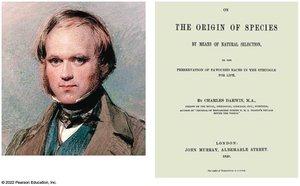
Charles Darwin and the Theory of Natural Selection
Charles Darwin proposed that species show evidence of "descent with modification" from common ancestors. Natural selection is the mechanism by which advantageous traits become more common in a population over generations.
Natural Selection: Individuals best suited to their environment are more likely to survive and reproduce, passing on advantageous traits.
Descent with Modification: Over time, populations accumulate differences from their ancestors.
Studying Life: Scientific Inquiry
Forming and Testing Hypotheses
Biologists use the scientific method to describe and understand natural phenomena. This involves making observations, forming hypotheses, conducting experiments, and analyzing data.
Data: Recorded observations, which can be qualitative (descriptions) or quantitative (measurements).
Inductive Reasoning: Drawing general conclusions from specific observations.
Hypothesis: A testable explanation based on observations.
Experiment: A controlled test to evaluate a hypothesis, involving independent (manipulated) and dependent (measured) variables.
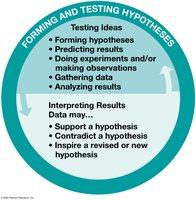
Controlled Experiments and Variables
Controlled experiments compare an experimental group with a control group, differing only in the variable being tested. For example, in studies of mouse predation, coat color is the independent variable, and predation rate is the dependent variable. Camouflaged mice suffer less predation, supporting the hypothesis that coloration is an adaptation.
Scientific Theories
Theories are broader than hypotheses and are supported by a large body of evidence. They can generate new hypotheses and are modified or rejected if new evidence contradicts them. The theory of natural selection is a foundational example in biology.
Chemistry of Life: Creating Compounds
Elements, Atoms, and Compounds
All living organisms are composed of matter, which consists of elements and compounds. Understanding the basic chemical building blocks is essential for studying biological processes.
Element: A substance that cannot be broken down or converted into other substances by chemical means.
Atom: The smallest unit of an element that retains its chemical properties.
Compound: A substance consisting of two or more elements in a fixed ratio, exhibiting emergent properties distinct from its constituent elements.
Elements of Life
Only a fraction of the 92 naturally occurring elements are essential for life. These elements are required for survival, growth, and reproduction. Trace elements are needed in minute quantities but are vital for proper physiological function.
Essential elements: 20-25% of natural elements are required for life.
Trace elements: Needed in small amounts; e.g., iodine is necessary for thyroid function, and its deficiency can cause goiter.
Evolution of Tolerance to Toxic Elements
Some organisms have evolved mechanisms to tolerate or detoxify toxic elements. Sunflowers, for example, can absorb heavy metals from contaminated soils, a process known as phytoremediation.
Phytoremediation: The use of plants to remove contaminants from the environment.
Example: Sunflowers were used to detoxify soils after Hurricane Katrina.

Element Properties Depend on Atomic Structure
Subatomic Particles
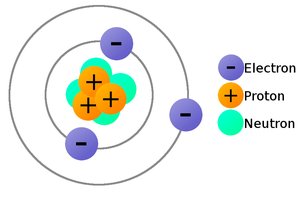
The properties of elements are determined by the structure of their atoms, which are composed of subatomic particles.
Neutrons: No electrical charge.
Protons: Positive charge.
Electrons: Negative charge.
Atomic nucleus: Contains protons and neutrons; electrons form a cloud around the nucleus.
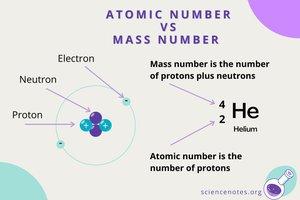
Atomic Number and Atomic Mass
Atoms of different elements are distinguished by their number of protons, neutrons, and electrons.
Atomic number: Number of protons in the nucleus.
Mass number: Sum of protons and neutrons in the nucleus.
Atomic mass: Approximated by the mass number.
Isotopes
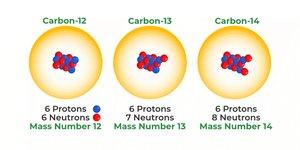
Isotopes are atomic forms of an element with different numbers of neutrons. Some isotopes are radioactive and have important biological and medical applications.
Isotopes: Atoms of the same element with varying neutron numbers.
Radioactive isotopes: Nuclei decay spontaneously, emitting particles and energy.
Applications: Dating fossils, tracing metabolic processes, medical diagnostics (e.g., PET scans).
Energy and Electrons
Electron Shells and Potential Energy
Electrons possess potential energy based on their distance from the nucleus. Their arrangement in shells influences chemical reactivity.
Energy: Capacity to cause change.
Potential energy: Energy due to position or structure.
Electron shells: Electrons occupy shells with varying energy levels; movement between shells involves energy absorption or release.
Electrons & Chemical Bonds
The chemical behavior of atoms is determined by the electrons in their outermost shell (valence shell). Atoms with incomplete valence shells tend to form chemical bonds.
Inert atoms: Completed valence shells; unreactive.
Reactive atoms: Incomplete valence shells; form bonds by sharing or transferring electrons.
Covalent Bonds
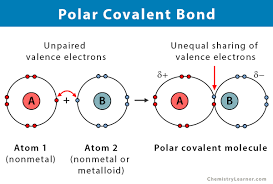
Covalent bonds involve the sharing of valence electrons between atoms, resulting in the formation of molecules.
Covalent bond: Sharing of a pair of electrons.
Single bond: One pair of shared electrons.
Double bond: Two pairs of shared electrons.
Electronegativity & Covalent Bonds
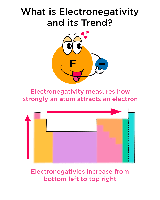
Electronegativity is the tendency of an atom to attract electrons. Differences in electronegativity lead to polar covalent bonds, where electrons are shared unequally.
Electronegativity: Measure of an atom's ability to attract electrons.
Polar covalent bond: Unequal sharing of electrons, resulting in partial charges.
Ionic Bonds
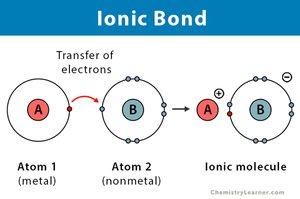
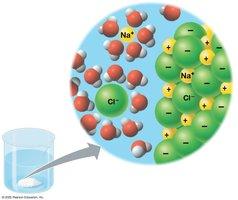
Ionic bonds are formed when electrons are transferred from one atom to another, resulting in oppositely charged ions (cations and anions) that attract each other.
Cation: Positively charged ion (lost electron).
Anion: Negatively charged ion (gained electron).
Ionic bond: Attraction between cation and anion.
Ionic compounds: Also called salts.
Weak Chemical Interactions
Weak chemical interactions, such as hydrogen bonds and van der Waals forces, play crucial roles in maintaining the structure and function of biological molecules.
Hydrogen bond: Attraction between a hydrogen atom (covalently bonded to an electronegative atom) and another electronegative atom.
Van der Waals interactions: Weak attractions due to transient asymmetrical electron distributions.
Example: Geckos use van der Waals interactions to adhere to surfaces.

Chemical Reactions
Chemical reactions involve the making and breaking of covalent bonds, transforming reactants into products. Photosynthesis is a key biological reaction.
Reactants: Starting molecules.
Products: Final molecules.
Photosynthesis equation:
Hydrogen Bonding & Water
Properties of Water
Water's unique properties arise from hydrogen bonding, which is essential for life. These properties include cohesion, adhesion, surface tension, temperature moderation, and the ability to float ice.
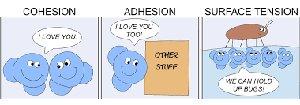
Cohesion: Water molecules stick together due to hydrogen bonding.
Adhesion: Water molecules cling to other substances.
Surface tension: Difficulty in breaking the surface of water.
Temperature moderation: Water absorbs/releases heat with minimal temperature change.
Floating ice: Ice is less dense than liquid water, allowing it to float.
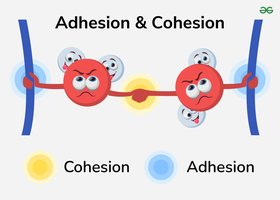
Cohesion and Adhesion in Water
Cohesion and adhesion are vital for the transport of water and nutrients in plants, especially against gravity.
Cohesion: Hydrogen bonding keeps water molecules together.
Adhesion: Water adheres to cell walls, countering gravity.
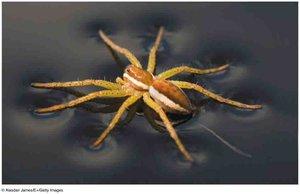
Surface Tension
Surface tension is a result of cohesion at the air-water interface, giving water an unusually high surface tension. This property allows certain organisms to walk on water.
Surface tension: Related to cohesion; important for aquatic life.
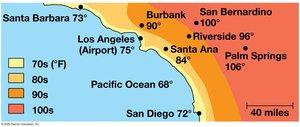
Moderation of Temperature by Water
Water's ability to absorb and release heat helps regulate temperature in organisms and environments, contributing to climate stability.
High specific heat: Water can absorb/release large amounts of heat with little temperature change.
Water: The Solvent of Life
Solutions, Solvents, and Solutes
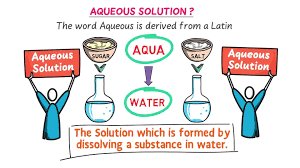
Water is an excellent solvent, capable of dissolving a wide range of substances due to its polarity. Biological fluids are often aqueous solutions.
Solution: Homogeneous mixture of substances.
Solvent: Dissolving agent (water in biological systems).
Solute: Substance dissolved in the solvent.
Aqueous solution: Solution where water is the solvent.
Water as a Solvent
Water dissolves ionic and polar substances (hydrophilic), but not nonpolar substances (hydrophobic). This distinction is important for biological molecules and cell membranes.
Hydrophilic: Affinity for water; dissolves easily.
Hydrophobic: Repels water; does not dissolve (e.g., oils).
Acids, Bases, & pH
Regulation of Hydrogen Ion Concentration
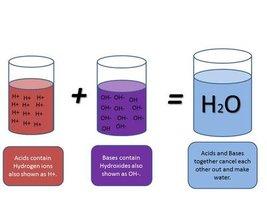
Acids and bases alter the concentration of hydrogen ions in water, affecting pH and biological processes. Buffers help maintain stable pH in living systems.
Acids: Increase H+ concentration (pH < 7).
Bases: Decrease H+ concentration (pH > 7).
Buffers: Minimize changes in H+ or OH- concentration.
Biological fluids: pH typically ranges from 6 to 8; internal cell pH is close to 7.
Chapter 3: Carbon and the Molecular Diversity of Life
Carbon Atoms Can Form Diverse Molecules by Bonding to Four Other Atoms
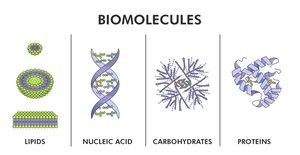
Organic chemistry is the study of carbon compounds, which are the foundation of all living organisms. Carbon's unique ability to form four covalent bonds allows it to create large, complex, and diverse molecules essential for life. The four main classes of biomolecules are carbohydrates, lipids, proteins, and nucleic acids.
Organic compounds: Contain carbon and are found in all living things.
Macromolecules: Large molecules composed of thousands of covalently connected atoms.
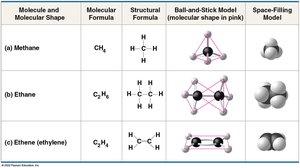
Carbon: Can form four covalent bonds due to its four valence electrons, enabling a variety of molecular structures.
The Formation of Bonds with Carbon
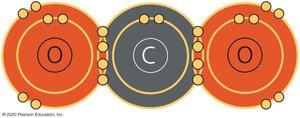
The number of covalent bonds an atom can form is called its valence, determined by the number of unpaired electrons in its outer shell. Carbon's valence of four allows it to bond with many elements, including hydrogen, oxygen, and nitrogen, as well as with other carbon atoms, forming chains and rings.
Double bonds: Between carbons create flat molecules, while single bonds allow for tetrahedral geometry.
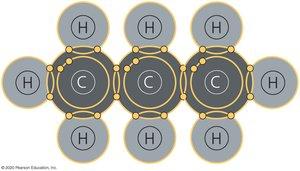
Hydrocarbons: Organic molecules consisting only of carbon and hydrogen.
Carbon Chain Skeletons
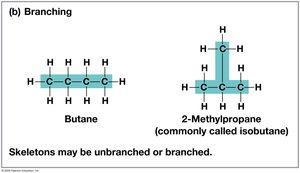
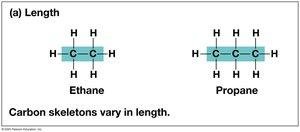
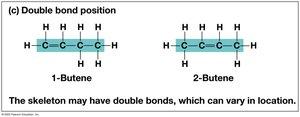
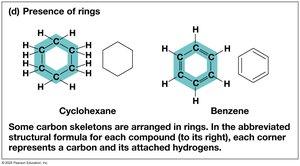
Carbon chains form the skeletons of most organic molecules. These chains can vary in length, branching, double bond position, and the presence of rings, contributing to the diversity of organic molecules.
Length: Chains can be short or long.
Branching: Chains may be unbranched or branched.
Double bond position: Double bonds can occur at different locations.
Rings: Some carbon skeletons form rings.
Three Types of Isomers
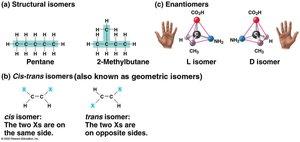
Isomers are compounds with the same molecular formula but different structures and properties. The three main types are:
Structural isomers: Differ in the covalent arrangement of atoms.
Cis-trans (geometric) isomers: Differ in spatial arrangement around double bonds.
Enantiomers: Mirror images of each other, often with different biological activities.
Functional Groups
Functional groups are chemical groups attached to carbon skeletons that participate in chemical reactions and confer specific properties to molecules. Seven functional groups are most important in the chemistry of life: hydroxyl, carbonyl, carboxyl, amino, sulfhydryl, phosphate, and methyl.
ATP: Important Energy Source for Cellular Processes
Adenosine triphosphate (ATP) is an organic molecule that stores energy for cellular processes. ATP consists of adenosine attached to three phosphate groups. Hydrolysis of ATP releases energy used by cells.
Macromolecules Are Polymers, Built from Monomers
Polymers and Monomers
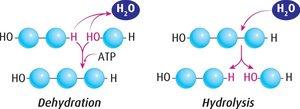
Polymers are long molecules made of repeating units called monomers. The synthesis and breakdown of polymers involve dehydration (condensation) and hydrolysis reactions, respectively. Enzymes catalyze these reactions.
Dehydration reaction: Joins two monomers by removing a water molecule.
Hydrolysis reaction: Breaks a bond between monomers by adding water.
Carbohydrates
Carbohydrates are sugars and polymers of sugars. The simplest carbohydrates are monosaccharides, which serve as major nutrients and building blocks for other molecules. Glucose (C6H12O6) is the most common monosaccharide.
Monosaccharides: Classified by the number of carbons and the position of the carbonyl group. In aqueous solutions, most five- and six-carbon sugars form rings.
Disaccharides: Formed by joining two monosaccharides via a dehydration reaction, creating a glycosidic linkage.
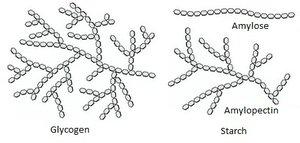
Polysaccharides: Carbohydrate polymers with storage (e.g., starch, glycogen) or structural (e.g., cellulose, chitin) roles.
Starch: Storage polysaccharide in plants.
Glycogen: Storage polysaccharide in animals.
Cellulose: Structural polysaccharide in plant cell walls.
Chitin: Structural polysaccharide in arthropod exoskeletons and fungal cell walls.
Lipids
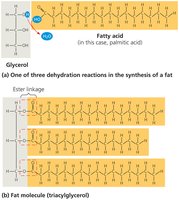
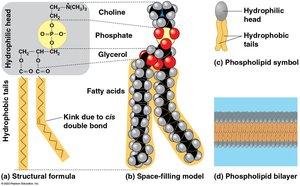
Lipids are hydrophobic molecules that do not form true polymers. The most important lipids are fats, phospholipids, and steroids. Fats are constructed from glycerol and three fatty acids, forming triacylglycerol (triglyceride) via ester linkages. Fats are used for energy storage.
Saturated vs. Unsaturated Fatty Acids
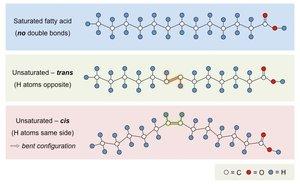
Fatty acids can be saturated (no double bonds, solid at room temperature) or unsaturated (one or more double bonds, liquid at room temperature). Trans fats are unsaturated fats with trans double bonds, often produced industrially.
Phospholipids
Phospholipids consist of two fatty acids, a phosphate group, and glycerol. They are major components of cell membranes, forming bilayers with hydrophilic heads and hydrophobic tails.
Steroids
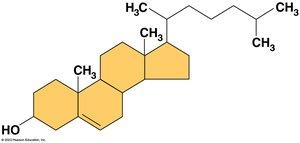
Steroids are lipids with a carbon skeleton consisting of four fused rings. Cholesterol is an important steroid in animal cell membranes and a precursor for other steroids such as hormones.
Proteins
Proteins are polymers of amino acids and account for more than 50% of the dry mass of most cells. They perform a wide range of functions, including defense, storage, transport, communication, movement, and structural support. The function of a protein is determined by its unique three-dimensional structure.
Amino Acids and Polypeptides
Amino acids are organic molecules with amino and carboxyl groups, differing in their side chains (R groups). Amino acids are linked by peptide bonds to form polypeptides, which fold into functional proteins.
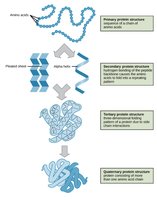
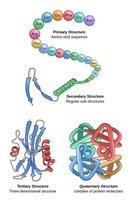
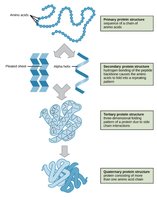
Levels of Protein Structure
Primary structure: Sequence of amino acids.
Secondary structure: Coils and folds (α helix, β pleated sheet) due to hydrogen bonding.
Tertiary structure: Overall 3D shape due to interactions among R groups.
Quaternary structure: Association of multiple polypeptides.
Protein Structure and Disease
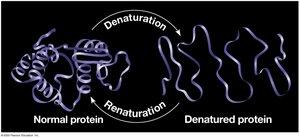
A single amino acid substitution can drastically affect protein function, as seen in sickle-cell disease. Protein structure can also be affected by environmental factors such as temperature, pH, and salt concentration, leading to denaturation (loss of structure and function).
Nucleic Acids
Nucleic acids store, transmit, and help express hereditary information. DNA and RNA are polymers of nucleotides. DNA contains deoxyribose sugar, while RNA contains ribose. DNA directs synthesis of messenger RNA (mRNA), which controls protein synthesis (gene expression).
Nucleotide: Nitrogenous base + pentose sugar + phosphate group.
Nucleoside: Nitrogenous base + pentose sugar.
Nitrogenous bases: Pyrimidines (C, T, U) and purines (A, G).
Nucleotide Polymers: DNA and RNA
Nucleotides are joined by phosphodiester linkages, forming a sugar-phosphate backbone. DNA is double-stranded, forming a double helix with complementary base pairing (A-T, G-C). RNA is usually single-stranded, with uracil replacing thymine.
Genomics and Proteomics
Genomics is the study of whole sets of genes and their interactions, while proteomics is the study of large sets of proteins. Advances in bioinformatics have accelerated the analysis of genome and proteome data, deepening our understanding of evolution and biological function.
DNA and Proteins as Tape Measures of Evolution
Comparing DNA and protein sequences among species reveals evolutionary relationships. Closely related species have more similar DNA sequences than distantly related species, allowing molecular biology to assess evolutionary kinship.