 Back
BackFrom DNA to Protein: Molecular Basis of Inheritance and Gene Expression
Study Guide - Smart Notes
 Tailored notes based on your materials, expanded with key definitions, examples, and context.
DNA as the Genetic Material
Discovery and Evidence for DNA as Genetic Material
The identification of DNA as the hereditary material was a pivotal moment in biology. Early experiments demonstrated that DNA, not protein, carries genetic information.
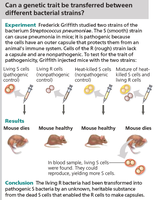
Griffith's Transformation Experiment: Showed that a substance from dead pathogenic bacteria could genetically transform living non-pathogenic bacteria.
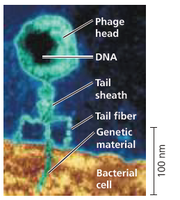
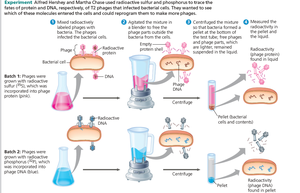
Hershey-Chase Experiment: Used bacteriophages to confirm that DNA, not protein, is the genetic material injected into bacteria to program viral replication.
Structure of DNA
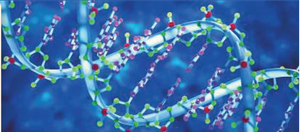
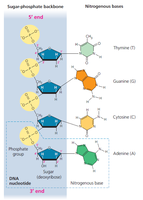
DNA (deoxyribonucleic acid) is a double-helical molecule composed of two antiparallel strands of nucleotides. Each nucleotide consists of a phosphate group, a deoxyribose sugar, and a nitrogenous base (adenine, thymine, cytosine, or guanine).
Double Helix: Proposed by Watson and Crick in 1953, the structure explains how genetic information is stored and replicated.
Base Pairing: Adenine pairs with thymine (A=T), and guanine pairs with cytosine (G≡C) via hydrogen bonds.

DNA Replication
Models of Replication
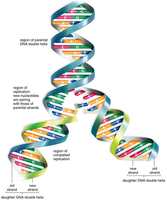
DNA replication is the process by which DNA makes a copy of itself during cell division. The semiconservative model, supported by Meselson and Stahl's experiments, states that each new DNA molecule consists of one parental and one newly synthesized strand.
Semiconservative Replication: Each daughter DNA molecule contains one old and one new strand.
Mechanism of DNA Replication
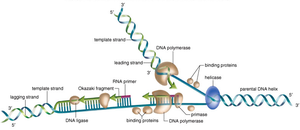
Replication involves several enzymes and proteins that unwind the DNA, synthesize new strands, and join fragments.
Initiation: Helicase unwinds the DNA; single-stranded binding proteins stabilize unwound strands; primase synthesizes RNA primers.
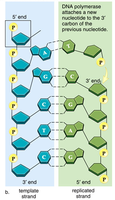
Elongation: DNA polymerase adds nucleotides in the 5'→3' direction. The leading strand is synthesized continuously, while the lagging strand is synthesized discontinuously as Okazaki fragments.
Joining: DNA ligase joins Okazaki fragments on the lagging strand.
Gene Structure and Function
Definition of a Gene
A gene is a segment of DNA that codes for a specific polypeptide or functional RNA molecule. Genes are the fundamental units of heredity and are located at specific loci on chromosomes.
Gene Expression: The process by which information from a gene is used to synthesize a functional product (protein or RNA).
Gene Expression: Transcription and Translation
Central Dogma of Molecular Biology
The central dogma describes the flow of genetic information: DNA is transcribed into RNA, which is then translated into protein.
Transcription: Synthesis of RNA from a DNA template.
Translation: Synthesis of a polypeptide using the information in mRNA.
The Genetic Code
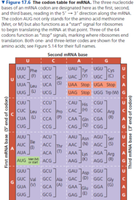
The genetic code is a set of rules by which information encoded in mRNA is translated into proteins. It is based on codons, which are triplets of nucleotides.
Properties: The code is universal, non-overlapping, and degenerate (some amino acids are specified by more than one codon).
Start Codon: AUG (methionine)
Stop Codons: UAA, UAG, UGA
Transcription in Prokaryotes and Eukaryotes
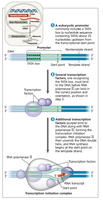
Transcription is the process by which RNA is synthesized from a DNA template. In prokaryotes, mRNA is immediately usable, while in eukaryotes, pre-mRNA undergoes processing before translation.
Initiation: RNA polymerase binds to the promoter region.
Elongation: RNA polymerase synthesizes RNA in the 5'→3' direction.
Termination: Transcription ends at a stop sequence.
RNA Processing (Eukaryotes): Addition of 5' cap, poly-A tail, and removal of introns (splicing).
Translation: From mRNA to Protein
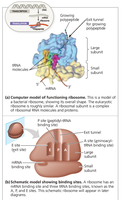
Translation is the process by which ribosomes synthesize proteins using mRNA as a template. tRNA molecules bring amino acids to the ribosome, matching codons in mRNA with anticodons in tRNA.
Ribosome Structure: Composed of large and small subunits, each made of rRNA and proteins.
Stages of Translation: Initiation, elongation, and termination.
Polyribosomes: Multiple ribosomes can translate a single mRNA simultaneously.
Mutations and Gene Editing
Types of Mutations
Mutations are changes in the nucleotide sequence of DNA. They can affect gene function and protein structure.
Point Mutation: Substitution of a single nucleotide (e.g., sickle cell disease).
Frameshift Mutation: Insertion or deletion of nucleotides that alters the reading frame.
Gene Editing: CRISPR-Cas9
CRISPR-Cas9 is a revolutionary gene-editing technology that allows for precise modifications of DNA sequences. It uses a guide RNA to direct the Cas9 enzyme to a specific DNA sequence, where it introduces cuts to edit genes.
Summary Table: Key Steps in Gene Expression
Process | Location | Main Enzymes/Players | Product |
|---|---|---|---|
DNA Replication | Nucleus (Eukaryotes), Cytoplasm (Prokaryotes) | DNA polymerase, helicase, ligase, primase | Two identical DNA molecules |
Transcription | Nucleus (Eukaryotes), Cytoplasm (Prokaryotes) | RNA polymerase, transcription factors | mRNA (pre-mRNA in eukaryotes) |
RNA Processing | Nucleus (Eukaryotes) | Spliceosome, capping enzymes, poly-A polymerase | Mature mRNA |
Translation | Cytoplasm (on ribosomes) | Ribosome, tRNA, aminoacyl-tRNA synthetase | Polypeptide (protein) |
Conclusion
Gene expression is a tightly regulated process involving transcription and translation, ensuring that proteins are produced as needed for cellular function. Mutations can disrupt this process, but modern gene-editing tools like CRISPR-Cas9 offer new possibilities for correcting genetic defects.
