 Back
BackFrom Genes to Proteins: Mechanisms of Transcription and Translation in Eukaryotes
Study Guide - Smart Notes
 Tailored notes based on your materials, expanded with key definitions, examples, and context.
From Genes to Proteins
Overview of Genetic Information Flow
The central dogma of molecular biology describes the flow of genetic information within a biological system: DNA is transcribed into RNA, which is then translated into protein. This process is fundamental to all living organisms and underlies the expression of genetic traits.
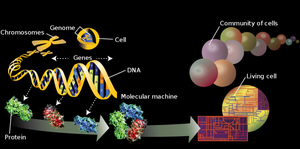
Genes are specific sequences of DNA located on chromosomes.
DNA is transcribed into messenger RNA (mRNA) in the nucleus.
mRNA is processed and transported to the cytoplasm, where ribosomes translate it into proteins.
The Central Dogma: DNA to RNA to Protein
The central dogma can be summarized as:
Transcription: DNA → RNA
Translation: RNA → Protein
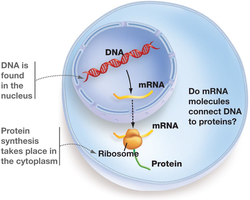
Example: The gene for hemoglobin is transcribed into mRNA, which is then translated into the hemoglobin protein in red blood cells.
Structure and Function of Genes
Organization of a Eukaryotic Gene
Every functional gene contains three main regions:
Promoter: Controls when and where transcription begins.
Transcribed Region: The DNA sequence that is copied into RNA.
Terminator: Signals the end of transcription.
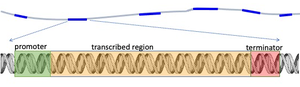
Definition: A gene is a region of DNA that carries information for a specific hereditary characteristic.
DNA and RNA: Structure and Differences
DNA and RNA are nucleic acids with distinct structural and functional differences:
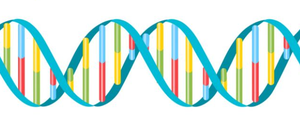
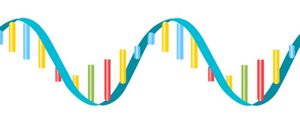
DNA: Double-stranded, contains deoxyribose sugar, bases are A, T, G, C.
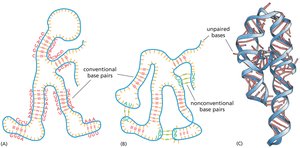
RNA: Single-stranded, contains ribose sugar, bases are A, U, G, C (uracil replaces thymine).
Additional info: RNA can fold into complex shapes, allowing it to perform various functions beyond serving as a messenger.
Transcription in Eukaryotes
Mechanism of Transcription
Transcription is the process of copying a DNA sequence into an RNA molecule. Only one DNA strand (the template strand) is used for RNA synthesis, and the resulting RNA is complementary to this strand.
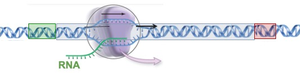
Initiation: Transcription factors bind to the promoter, recruiting RNA polymerase.
Elongation: RNA polymerase moves along the DNA, synthesizing RNA in the 5' to 3' direction.
Termination: The terminator sequence signals RNA polymerase to stop transcription and release the RNA transcript.
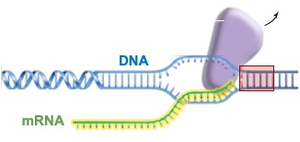
Key Enzyme: RNA polymerase catalyzes the synthesis of RNA from a DNA template.
Types of RNA Produced
mRNA (messenger RNA): Encodes the information for protein synthesis.
tRNA (transfer RNA): Brings amino acids to the ribosome during translation.
rRNA (ribosomal RNA): Forms the core of ribosome structure and catalyzes peptide bond formation.
microRNA and other small RNAs: Regulate gene expression (mainly in eukaryotes).
mRNA Processing in Eukaryotes
Steps of mRNA Processing
In eukaryotes, the primary RNA transcript (pre-mRNA) undergoes several modifications before becoming mature mRNA:
5' Capping: Addition of a modified guanine nucleotide to the 5' end for protection and ribosome recognition.
3' Polyadenylation: Addition of a poly-A tail (a string of adenine nucleotides) to the 3' end for stability and export.
Splicing: Removal of non-coding sequences (introns) and joining of coding sequences (exons).
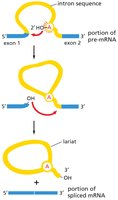
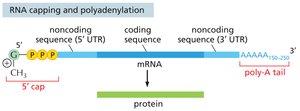
Importance: The 5' cap and 3' poly-A tail protect mRNA from degradation and assist in export from the nucleus and translation initiation.
Alternative Splicing
Alternative splicing allows a single gene to produce multiple protein variants by including or excluding different exons during mRNA processing.
Example: The human troponin T gene can generate different muscle protein isoforms through alternative splicing.
Additional info: This mechanism increases protein diversity without increasing the number of genes.
Translation: From mRNA to Protein
The Genetic Code
The genetic code consists of triplets of nucleotides (codons) on mRNA, each specifying a particular amino acid. There are 64 possible codons, but only 20 amino acids, so the code is degenerate (some amino acids are specified by more than one codon).
Start codon: AUG (methionine, M)
Stop codons: UAA, UAG, UGA (signal termination of translation)
Mechanism of Translation
Translation occurs in the cytoplasm on ribosomes and involves three main steps:
Initiation: The small ribosomal subunit binds to the mRNA near the start codon. The initiator tRNA (carrying methionine) pairs with the start codon. The large subunit then joins to form the complete ribosome.
Elongation: tRNAs bring amino acids to the ribosome, matching their anticodons to codons on the mRNA. Peptide bonds form between amino acids, elongating the polypeptide chain.
Termination: When a stop codon is reached, a release factor binds, causing the ribosome to release the completed polypeptide and dissociate from the mRNA.
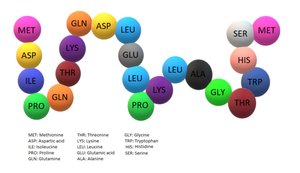
Roles of Different Types of RNA in Translation
mRNA: Provides the codon sequence to be translated.
tRNA: Matches amino acids to codons via its anticodon loop.
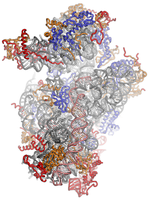
rRNA: Forms the catalytic core of the ribosome (functions as a ribozyme).
tRNA Anticodons: The anticodon region of tRNA pairs with the complementary codon on mRNA, ensuring the correct amino acid is added to the growing chain.
Ribozymes vs. Enzymes
Ribozymes: RNA molecules with catalytic activity (e.g., rRNA in the ribosome catalyzing peptide bond formation).
Enzymes: Typically proteins that catalyze biochemical reactions.
Additional info: The discovery of ribozymes demonstrated that RNA can have both informational and catalytic roles.
Predicting Protein Sequence from mRNA
To determine the amino acid sequence encoded by an mRNA, use the genetic code chart to translate each codon (set of three nucleotides) into its corresponding amino acid, starting at the AUG codon and ending at a stop codon.
Example: mRNA sequence: 5'-AUG-GCC-UAA-3' translates to Met-Ala (stop).
Polyribosomes
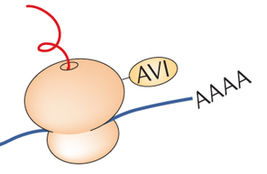
Multiple ribosomes can simultaneously translate a single mRNA molecule, forming a structure called a polyribosome or polysome. This increases the efficiency of protein synthesis.
Summary Table: Key Differences Between DNA and RNA
Feature | DNA | RNA |
|---|---|---|
Sugar | Deoxyribose | Ribose |
Strands | Double-stranded | Single-stranded |
Bases | A, T, G, C | A, U, G, C |
Location | Nucleus (and mitochondria/chloroplasts) | Nucleus, cytoplasm |
Function | Genetic information storage | Information transfer, catalysis, regulation |
