 Back
BackFrom Genes to Proteins: The Central Dogma, Mutations, and Human Genetic Variation
Study Guide - Smart Notes
 Tailored notes based on your materials, expanded with key definitions, examples, and context.
Communicating in Science
Understanding and Sharing Scientific Findings
Effective communication is essential in science, both for advancing research and for informing the public. Scientists use primary literature to share discoveries, while also translating complex findings for broader audiences.
Primary Literature: Original research articles where scientists report their own experimental data, methods, and results for the first time.
Peer Review: Most primary articles are published in peer-reviewed journals, ensuring quality and integrity.
Scientific Progress: Primary literature forms the foundation for further studies and review articles.



Format of a Scientific Paper
Scientific papers follow a standard structure to facilitate understanding and reproducibility:
Abstract: A concise summary of the entire paper.
Introduction: Presents the background and the specific research question.
Methods: Details the experimental procedures.
Results: Presents the data and findings.
Discussion/Conclusion: Interprets the results and their significance.
References: Lists sources cited in the paper.
Reading for Understanding
To efficiently read scientific papers, follow these steps:
Read the Abstract: Get a summary of the paper's purpose and findings.
Introduction: Understand the big problem and the specific question addressed.
Methods & Results: Focus on the main idea and key findings, not every detail.
Discussion/Conclusion: Identify the main answer and its real-world context.
From Genotype to Phenotype: The Central Dogma of Molecular Biology
The Central Dogma
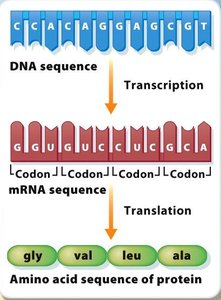
The central dogma of molecular biology describes the flow of genetic information from DNA to RNA to protein, explaining how genotype determines phenotype.
Transcription: The process by which a DNA sequence is copied into messenger RNA (mRNA) in the nucleus.
Translation: The process by which the mRNA sequence is used as a template to assemble amino acids into a protein at the ribosome in the cytoplasm.
Genetic Code and Protein Synthesis
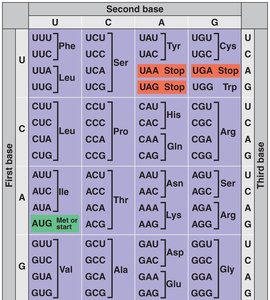
The genetic code is a set of rules by which information encoded in mRNA is translated into proteins. Each group of three nucleotides (codon) specifies a particular amino acid.
20 Amino Acids: The building blocks of proteins.
Codons: Triplets of nucleotides in mRNA; each codon codes for one amino acid.
Start Codon: AUG (codes for methionine) signals the start of translation.
Stop Codons: UAA, UAG, UGA signal the end of translation.
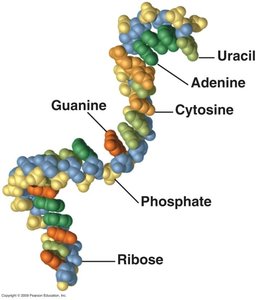
RNA vs. DNA: RNA uses uracil (U) instead of thymine (T).
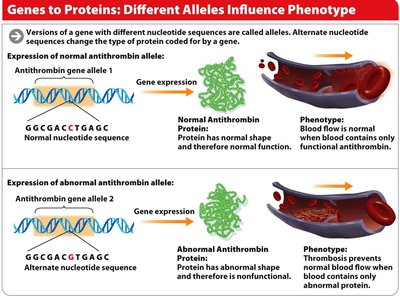
Example: Antithrombin Protein
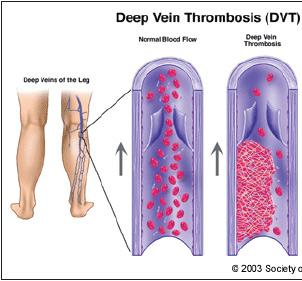
The antithrombin gene, located on chromosome 1, codes for a protein that prevents blood clots. Deficiency in this protein can lead to thrombosis.
Gene Location: Chromosome 1
Function: Prevents blood clots and maintains blood flow.
Clinical Relevance: Deficiency can cause deep vein thrombosis (DVT).
Human Genome and Chromosomes
Genome Structure
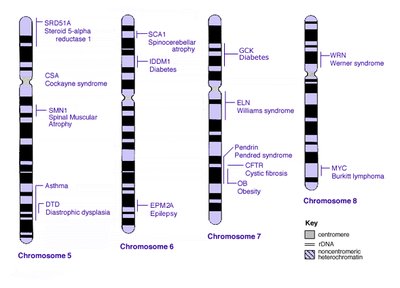
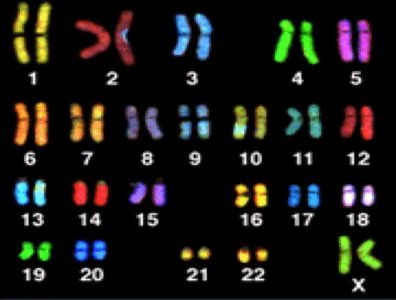
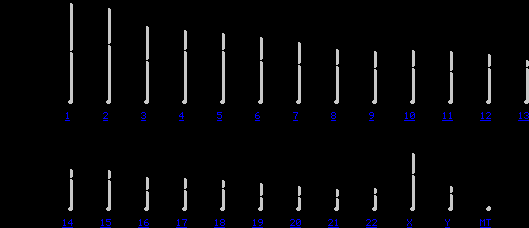
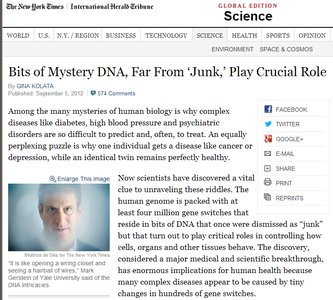
The human genome consists of 23 types of chromosomes, with a total size of approximately 3.16 billion base pairs and over 22,000 genes. Only about 1.5% of the genome codes for proteins.
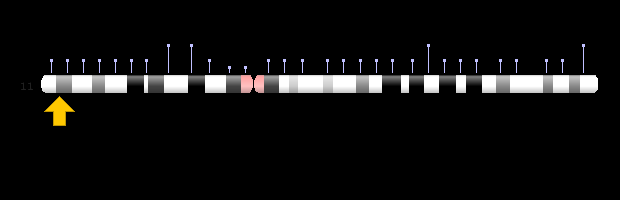
Chromosome Maps: Show the loci (locations) of genes of interest.
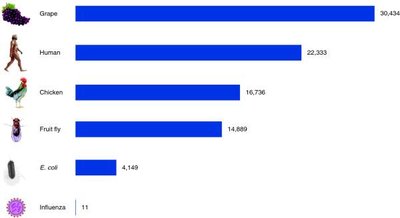
Gene Number Comparison: Humans have fewer genes than some other organisms, such as grapes.
Gene Expression: From DNA to Protein
Transcription and Translation Steps
Gene expression involves two main steps: transcription (DNA to mRNA) and translation (mRNA to protein). This process is universal among all organisms.
Transcription: DNA is used as a template to synthesize mRNA in the nucleus.
Translation: mRNA is decoded by ribosomes in the cytoplasm to build a specific protein.
Applying the Genetic Code
To determine which amino acid is encoded by a DNA sequence, first transcribe the DNA to mRNA, then use the genetic code table to translate the codon.
Example: DNA template 3'-CGA-5' is transcribed to mRNA 5'-GCU-3', which codes for alanine (Ala).
Mutations and Their Effects
Types of Small-Scale Mutations
Mutations are changes in the DNA sequence that can affect protein function. Small-scale mutations include point mutations (substitutions) and insertions or deletions (indels).
Substitutions: Replace one nucleotide pair with another.
Silent Mutations: Do not change the amino acid due to redundancy in the genetic code.
Missense Mutations: Change one amino acid to another, potentially altering protein function.
Nonsense Mutations: Change an amino acid codon to a stop codon, usually resulting in a nonfunctional protein.
Frameshift Mutations: Insertions or deletions that alter the reading frame, often leading to nonfunctional proteins.
Example: Sickle Cell Disease
Sickle cell disease is caused by a single nucleotide substitution in the β-globin gene, resulting in the replacement of glutamic acid (Glu) with valine (Val) in the hemoglobin protein. This mutation causes hemoglobin molecules to clump together, distorting red blood cells into a sickle shape.
Normal DNA: GAG (codes for Glu)
Mutant DNA: GTG (codes for Val)
Phenotype: Sickle-shaped red blood cells, leading to various health complications.
Genetic Variation and Disease Resistance
Sickle Cell and Malaria
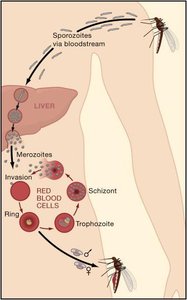
The sickle cell allele (HbS) provides a survival advantage in regions where malaria is prevalent. Heterozygotes (carriers) are more resistant to malaria, a phenomenon known as heterozygote advantage.
Malaria Parasite: Plasmodium falciparum infects red blood cells.
Heterozygote Advantage: Individuals with one normal and one sickle cell allele are less likely to suffer severe malaria.

Summary Table: Types of Small-Scale Mutations
Mutation Type | Description | Effect on Protein |
|---|---|---|
Silent | Substitution that does not change amino acid | No effect |
Missense | Substitution that changes one amino acid | May alter protein function |
Nonsense | Substitution that creates a stop codon | Usually nonfunctional protein |
Frameshift | Insertion/deletion that shifts reading frame | Usually nonfunctional protein |
Key Equations and Concepts
Transcription:
Translation:
Codon to Amino Acid: Use the genetic code table to translate mRNA codons to amino acids.
Conclusion
Understanding the flow of genetic information from DNA to protein, the impact of mutations, and the role of genetic variation in disease resistance is fundamental to modern biology. These concepts are central to genetics, molecular biology, and the study of human health and disease.
