 Back
Gene Expression: From DNA to Protein
Study Guide - Smart Notes
 Tailored notes based on your materials, expanded with key definitions, examples, and context.
Gene Expression
Overview of Gene Expression
Gene expression is the process by which information from a gene is used to synthesize a functional gene product, typically a protein. This process involves two main steps: transcription and translation.
Transcription: The synthesis of RNA molecules complementary to DNA.
Translation: The process in which RNA directs polypeptide (protein) synthesis.
Example: Most genes specify the structure of proteins, which are essential for cellular function.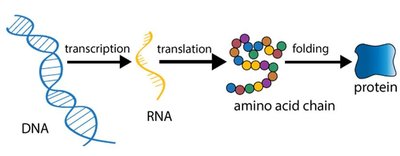
Ribonucleic Acid (RNA)
Structure and Differences from DNA
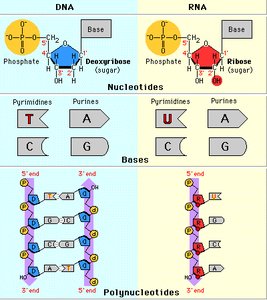
RNA is a polymer of nucleotides similar to DNA, but with key differences:
Single-stranded: RNA is usually single-stranded, unlike the double-stranded DNA.
Sugar: The sugar in RNA is ribose, while DNA contains deoxyribose.
Base: RNA uses uracil instead of thymine.
Example: Messenger RNA (mRNA) carries genetic information from DNA to the ribosome.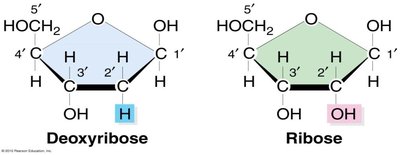
Transcription
Mechanism of Transcription
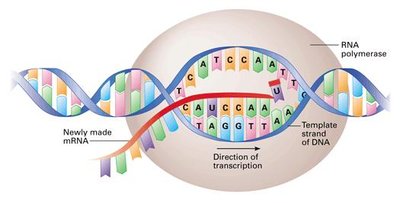
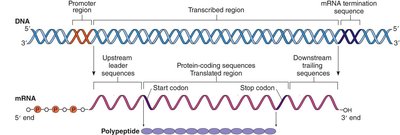
Transcription is the process of copying information from a DNA gene into an RNA form. It requires the enzyme RNA polymerase, which binds to the promoter region of the gene and synthesizes RNA until it reaches the terminator.
Promoter: Helps RNA polymerase locate the gene.
RNA Coding Sequence: The region where DNA is copied into RNA.
Termination: RNA polymerase stops at the terminator sequence.
Example: The sequence of RNA bases is determined by complementary base pairing with the DNA template strand.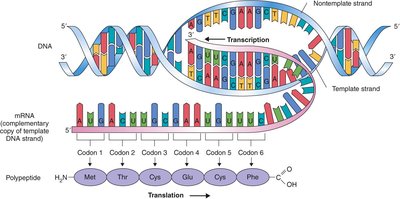
Types of RNA
Messenger RNA (mRNA) and Transfer RNA (tRNA)
All types of RNA are made through transcription, but only mRNA is translated into protein. The main types of RNA relevant to gene expression are:
Messenger RNA (mRNA): Carries information for making a protein.
Transfer RNA (tRNA): Folds into a specific shape, binds with one kind of amino acid, and carries it to the ribosome.
Example: tRNA molecules are essential for decoding mRNA codons during translation.
Translation
Process and Genetic Code
Translation uses the information in mRNA to specify the amino acid sequence of a polypeptide. The mRNA sequence is read in three-letter combinations called codons.
Codons: Each codon codes for one of 20 amino acids.
Start Codon: AUG (methionine) initiates translation.
Stop Codons: UAA, UAG, UGA terminate translation.
Reading Frame: Established by the start codon.
Example: The genetic code is universal and highly conserved among organisms.
tRNA and the Role of Anticodons
Function of tRNA in Translation
Each tRNA links with a specific amino acid and has a sequence of three bases (anticodon) that base pairs with a specific mRNA codon. The amino acids carried by tRNAs are linked in the order specified by the sequence of codons in the mRNA.
Anticodon: Three-base sequence on tRNA complementary to mRNA codon.
Amino Acid Attachment: Each tRNA carries a specific amino acid.
Example: tRNA ensures the correct amino acid is added to the growing polypeptide chain.
Ribosomes
Site of Translation
Ribosomes are the cellular structures where translation occurs. They are composed of two subunits (large and small) and attach to the 5′ end of mRNA, allowing tRNAs to attach sequentially to the codons.
Subunits: Large and small subunits work together to facilitate translation.
Peptide Bonds: Amino acids are joined by peptide bonds to form a polypeptide.
Example: Ribosomes travel along mRNA, assembling proteins.
Transcription and Translation Overview
Integration of Processes
Transcription and translation are tightly coordinated processes that ensure the accurate expression of genetic information. Only the coding region of mRNA is translated into protein.
Transcribed Region: Includes both coding and non-coding sequences.
Translated Region: Only the coding region is translated into protein.
Example: The central dogma of molecular biology describes the flow of genetic information from DNA to RNA to protein.
Summary Table: DNA vs RNA
Comparison of DNA and RNA
Feature | DNA | RNA |
|---|---|---|
Strands | Double-stranded | Single-stranded |
Sugar | Deoxyribose | Ribose |
Bases | A, T, C, G | A, U, C, G |
Function | Genetic storage | Protein synthesis |
Additional info: The notes include links to helpful videos for further study, but these are not summarized here as per instructions.
