 Back
BackGene Expression: From DNA to Protein
Study Guide - Smart Notes
 Tailored notes based on your materials, expanded with key definitions, examples, and context.
Gene Expression: From DNA to Protein
Introduction to Gene Expression
Gene expression is the process by which the information encoded in a gene is used to direct the synthesis of a functional gene product, typically a protein. This process is fundamental to the manifestation of inherited traits and the functioning of all living cells.
Genes are specific sequences of nucleotides in DNA that code for functional products.
Most genes encode proteins, which determine an organism's traits.
Changes in genes (mutations) can alter the proteins produced, affecting phenotype.
DNA Structure and the Human Genome
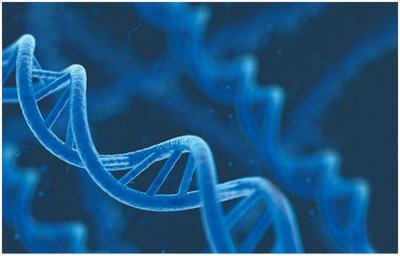
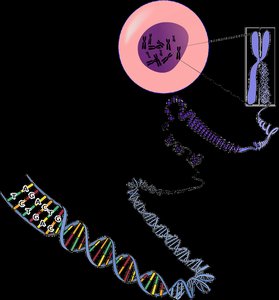
DNA (deoxyribonucleic acid) is a double-helical molecule composed of nucleotide subunits. The human genome contains approximately 3 billion base pairs, organized into 23 pairs of chromosomes, and encodes about 20,000–25,000 genes.
Each chromosome contains thousands of genes.
DNA is packaged into chromosomes within the cell nucleus.
The Central Dogma of Molecular Biology
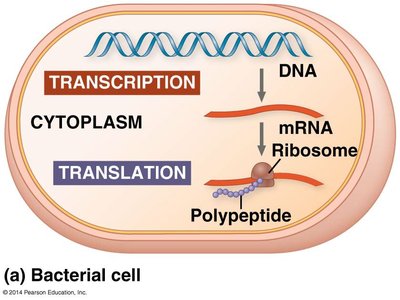
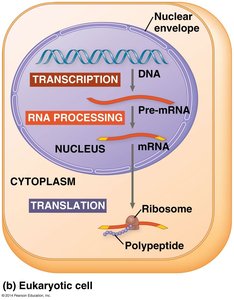
The central dogma describes the flow of genetic information within a biological system: DNA is transcribed into RNA, which is then translated into protein. This process is universal among all living organisms.
Transcription: Synthesis of RNA from a DNA template.
Translation: Synthesis of a protein from an mRNA template.

Transcription and Translation: Cellular Context
Transcription and translation occur in different cellular compartments depending on the organism:
In prokaryotes (e.g., bacteria), both processes occur in the cytoplasm.
In eukaryotes, transcription occurs in the nucleus, and translation occurs in the cytoplasm.
Overview of Gene Expression
Gene expression involves the conversion of genetic information from DNA to a functional protein product. The process includes several steps, each regulated to ensure proper cellular function.
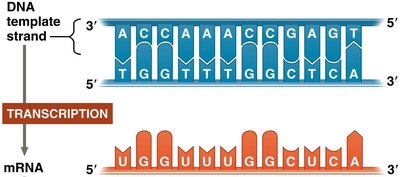
Template strand: The DNA strand used as a template for RNA synthesis.
Coding strand: The DNA strand whose sequence matches the RNA (except T is replaced by U).
The Genetic Code
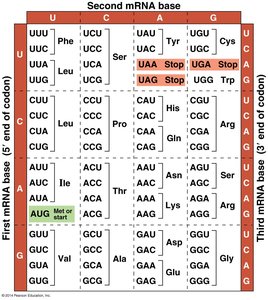
The genetic code is the set of rules by which the nucleotide sequence of mRNA is translated into the amino acid sequence of a protein. It is composed of codons, which are triplets of nucleotides.
There are 4 nucleotides in DNA/RNA and 20 amino acids in proteins.
There are 64 possible codons (43 = 64).
The code is redundant (more than one codon can specify the same amino acid) but not ambiguous (each codon specifies only one amino acid).
The code is nearly universal among all organisms.
Transcription: From DNA to RNA
During transcription, RNA polymerase synthesizes a complementary RNA strand from a DNA template. The RNA sequence is determined by base-pairing rules:
A pairs with U (in RNA), T pairs with A, C pairs with G, and G pairs with C.
The resulting mRNA is complementary to the DNA template strand and nearly identical to the coding strand (except U for T).
Example: For the DNA template 3′–ATTGCGTAC–5′, the RNA sequence is 5′–UAACGCAUG–3′.
Translation: From mRNA to Protein
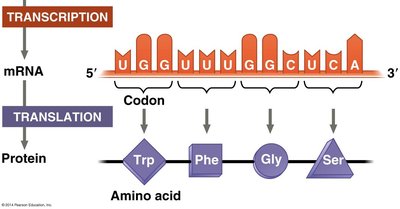
Translation is the process by which ribosomes synthesize proteins using the sequence of codons in mRNA. Each codon specifies a particular amino acid, and the sequence of codons determines the sequence of amino acids in the protein.
Start codon: AUG (methionine) signals the start of translation.
Stop codons: UAA, UAG, UGA signal the end of translation.
Properties of the Genetic Code
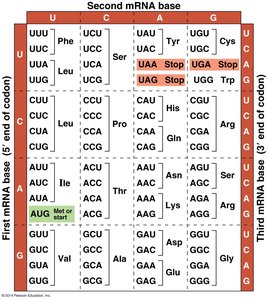
Redundancy (Degeneracy): Most amino acids are encoded by more than one codon.
No ambiguity: Each codon specifies only one amino acid.
Universality: The genetic code is nearly the same in all organisms.
Mutations and Their Effects
Mutations are changes in the DNA sequence that can affect gene expression and protein function. They can result from errors in DNA replication or external factors such as radiation.
Silent mutations: Do not change the amino acid sequence due to redundancy in the genetic code.
Missense mutations: Change one amino acid in the protein.
Nonsense mutations: Introduce a premature stop codon, truncating the protein.
Bioinformatics
Bioinformatics is the application of computational tools to analyze and interpret biological data, such as DNA and protein sequences. It is essential for understanding gene structure, function, and evolution.
Used to identify genes, predict protein structure, and study genetic variation.
Summary Table: Key Features of the Genetic Code
Feature | Description |
|---|---|
Redundancy | More than one codon can specify the same amino acid |
No ambiguity | Each codon specifies only one amino acid |
Universality | Genetic code is nearly universal among organisms |
Start codon | AUG (methionine) |
Stop codons | UAA, UAG, UGA |
Key Equations and Concepts
Number of possible codons:
Central Dogma:
Additional info: The notes above expand on the original content by providing definitions, examples, and context for each step in gene expression, as well as a summary table and relevant equations for exam preparation.
