 Back
BackChapter 17 study guide
Study Guide - Smart Notes
 Tailored notes based on your materials, expanded with key definitions, examples, and context.
Gene Expression: From Gene to Protein
Overview of Gene Expression
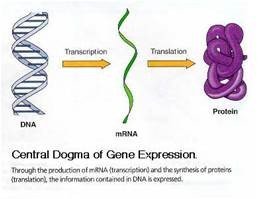
Gene expression is the process by which information encoded in a gene is used to direct the synthesis of a protein. This process involves two main stages: transcription and translation. The central dogma of molecular biology describes the flow of genetic information from DNA to RNA to protein.
Transcription: The synthesis of messenger RNA (mRNA) from a DNA template.
Translation: The synthesis of a polypeptide (protein) using the information in the mRNA sequence.
Types of RNA
Three major types of RNA are involved in gene expression, each with a distinct role:
Messenger RNA (mRNA): Carries genetic information from DNA in the nucleus to ribosomes in the cytoplasm.
Ribosomal RNA (rRNA): Combines with proteins to form ribosomes, the site of protein synthesis.
Transfer RNA (tRNA): Brings amino acids to the ribosome and matches them to the coded mRNA message.
Structure of RNA
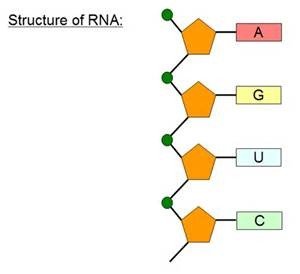
RNA differs from DNA in several key ways:
Contains the sugar ribose instead of deoxyribose.
Uses the base uracil (U) in place of thymine (T).
Is typically single-stranded and does not form a double helix.
Transcription
Mechanism of Transcription
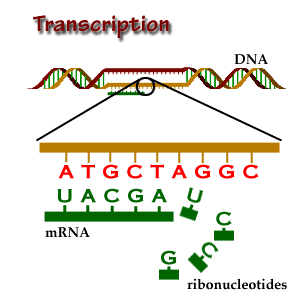
During transcription, RNA polymerase separates the two strands of DNA and synthesizes a complementary RNA strand using one DNA strand as a template. Only one DNA strand (the template strand) is used for RNA synthesis.
RNA sequence is complementary to the DNA template strand.
Transcription occurs in the nucleus of eukaryotic cells.
Processing of mRNA in Eukaryotes
Before mRNA can be translated, it undergoes several modifications:
Splicing: Removal of non-coding regions (introns); coding regions (exons) are joined together.
5’ Cap: Addition of a modified guanine nucleotide to the 5’ end.
Poly-A Tail: Addition of a string of adenine nucleotides to the 3’ end.
The mature mRNA exits the nucleus and enters the cytoplasm for translation.
The Genetic Code
Codons and the Triplet Code
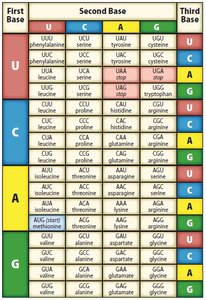
The genetic code is read in sets of three nucleotides called codons. Each codon specifies a particular amino acid or a stop signal for translation.
There are 64 possible codons (43 combinations).
61 codons code for amino acids; 3 are stop codons.
The code is redundant (most amino acids have more than one codon) and universal (shared by almost all organisms).
The start codon (AUG) codes for methionine and signals the start of translation.
First Base | Second Base | Third Base |
|---|---|---|
U | C | A |
G | U | C |
Translation
Overview of Translation
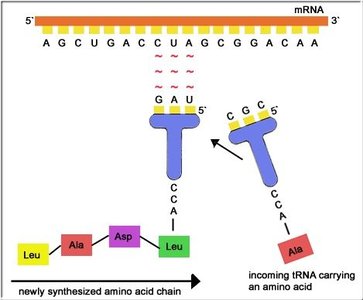
Translation is the process by which the sequence of bases in mRNA is converted into the sequence of amino acids in a protein. This occurs in the cytoplasm at the ribosome.
tRNA molecules bring specific amino acids to the ribosome.
Each tRNA has an anticodon that pairs with a complementary mRNA codon.
The ribosome moves along the mRNA, catalyzing the formation of peptide bonds between amino acids.
Ribosomes and rRNA
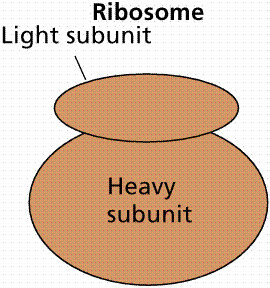
Ribosomes are composed of rRNA and proteins and consist of two subunits (large and small). They provide binding sites for mRNA and tRNA and catalyze peptide bond formation.
Ribosomes move along the mRNA, facilitating the sequential addition of amino acids.
Translation occurs in three main steps: initiation, elongation, and termination.
Steps of Translation
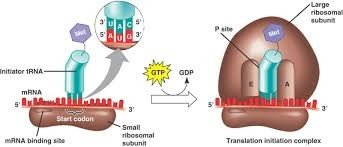
1. Chain Initiation
The small ribosomal subunit binds to mRNA and the initiator tRNA (carrying methionine). The large subunit then joins to form the complete initiation complex.
2. Chain Elongation
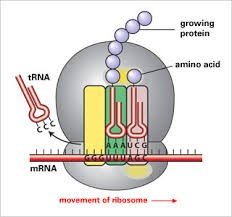
Amino acids are added one by one to the growing polypeptide chain. The ribosome can accommodate two tRNAs at a time, allowing peptide bonds to form between adjacent amino acids.
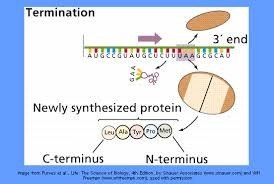
3. Chain Termination
When a stop codon is reached, translation ends. The newly synthesized polypeptide is released, and the ribosomal subunits dissociate.
Importance of Precision in Gene Expression
Accurate gene expression is essential for proper cellular function. Proteins are responsible for a wide range of cellular activities, including catalyzing metabolic reactions, forming cellular structures, and regulating gene expression. Errors in gene expression can lead to mutations, which may cause genetic disorders or diseases.
Gene mutation: A change in the sequence of bases within a gene.
Mutations can be caused by errors in DNA replication, exposure to mutagens (e.g., radiation, chemicals), or failures in DNA repair mechanisms.
Gene editing technologies (e.g., CRISPR) can be used to correct genetic errors.
Types of Mutations
Missense mutation: Substitution that changes one amino acid in the protein.
Nonsense mutation: Substitution that creates a premature stop codon.
Frameshift mutation: Insertion or deletion that shifts the reading frame, altering downstream amino acids.
Duplication: Repetition of a segment of DNA, leading to extra amino acids in the protein.
Causes of Mutations
Errors in replication: Rare due to proofreading by DNA polymerase.
Mutagens: Environmental factors such as radiation and chemicals.
DNA repair enzymes: Constantly monitor and repair DNA to maintain genetic integrity.
Summary Table: Types of RNA and Their Functions
Type of RNA | Function |
|---|---|
mRNA | Carries genetic code from DNA to ribosome |
rRNA | Forms ribosomes, the site of protein synthesis |
tRNA | Brings amino acids to ribosome, matches codons with anticodons |
Additional info: The above notes expand on the original content with definitions, examples, and academic context to ensure completeness and clarity for exam preparation.
