 Back
BackGeneral Health and Management of Small Ruminants: Sheep and Goats
Study Guide - Smart Notes
 Tailored notes based on your materials, expanded with key definitions, examples, and context.
General Health & Management of Small Ruminants
Introduction
Small ruminants, including sheep and goats, require specialized management to maintain optimal health and productivity. This guide covers essential aspects of their health, disease prevention, body condition scoring, and common diseases, providing foundational knowledge for students in animal science and veterinary studies.
Reproductive Management
Seasonal Breeding in Sheep
Sheep are short-day breeders: Their estrous cycles become active as daylight decreases, typically in the fall.
Estrous cycle and gestation: Sheep enter estrus, mate, and gestate for approximately 148 days before lambing.
Annual production cycle: Management practices vary by season to optimize reproductive success and lamb survival.
Vital Signs and Health Assessment
Normal Vital Signs
Sheep: Temperature 100.9–103.8°F, Respiration 12–15 breaths/min, Heart rate 70–80 bpm.
Goats: Temperature 101.3–103.5°F, Respiration 12–24 breaths/min, Heart rate 70–80 bpm.
Signs of Illness
Isolation from the flock
Unusual eating habits or anorexia
Depression and lethargy
Scouring (diarrhea)
Abnormal vocalization
Teeth grinding (indicative of pain)
Disease Prevention and Biosecurity
Biosecurity Measures
Biosecurity is critical to prevent the introduction and spread of infectious diseases in sheep and goat operations.
Restrict visitor access and monitor wild/domestic animal contact.
Isolate new animals for 30–60 days before introducing them to the main flock.
Prevent disease transmission via vehicles, airborne particles, and contaminated feed or water.
Maintain a closed flock when possible to minimize risk.

Body Condition Scoring (BCS)
BCS System (1–5 Scale)
Body condition scoring is a hands-on method to assess the fat and muscle reserves of sheep and goats, which is essential for managing nutrition and health throughout the production cycle.
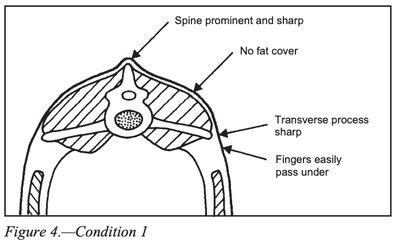
1: Emaciated – Spinous and transverse processes are sharp and prominent; no fat cover.
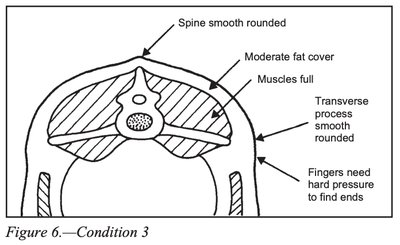
3–3.5: Ideal for breeding – Smooth, rounded processes; moderate fat cover.
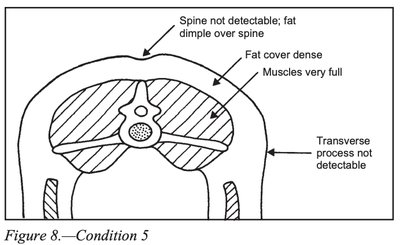
5: Obese – Spinous and transverse processes not detectable; very thick fat cover.
Production Stage | Optimum BCS |
|---|---|
Breeding | 3–4 |
Early–Mid Gestation | 2.5–4 |
Lambing (singles) | 3.0–3.5 |
Lambing (twins) | 3.5–4 |
Weaning | 2 or higher |
BCS Condition Illustrations
Condition 1 – Emaciated: Spinous processes are sharp and prominent; no fat cover; fingers easily pass under transverse processes.
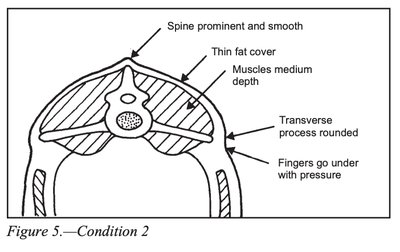
Condition 2 – Thin: Spinous processes are sharp and prominent; thin fat cover; transverse processes rounded; fingers go under with pressure.
Condition 3 – Average: Spinous processes smooth and rounded; moderate fat cover; fingers need hard pressure to find ends.
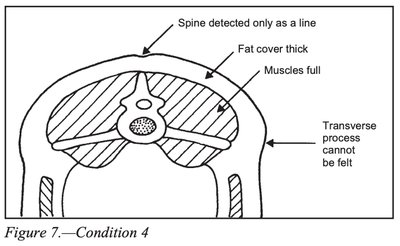
Condition 4 – Fat: Spinous process detected only as a line; thick fat cover; transverse process cannot be felt.
Condition 5 – Obese: Spine not detectable; fat dimple over spine; very full muscles; transverse process not detectable.
Lameness and Hoof Diseases
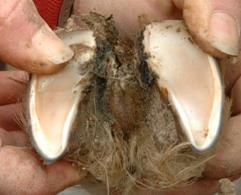
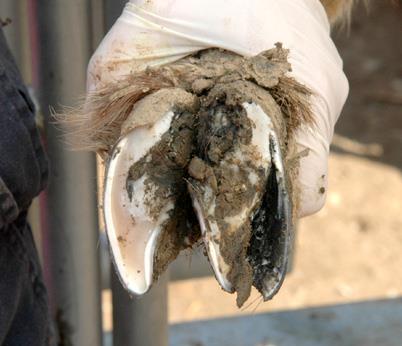
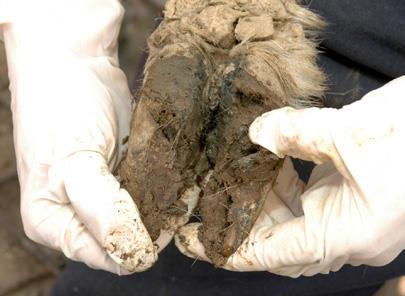
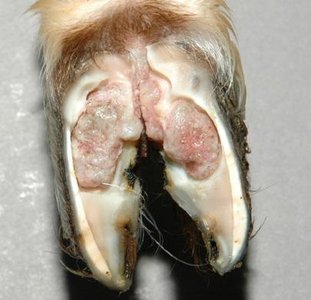
Footrot and Foot Scald
Footrot: Caused by Fusobacterium necrophorum and Dichelobacter nodosus. Highly contagious and costly; requires quarantine in some states.
Foot Scald: Caused by Fusobacterium necrophorum alone; associated with wet, muddy conditions and inter-digital irritation.
Both conditions can progress from inflammation between the toes to severe hoof damage.
Vaccination Programs
Core Vaccines
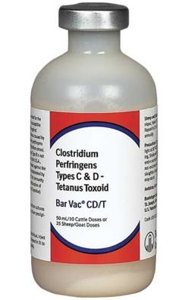
Clostridium perfringens Types C & D: Prevents enterotoxemia (overeating disease).
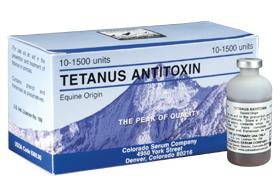
Tetanus: Caused by Clostridium tetani, often following tail docking or castration.
Vaccination Protocol
If ewes/does have never been vaccinated or it has been more than 1 year: vaccinate twice with CD&T, with the last dose 20 days before lambing/kidding.
Annual booster: 30 days before parturition.
Lambs/kids: Vaccinate at 6–8 weeks, booster 2–4 weeks later.
Provides passive immunity to offspring via colostrum for 5–8 weeks.

Abortive Diseases and Vaccines
Common Causes of Abortion
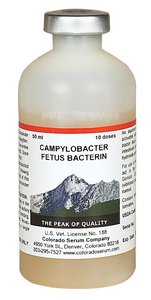
Campylobacter: Causes late pregnancy abortions or stillbirths; treat with tetracycline or sulfa drugs; vaccination recommended if herd history exists.
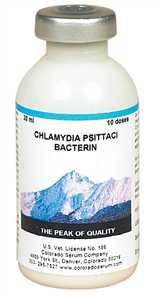
Chlamydia: Causes abortions in the last 2–3 weeks of gestation; treat with tetracycline; vaccination available.
Toxoplasmosis: Protozoan parasite from cats/rodents; causes early resorption or late abortion; control rodents/cats and use coccidiostats.
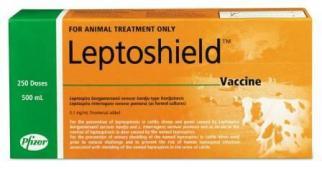
Leptospirosis: More common in goats; associated with standing water; vaccination recommended if herd history exists.
Skin Diseases
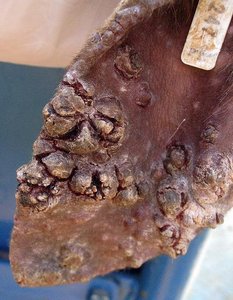
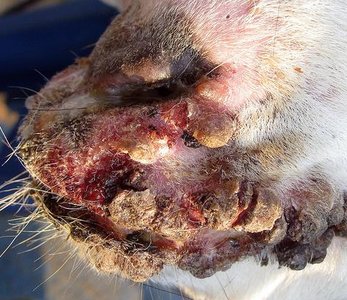
Soremouth (Contagious Ecthyma)
Caused by a pox virus; zoonotic (can infect humans).
Course: 1–4 weeks; pustules, scabs, and healing over 17–21 days.
Scabs are highly contagious; young lambs are more susceptible.
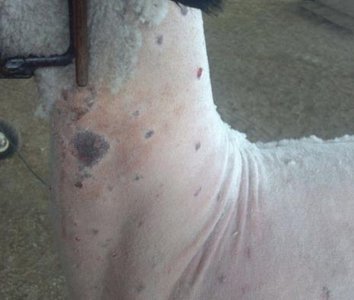
Ringworm (Club Lamb Fungus)
Fungal infection; increased by close shearing and frequent washing (removes protective lanolin).
Highly contagious to animals and humans; symptoms appear 1–4 weeks after exposure.
Treatment: Shear affected area, clean with soapy water, apply topical antifungals (e.g., Nolvasan, lime sulfur).
Other Common Diseases and Disorders
Respiratory Problems (Pneumonia)
Common and serious; triggered by stress (weaning, transport, weather changes, poor air quality).
Symptoms: Fever (>104°F), moist/painful cough, dyspnea, anorexia, depression.
Caseous Lymphadenitis (CL)
Chronic disease caused by Corynebacterium pseudotuberculosis.
Abscesses in lymph nodes and internal organs; zoonotic risk via raw milk or carcasses.
Symptoms: Weight loss, decreased production, anemia, fever.
Pregnancy Toxemia (Ketosis)
Occurs in late gestation when energy intake is insufficient for dam and fetus.
Prevention: Manage weight, adjust feed based on number of offspring, provide high-energy grains and quality hay in third trimester.
Ruminal Lactic Acidosis
Caused by grain overload; rapid fermentation lowers rumen pH, leading to discomfort, anorexia, and diarrhea.
Prevention: Gradually introduce high-grain diets over 10–14 days; provide dietary buffers (limestone, calcium carbonate).
Copper Toxicity
Sheep are highly sensitive to copper; excess accumulates in the liver and can be fatal.
Ensure feed and minerals are formulated specifically for sheep (not cattle or goats).
Grass Tetany (Magnesium Deficiency)
Acute onset; symptoms include rigid limbs, staggering, twitching facial muscles.
Caused by low magnesium in lush spring grass or mineral imbalances; treat with commercial magnesium supplements.
Rectal Prolapse
Common in show/feedlot lambs; associated with short tail docking, high-grain diets, and increased straining.
May require surgical intervention; recurrence is common.
Scrapie
Degenerative, fatal prion disease of sheep (rare in goats); spread by birth fluids.
Symptoms: Behavior changes, unsteady gait, intense scratching, weight loss, death in 1–6 months.
National eradication program has reduced incidence; genetic testing (codon 171/136) identifies susceptibility (RR = resistant, QR = carrier, QQ = susceptible).
Nutritional Management
Stage-Specific Nutritional Needs
Requirements vary by production stage: breeding, pregnancy, lactation, maintenance.
Overweight animals are more prone to health issues than leaner ones.
General Management Tips
Implement a comprehensive vaccination program.
Control internal and external parasites.
Maintain biosecurity and quarantine new animals.
Provide adequate nutrition and clean water.
Ensure clean, well-ventilated housing.
Establish a working relationship with a veterinarian for routine and emergency care.
Additional info: This guide integrates core concepts from animal science and veterinary medicine, focusing on practical management and disease prevention in small ruminants. It is suitable for students preparing for exams or seeking a concise reference for sheep and goat health management.
