 Back
BackGenetic Control and DNA Technology: Regulation, Expression, and Applications
Study Guide - Smart Notes
 Tailored notes based on your materials, expanded with key definitions, examples, and context.
Genetic Control of Gene Expression
Prokaryotic Gene Regulation: Operons
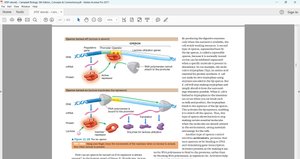
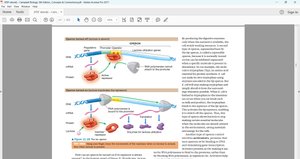
Gene regulation in prokaryotes is primarily achieved through operons, which are clusters of genes regulated as a single unit. This allows bacteria to respond efficiently to environmental changes by turning genes on or off as needed.
Operon: A group of genes with related functions, controlled by regulatory DNA sequences.
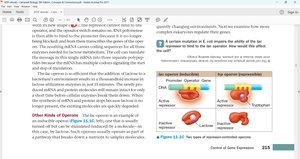
Lac Operon: An inducible operon in E. coli that is activated in the presence of lactose. It controls the expression of three genes required for lactose metabolism.
Gene Expression: The process by which information from a gene is used to synthesize a functional gene product (usually a protein).
Inducible vs. Repressible Operons: Inducible operons (like lac) are usually off but can be turned on; repressible operons (like trp) are usually on but can be turned off when their product is abundant.
Example: The lac operon is off when lactose is absent and on when lactose is present.
Chromosome Structure and Epigenetic Regulation
Gene expression in eukaryotes is influenced by the structure of chromatin and chemical modifications to DNA and histones. These modifications can either promote or inhibit transcription.
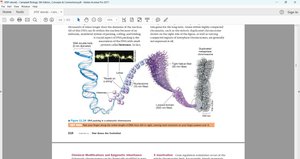
DNA Packing: Highly compacted chromatin blocks access to transcription machinery, silencing gene expression.
Histone Modification: Methylation leads to tighter packing and gene silencing; acetylation loosens packing and promotes expression.
DNA Methylation: Addition of methyl groups to cytosine residues silences genes and can be inherited (epigenetic inheritance).
Epigenetic Inheritance: Transmission of gene expression patterns not involving changes in DNA sequence.
X Chromosome Inactivation
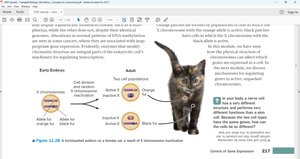
In female mammals, one X chromosome in each somatic cell is randomly inactivated, resulting in mosaic expression of X-linked genes. This is achieved through DNA and histone methylation.
X Inactivation: Ensures dosage compensation between males and females.
Example: Mosaic fur color in female cats due to X inactivation.
Eukaryotic Transcriptional Control
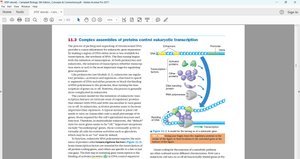
Gene expression in eukaryotes is regulated by complex assemblies of proteins, including activators and repressors, which interact with DNA to control the binding of RNA polymerase.
Regulatory Proteins: Bind to enhancers or silencers to modulate transcription.
Housekeeping Genes: Genes that are always active for essential cellular functions.
Alternative RNA Splicing
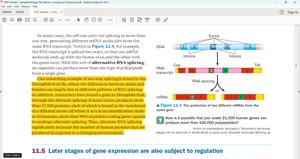
Alternative splicing allows a single gene to produce multiple protein variants by rearranging exons during mRNA processing. This increases protein diversity and adaptability.
Alternative Splicing: Different combinations of exons are joined to form distinct mRNAs.
Example: In humans, over 90% of protein-coding genes undergo alternative splicing.
Post-Transcriptional Regulation
Gene expression can be regulated after transcription, including mRNA stability, translation initiation, and post-translational protein processing.
mRNA Stability: The longer an mRNA persists, the more protein can be produced.
Translation Initiation: Certain conditions (e.g., presence of heme in RBCs) are required for translation.
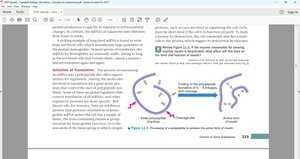
Protein Processing: Many proteins require modifications after translation to become functional.
Noncoding RNAs and Gene Regulation
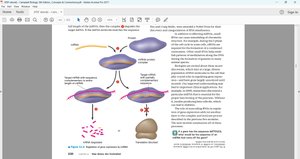
Noncoding RNAs, such as microRNAs (miRNAs) and small interfering RNAs (siRNAs), play crucial roles in regulating gene expression by binding to mRNAs and preventing their translation.
miRNAs: Short RNAs (~22 bases) that inhibit translation by binding to target mRNAs.
siRNAs: Similar to miRNAs, involved in gene silencing.
"Junk DNA": Much of the genome is transcribed into noncoding RNAs with regulatory functions.
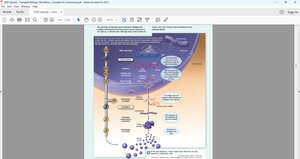
Review of Eukaryotic Gene Expression
A comprehensive overview of the stages and mechanisms of gene expression regulation in eukaryotes, including transcriptional, post-transcriptional, and epigenetic controls.
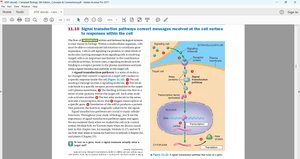
Signal Transduction Pathways
Cell Surface to Cellular Response
Signal transduction pathways convert external signals received at the cell surface into specific cellular responses, often involving cascades of molecular interactions.
Signal Transduction: The process by which a cell responds to external stimuli via receptor-mediated pathways.
Example: Hormone binding triggers a cascade leading to gene expression changes.
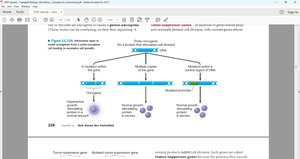
The Genetic Basis of Cancer
Mutations and Cell Division
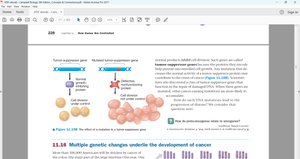
Cancer arises from mutations in genes that regulate cell division, including proto-oncogenes and tumor-suppressor genes.
Proto-oncogene: Normal gene promoting cell division; mutation converts it to an oncogene, causing uncontrolled growth.
Tumor-suppressor Gene: Inhibits cell division; mutation leads to loss of control and cancer development.
DNA Technology and Biotechnology
Gene Cloning and Recombinant DNA
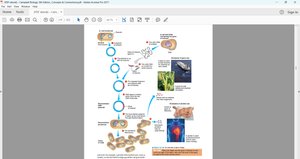
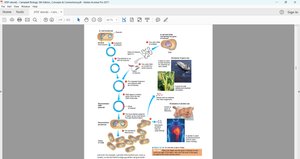
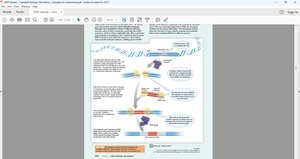
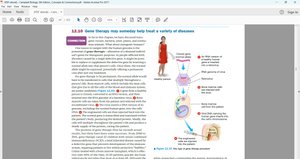
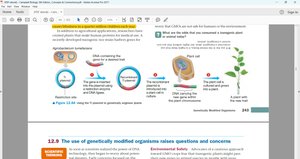
Gene cloning involves isolating a gene of interest (GOI) using restriction enzymes and inserting it into a plasmid for propagation in bacteria. This enables large-scale production and study of genes and their products.
Restriction Enzymes: Cut DNA at specific sequences.
DNA Ligase: Seals DNA fragments together.
Plasmid: Circular DNA used as a vector for gene cloning.
Polymerase Chain Reaction (PCR)
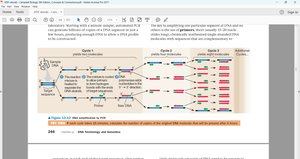
PCR is a technique used to amplify specific DNA sequences, enabling cloning, analysis, and diagnostics.
Primers: Short DNA sequences designed to target the GOI.
Cycles: Repeated heating and cooling steps to replicate DNA.
CRISPR-Cas9 Genome Editing
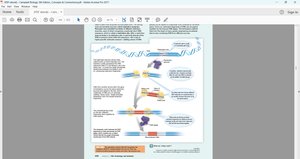
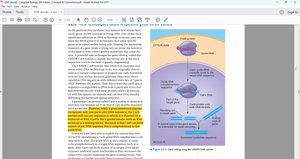
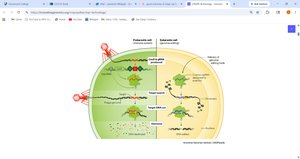
CRISPR-Cas9 is a revolutionary technology for precise DNA editing, adapted from the prokaryotic immune system. Scientists design guide RNAs to target specific DNA sequences for modification.
Guide RNA (gRNA): Directs Cas9 to the target DNA.
Applications: Gene therapy, crop improvement, disease modeling.
Applications of Biotechnology
Healthcare: Pharmaceuticals, vaccines, gene therapy, diagnostics.
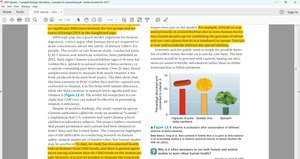
Agriculture: Improved nutrition, pest resistance, drought tolerance (e.g., Golden Rice).
Industrial: Enzymes for sustainable manufacturing, biofuels, bioplastics.
Environmental: Bioremediation for pollution cleanup.
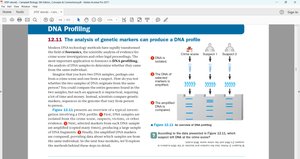
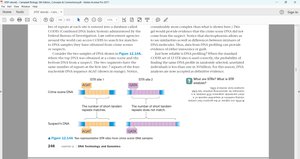
Law Enforcement & Genealogy: DNA profiling for identification and ancestry.
Summary Table: Types of Operons
Operon Type | Regulation Mechanism | Example |
|---|---|---|
Inducible | Usually off, turned on by inducer | Lac operon |
Repressible | Usually on, turned off by repressor | trp operon |
Summary Table: Biotechnology Applications
Category | Application |
|---|---|
Healthcare | Pharmaceuticals, gene therapy, diagnostics |
Agriculture | Improved crops, pest resistance, Golden Rice |
Industrial | Enzymes, biofuels, bioplastics |
Environmental | Bioremediation, pollution cleanup |
Law Enforcement | DNA profiling, forensic analysis |
Additional info: Academic context was added to clarify regulatory mechanisms, biotechnology applications, and epigenetic inheritance.
