 Back
BackGenetic Diseases and DNA Biotechnology: Structure, Function, and Applications
Study Guide - Smart Notes
 Tailored notes based on your materials, expanded with key definitions, examples, and context.
Cell Structure and Function
Major Cell Types and Their Functions
Cells are the fundamental units of life, and their structure is closely related to their function. Different cell types have specialized shapes and internal structures that enable them to perform unique roles in organisms.
Animal cells: Specialized for movement, communication, and complex functions (e.g., muscle cells, nerve cells).
Plant cells: Have cell walls and chloroplasts for photosynthesis.
Microorganisms: Include protists, fungi, and algae, each with unique adaptations.
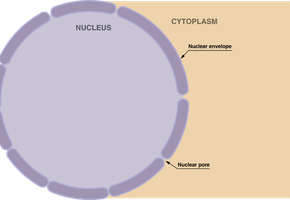
The three major regions of a typical eukaryotic cell are the nucleus, cytoplasm, and plasma membrane.

Cell Nucleus and Chromatin Structure
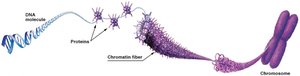
The nucleus houses the cell's genetic material in the form of chromosomes. DNA molecules are wrapped around proteins to form fibers called chromatin. These fibers further fold and condense to form chromosomes during cell division.
DNA: Structure and Function
Nucleotide Structure
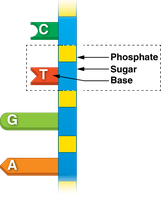
DNA is a polymer made up of repeating units called nucleotides. Each nucleotide consists of three components:
A phosphate group
A deoxyribose sugar
A nitrogenous base (adenine, guanine, cytosine, or thymine)
DNA Double Helix and Base Pairing
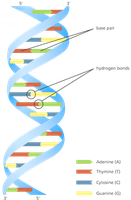
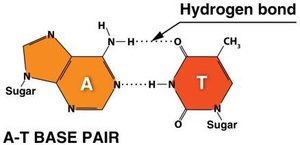
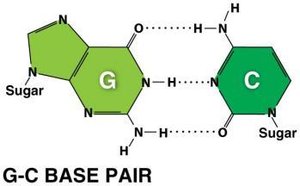
DNA forms a double helix, with two strands held together by hydrogen bonds between complementary bases. The base pairing rules are:
Adenine (A) pairs with Thymine (T)
Guanine (G) pairs with Cytosine (C)
DNA Replication
Semi-Conservative Replication
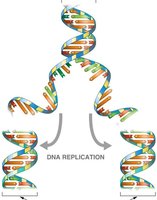
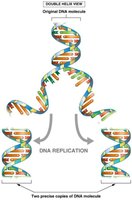
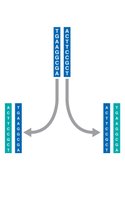
DNA replication is the process by which a cell duplicates its chromosomes before cell division. The process is semi-conservative, meaning each new DNA molecule consists of one original (parental) strand and one newly synthesized strand.
Enzymes unwind the double helix and separate the strands.
Each parental strand serves as a template for the synthesis of a new complementary strand.
Mutations and Genetic Variation
Types and Effects of Mutations
A mutation is any change in the nucleotide sequence of DNA. Mutations can occur by replacing, deleting, or adding nucleotides, and may affect coding (genes) or non-coding regions. While most mutations are neutral or harmful, some provide genetic variation that drives evolution.
Point mutation: Change of a single nucleotide.
Insertion/deletion: Addition or loss of nucleotides, which can shift the reading frame (frameshift mutation).

Central Dogma: DNA to Protein
Overview of the Central Dogma
The central dogma of molecular biology describes the flow of genetic information: DNA is transcribed into RNA, which is then translated into protein. Proteins carry out most cellular functions.
Transcription: DNA is used as a template to synthesize messenger RNA (mRNA).
Translation: mRNA is decoded by ribosomes to assemble amino acids into a protein.


RNA Structure and Differences from DNA
RNA (ribonucleic acid) is a nucleic acid similar to DNA but with key differences:
Single-stranded (not a double helix)
Sugar is ribose instead of deoxyribose
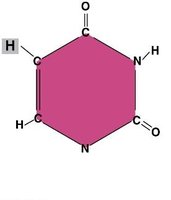
Uracil (U) replaces thymine (T)
DNA Biotechnology
Polymerase Chain Reaction (PCR)
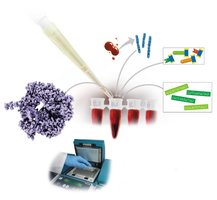
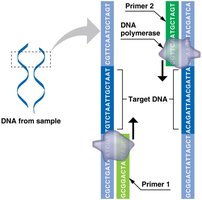
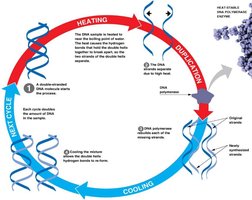
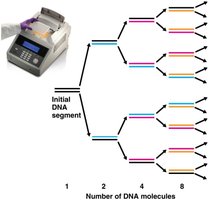
The polymerase chain reaction (PCR) is a technique used to amplify specific DNA segments in vitro. It allows scientists to generate millions of copies of a DNA sequence from a small sample.
Ingredients: DNA sample, primers, DNA polymerase, nucleotides
Steps: Denaturation (heating), annealing (cooling and primer binding), extension (DNA synthesis)
Each cycle doubles the amount of DNA

Gel Electrophoresis
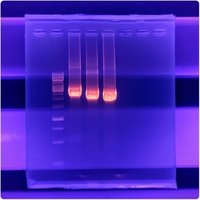
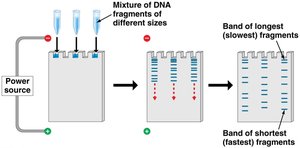
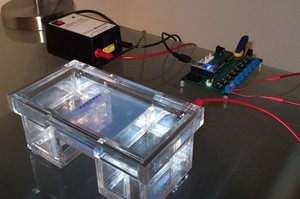
Gel electrophoresis is a laboratory technique used to separate DNA fragments by size. DNA samples are loaded into a gel matrix and an electric current is applied, causing fragments to migrate at different rates.
Smaller fragments move faster and farther than larger ones.
Used to analyze PCR products, DNA profiling, and genetic testing.
DNA Profiling and Forensic Applications
Short Tandem Repeats (STRs) and DNA Profiling
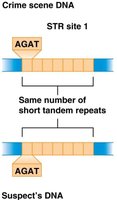
DNA profiling uses variations in short tandem repeats (STRs) to identify individuals. STRs are short, repeating sequences of DNA found at specific locations in the genome. The number of repeats varies among individuals, making STR analysis a powerful tool in forensics and paternity testing.
STRs are analyzed using PCR and gel electrophoresis.
DNA profiles can match crime scene evidence to suspects with high certainty.

Summary Table: DNA, RNA, and Protein Synthesis
Feature | DNA | RNA | Protein |
|---|---|---|---|
Structure | Double helix | Single strand | Polypeptide chain |
Sugar | Deoxyribose | Ribose | — |
Bases | A, T, G, C | A, U, G, C | 20 amino acids |
Function | Stores genetic information | Transfers information, catalysis | Cellular structure and function |
Additional info: This summary integrates foundational concepts from cell biology, molecular genetics, and biotechnology, providing a comprehensive overview suitable for college-level biology students.
