 Back
BackGenetics: Mendelian and Complex Inheritance, Genetic Disorders, and Epigenetics
Study Guide - Smart Notes
 Tailored notes based on your materials, expanded with key definitions, examples, and context.
Genetics: The Study of Inheritance
Introduction to Genetics
Genetics is the branch of biology that studies genes, heredity, and variation in living organisms. It seeks to understand how traits are passed from parents to offspring and the molecular mechanisms underlying these processes.
Gene: A segment of DNA that codes for a protein or functional RNA.
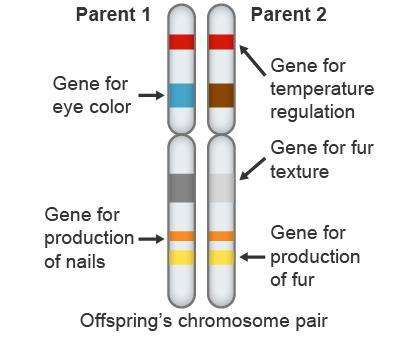
Allele: Alternative versions of a gene found at the same locus on homologous chromosomes.
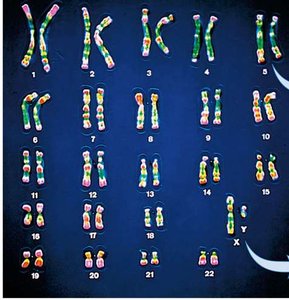
Homologous chromosomes: Chromosome pairs, one from each parent, that have the same genes but may have different alleles.
Diploid: Organisms with two sets of chromosomes (2n), one from each parent.
Historical Perspectives
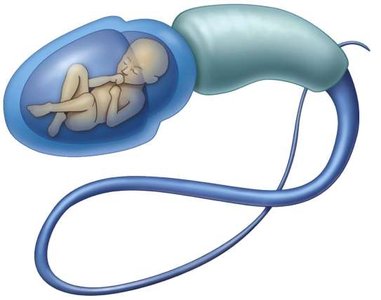
Early theories of inheritance, such as preformationism, suggested that a tiny pre-made human existed in every sperm cell. Modern genetics began with Gregor Mendel's experiments in the 1860s, which established the basic principles of heredity.
Gregor Mendel: An Augustinian monk who used garden peas to study inheritance patterns.
Simple inheritance: Traits determined by a single gene, now called Mendelian inheritance.
Mendelian Genetics
Mendel's Experiments and Terminology
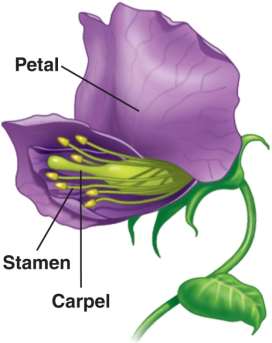
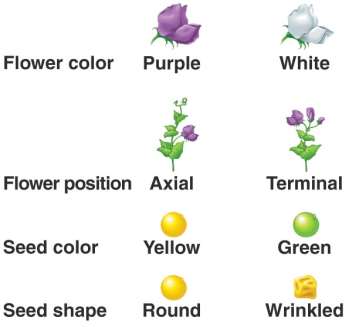
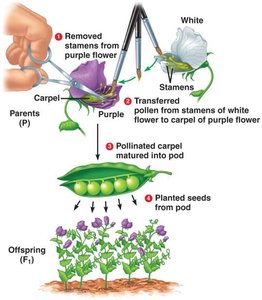
Mendel studied traits in pea plants that had two distinct variants, such as flower color and seed shape. He controlled fertilization to observe inheritance patterns across generations.
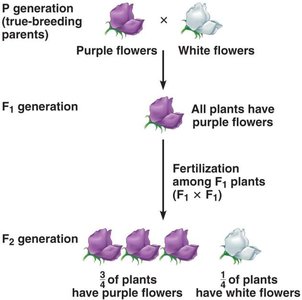
P generation: True-breeding parental generation.
F1 generation: First filial generation, offspring of the P generation.
F2 generation: Second filial generation, offspring of F1 individuals.
Hybridization: Crossing two different variants to produce hybrids.
Mendel's Four Hypotheses
There are alternate versions of genes (alleles).
Each organism inherits two alleles for each gene, one from each parent.
If alleles differ, one is dominant and the other is recessive.
Gametes carry only one allele for each gene (Law of Segregation).
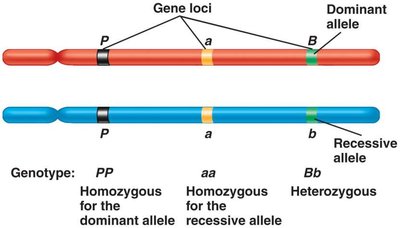
Homozygous: Two identical alleles (AA or aa).
Heterozygous: Two different alleles (Aa).
Genotype: Genetic makeup of an organism.
Phenotype: Observable traits of an organism.
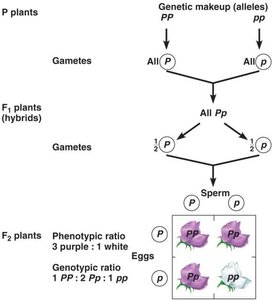
Monohybrid Crosses and Test Crosses
Monohybrid crosses examine the inheritance of a single trait. The Punnett square is a tool used to predict genotype and phenotype ratios in offspring.
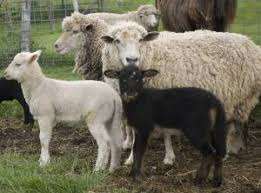
Test cross: Crossing an individual with a dominant phenotype (unknown genotype) with a homozygous recessive individual to determine genotype.
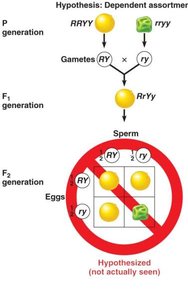
Mendel's Law of Independent Assortment
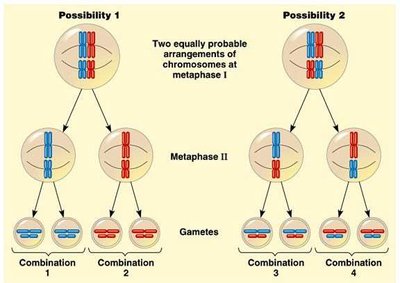
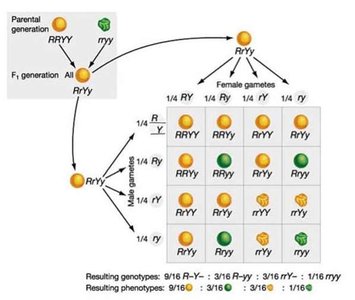
Genes for different traits are inherited independently if they are on different chromosomes or far apart on the same chromosome. This law explains the genetic variation seen in offspring.
Dihybrid cross: Cross involving two traits, leading to a 9:3:3:1 phenotypic ratio if genes assort independently.
Linked Genes
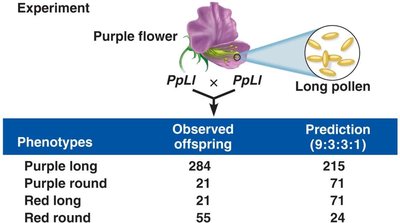
Genes located close together on the same chromosome tend to be inherited together and do not follow the law of independent assortment. This phenomenon is called genetic linkage.
Linked genes: Genes that are physically close on a chromosome and tend to be inherited together.
Simple and Complex Inheritance
Simple (Mendelian) Inheritance
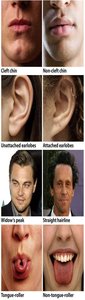
Traits controlled by a single gene with clear dominant and recessive alleles are called simple or Mendelian traits. Many human traits and genetic disorders follow this pattern.
Dominant allele: Expressed in the phenotype even if only one copy is present.
Recessive allele: Expressed only when two copies are present.
Complex Inheritance
Most traits do not follow strict Mendelian inheritance. Complex inheritance includes polygenic traits, pleiotropy, incomplete dominance, codominance, and sex-linked inheritance.
Polygenic inheritance: Multiple genes contribute to a single trait (e.g., height, skin color).
Pleiotropy: One gene influences multiple traits (e.g., SRY gene).
Incomplete dominance: Heterozygote shows an intermediate phenotype (e.g., wavy hair).
Codominance: Both alleles are fully expressed (e.g., AB blood type).
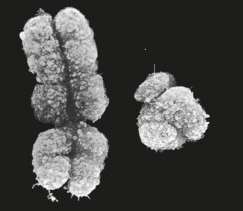
Sex-linked inheritance: Genes located on sex chromosomes, often X-linked in humans.


Genetic Disorders
Patterns of Inheritance
Genetic disorders can be inherited in different ways: autosomal dominant, autosomal recessive, and X-linked recessive. Pedigrees are used to trace inheritance patterns in families.
Autosomal dominant: Only one mutated allele needed for disorder to be expressed (e.g., Huntington's disease).
Autosomal recessive: Two mutated alleles needed for disorder to be expressed (e.g., Tay-Sachs disease, cystic fibrosis).
X-linked recessive: More common in males; females are often carriers (e.g., muscular dystrophy, hemophilia).
Epigenetics
Heritable Changes Beyond DNA Sequence
Epigenetics refers to heritable changes in gene expression that do not involve changes to the DNA sequence. Mechanisms include chromatin remodeling and DNA methylation, which can affect cellular differentiation, metabolism, and disease susceptibility.
Chromatin remodeling: Structural changes to chromatin that affect gene accessibility.
DNA methylation: Addition of methyl groups to DNA, often silencing gene expression.
Examples: Cellular differentiation, metabolic changes, possible links to cancer and obesity.
