 Back
BackGenetics: Patterns of Inheritance – Mendelian and Non-Mendelian Genetics
Study Guide - Smart Notes
 Tailored notes based on your materials, expanded with key definitions, examples, and context.
Genetics: Patterns of Inheritance
Introduction to Mendelian Genetics
Genetics is the study of heredity and the variation of inherited characteristics. Gregor Mendel’s experiments with pea plants established the foundational principles of inheritance, which explain how traits are passed from one generation to the next.
Inheritance: The process by which genetic information is passed from parents to offspring.
Trait: A specific characteristic of an organism, such as flower color or seed shape.
Gene: A segment of DNA that encodes information for a specific trait.
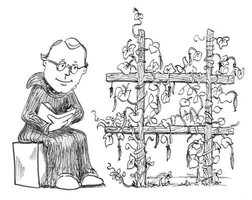
Mendel’s Experiments and Contributions
Experimental Design and Key Findings
Mendel cross-fertilized pea plants and observed seven distinct characters, each with two contrasting traits. His systematic approach allowed him to deduce the basic rules of inheritance.
Characters Studied: Seed shape, seed color, flower color, pod shape, pod color, flower position, and stem length.
Alleles: Alternative versions of a gene that account for variations in inherited characters.
Key Principle: Inheritable factors (genes) retain their individuality generation after generation.
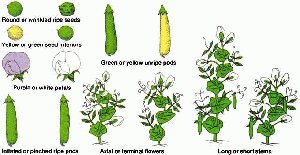
Alleles and Trait Variation
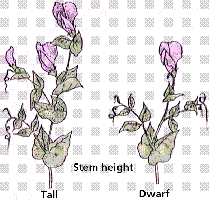
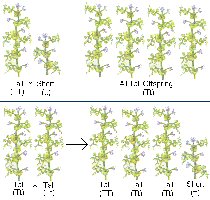
Each gene exists in different forms called alleles. For example, the gene for stem height has two alleles: tall and dwarf.
Homozygous: An organism with two identical alleles for a gene.
Heterozygous: An organism with two different alleles for a gene.
Dominant and Recessive Alleles
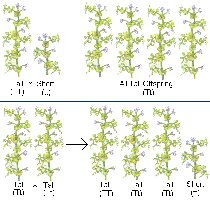
When two different alleles are present, one may mask the expression of the other. The dominant allele determines the organism’s appearance, while the recessive allele has no noticeable effect in the presence of the dominant allele.
Dominant allele: Represented by an uppercase letter (e.g., T for tall).
Recessive allele: Represented by a lowercase letter (e.g., t for short).
Law of Segregation
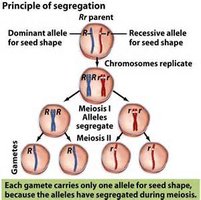
Mendel’s Law of Segregation states that allele pairs separate during the formation of gametes (meiosis), so each gamete carries only one allele for each gene.
Explains why offspring inherit one allele from each parent.
Genetic Crosses and Terminology
Hybridization and Generational Terminology
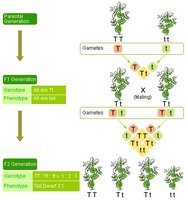
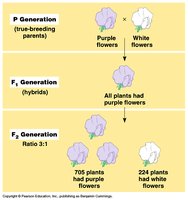
Hybridization involves crossing different varieties of plants. The parental generation (P) produces the first filial generation (F1), whose offspring are the second filial generation (F2).
Genotype: The genetic makeup of an organism (e.g., TT, Tt, or tt).
Phenotype: The observable physical trait (e.g., tall or short).
Monogenic vs. Polygenic Traits
Traits can be controlled by a single gene (monogenic) or by multiple genes (polygenic).
Monogenic trait: Controlled by one gene (e.g., pea plant height).
Polygenic trait: Controlled by two or more genes (e.g., human skin color).
Punnett Squares and Mendelian Ratios
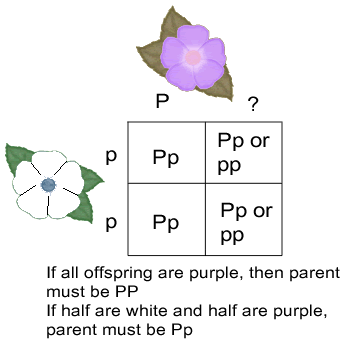
Punnett squares are used to predict the possible combinations of alleles in offspring. For a monohybrid cross (Tt x Tt), the F2 generation shows a 3:1 ratio of dominant to recessive phenotypes.
Genotypic ratio: 1 TT : 2 Tt : 1 tt
Phenotypic ratio: 3 tall : 1 short
Test Cross
A test cross is used to determine the genotype of an individual with a dominant phenotype by crossing it with a homozygous recessive individual.
Mendel’s Laws and Probability
Principle of Independent Assortment
Mendel’s Principle of Independent Assortment states that each pair of alleles segregates independently of other pairs during gamete formation. This explains the inheritance of multiple traits.
Rules of Probability in Genetics
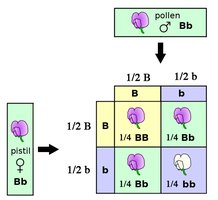
Genetic outcomes follow the rules of probability. The rule of multiplication applies to independent events, while the rule of addition applies to mutually exclusive events.
Rule of multiplication: Probability of two independent events both occurring is the product of their individual probabilities.
Rule of addition: Probability of either of two mutually exclusive events occurring is the sum of their individual probabilities.
Example: Probability of aabbcc offspring from AaBbCc x AaBbCc cross:
Dihybrid Crosses
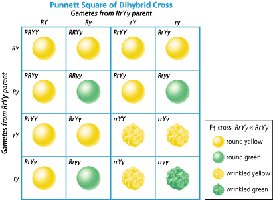
A dihybrid cross involves parents differing in two traits. The F2 generation typically shows a 9:3:3:1 phenotypic ratio, demonstrating independent assortment.
Non-Mendelian Inheritance
Incomplete Dominance
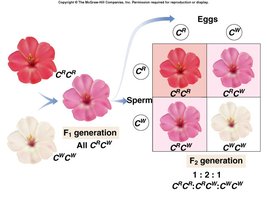
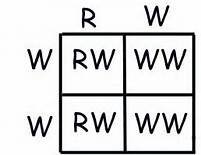
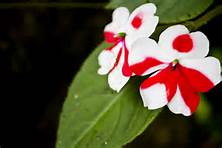
In incomplete dominance, the heterozygote displays a phenotype that is intermediate between the two homozygotes, resulting in a blending of traits.
Codominance
In codominance, both alleles in a heterozygote are fully expressed, such as in human blood type AB.
Pedigree Analysis and Human Genetics
Pedigrees
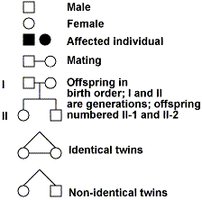
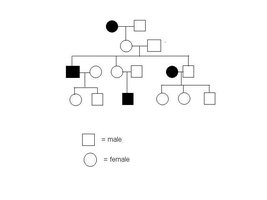
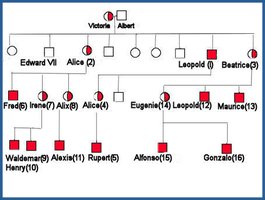
Pedigrees are diagrams that track the inheritance of traits through generations. They are useful for determining genotypes and predicting genetic disorders in families.
Genetic Disorders
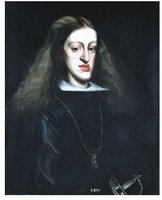
Most genetic disorders are caused by recessive alleles. Carriers are heterozygous individuals who do not show symptoms but can pass the allele to offspring. Inbreeding increases the likelihood of recessive disorders appearing in offspring.
Autosomal recessive disorders: Cystic fibrosis, Tay-Sachs disease, sickle cell anemia
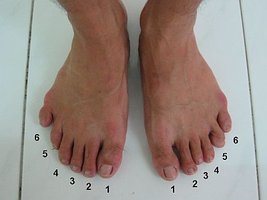
Autosomal dominant disorders: Achondroplasia, Huntington’s disease, polydactyly

Genetic Testing and Diagnosis
Amniocentesis
Amniocentesis is a prenatal diagnostic procedure performed between weeks 14-20 of pregnancy. Amniotic fluid is extracted and tested for genetic disorders and chromosomal abnormalities.
Used for karyotyping and biochemical testing.
Risks include bleeding, miscarriage, or premature birth (about 1%).
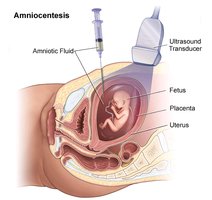
Chorionic Villus Sampling (CVS)
CVS is a prenatal test where a sample of chorionic villi is taken from the placenta. It can be performed as early as the 8th week of pregnancy and provides rapid results for chromosomal and genetic disorders.
Risks include bleeding, miscarriage, or premature birth (about 2%).
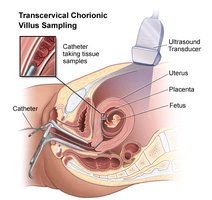
Summary Table: Key Genetic Concepts
Term | Definition | Example |
|---|---|---|
Gene | Unit of heredity encoding a trait | Gene for flower color |
Allele | Alternative form of a gene | Purple or white flower allele |
Genotype | Genetic makeup (allele combination) | TT, Tt, or tt |
Phenotype | Physical expression of genotype | Tall or short plant |
Homozygous | Two identical alleles | TT or tt |
Heterozygous | Two different alleles | Tt |
Dominant | Allele that masks another | T (tall) |
Recessive | Allele masked by dominant | t (short) |
