 Back
BackHantavirus: Biology, Transmission, and Pathophysiology
Study Guide - Smart Notes
 Tailored notes based on your materials, expanded with key definitions, examples, and context.
Viruses
Introduction to Hantavirus
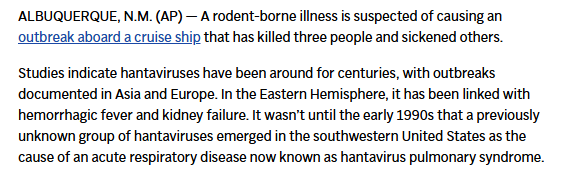
Hantaviruses are a group of viruses that primarily infect rodents but can cause severe disease in humans. These viruses are zoonotic, meaning they are transmitted from animals to humans, and are responsible for diseases such as hantavirus pulmonary syndrome (HPS) and hemorrhagic fever with renal syndrome (HFRS). Understanding the biology, transmission, and effects of hantaviruses is crucial for public health and disease prevention.
Hantavirus Epidemiology and Outbreaks
Reservoir: Hantaviruses are maintained in nature by persistent infection in rodent hosts, which shed the virus in urine, saliva, and feces.
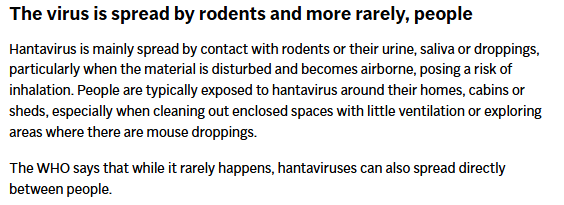
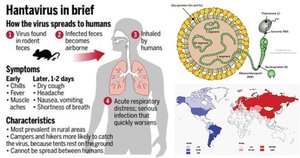
Human Infection: Humans typically become infected through inhalation of aerosolized virus particles from contaminated rodent excreta.
Outbreaks: Outbreaks have been documented globally, with notable cases in Asia, Europe, and the Americas. In the United States, hantavirus pulmonary syndrome was first recognized in the early 1990s.
Transmission: While rodent-to-human transmission is most common, rare cases of human-to-human transmission have been reported.

Transmission and Life Cycle of Hantavirus
Hantavirus transmission occurs primarily through inhalation of virus-contaminated particles. The virus's life cycle involves several key steps within the host cell, leading to replication and spread.
Transmission: Contact with rodent urine, saliva, or droppings, especially when these become airborne, is the main route of infection. Less commonly, direct human-to-human transmission can occur.
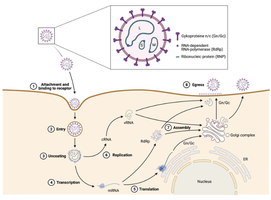
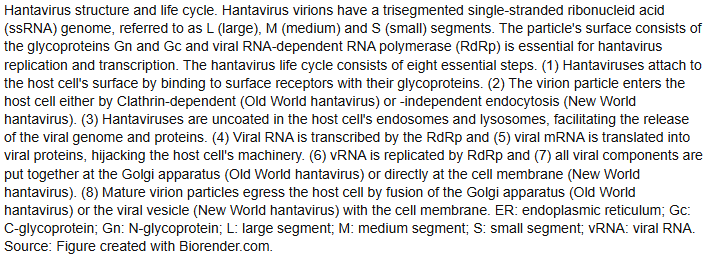
Life Cycle: Hantavirus virions have a tripartite, single-stranded RNA genome (L, M, S segments). The virus attaches to host cell receptors via glycoproteins, enters by endocytosis, uncoats in endosomes, and uses host machinery for replication and assembly. Mature virions exit the cell via the Golgi apparatus or cell membrane.
Key steps in the life cycle include:
Attachment and binding to host cell receptors
Entry via endocytosis
Uncoating in endosomes/lysosomes
Transcription of viral RNA
Translation of viral proteins
Replication of viral RNA
Assembly of new virions
Egress from the host cell
Additional info: The viral RNA-dependent RNA polymerase (RdRp) is essential for replication and transcription of the viral genome.
Clinical Presentation and Symptoms
Hantavirus infection in humans can lead to two main syndromes, both of which can be severe and life-threatening.
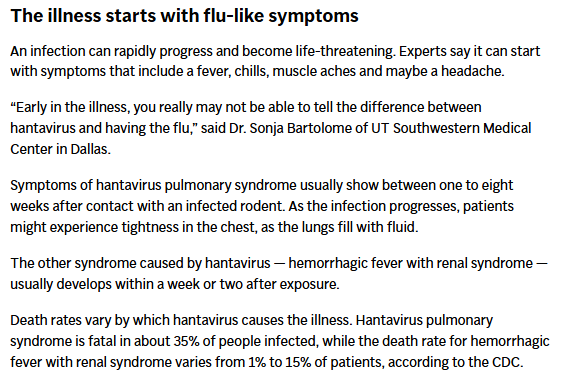
Hantavirus Pulmonary Syndrome (HPS): Characterized by fever, chills, muscle aches, and headache, progressing to acute respiratory distress as the lungs fill with fluid. Symptoms typically appear 1–8 weeks after exposure.
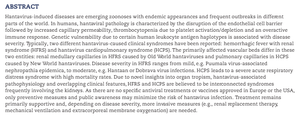
Hemorrhagic Fever with Renal Syndrome (HFRS): Presents with fever and renal involvement, including kidney failure. This syndrome is more common with Old World hantaviruses.
Mortality: HPS has a fatality rate of about 35%, while HFRS fatality rates range from 1% to 15%.
Pathophysiology and Organ Involvement
Hantavirus infection leads to increased vascular permeability, immune dysregulation, and organ dysfunction, particularly affecting the lungs and kidneys.
Immune Response: The disease is characterized by endothelial cell dysfunction, thrombocytopenia, and an overactive immune response.
Kidney Involvement: HFRS is associated with acute kidney injury, proteinuria, and sometimes renal failure.
Lung Involvement: HPS leads to pulmonary edema and respiratory failure due to capillary leak syndrome.
Summary Table: Hantavirus Syndromes
Syndrome | Main Symptoms | Primary Organ Affected | Mortality Rate | Geographic Distribution |
|---|---|---|---|---|
Hantavirus Pulmonary Syndrome (HPS) | Fever, chills, muscle aches, respiratory distress | Lungs | ~35% | Americas (New World) |
Hemorrhagic Fever with Renal Syndrome (HFRS) | Fever, renal failure, hemorrhage | Kidneys | 1–15% | Asia, Europe (Old World) |
Prevention and Public Health
Rodent Control: Reducing exposure to rodents and their excreta is the primary preventive measure.
Environmental Hygiene: Proper cleaning of enclosed spaces and use of protective equipment can reduce risk.
Awareness: Public education about hantavirus risks and transmission is essential, especially in endemic areas.
Additional info: There is currently no specific antiviral treatment for hantavirus infection; management is supportive, focusing on respiratory and renal function.
