Back
BackHow Genes Work: The Central Dogma, Genetic Code, and Mutations
Study Guide - Smart Notes
 Tailored notes based on your materials, expanded with key definitions, examples, and context.
How Genes Work
Introduction to Gene Function
Genes are fundamental units of heredity, encoding instructions for the synthesis of proteins that determine cellular structure and function. Understanding how genes direct the production of proteins is central to molecular biology and genetics.
Gene Expression: The process by which information from DNA is converted into functional molecules, primarily proteins.
Key Question: How do genes work at the molecular level to influence phenotype?
What Do Genes Do?
Beadle and Tatum's Experiments
Beadle and Tatum demonstrated that genes act by regulating distinct biochemical events. By inducing mutations in the bread mold Neurospora crassa, they showed that specific genes correspond to specific enzymes.
Null (Loss-of-Function) Alleles: Mutated genes that do not produce functional products.
Experimental Approach: Damaging genes and observing the resulting phenotypes to infer gene function.
The Central Dogma of Molecular Biology
Flow of Genetic Information
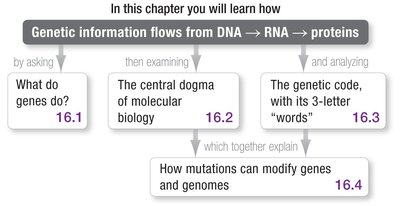
The central dogma describes the directional flow of genetic information within a cell: DNA → RNA → Protein. This framework explains how genetic instructions are translated into cellular functions.
DNA: Stores genetic information as sequences of nucleotides.
RNA: Acts as an intermediary, carrying genetic information from DNA to the protein synthesis machinery.
Protein: The functional molecules that perform cellular activities.
RNA as the Intermediary
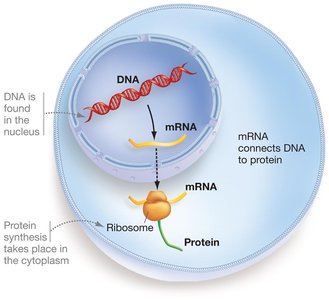
Messenger RNA (mRNA) is synthesized from a DNA template and carries the genetic code to ribosomes, where proteins are assembled.
RNA Polymerase: Enzyme that synthesizes RNA from a DNA template.
mRNA: Connects the genetic information in the nucleus to the protein synthesis machinery in the cytoplasm.
Transcription and Translation
Gene expression involves two main processes:
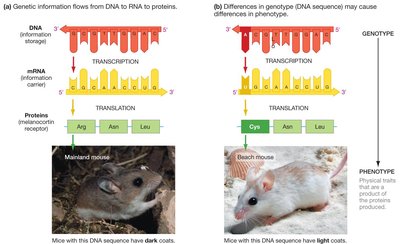
Transcription: The synthesis of RNA from a DNA template.
Translation: The synthesis of proteins using the information carried by mRNA.
Linking Genotype to Phenotype
The genotype of an organism is determined by its DNA sequence, while the phenotype is the result of the proteins produced. Different alleles can lead to variations in protein structure and function, resulting in different phenotypes.
Genotype: The genetic makeup (DNA sequence) of an organism.
Phenotype: The observable traits, determined by the proteins produced.
The Genetic Code
Structure and Function of the Genetic Code
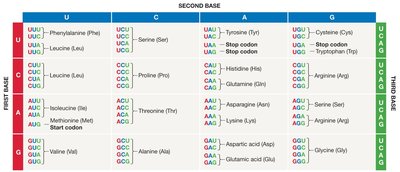
The genetic code is a set of rules by which the information encoded in DNA or RNA sequences is translated into proteins. Each three-nucleotide sequence, called a codon, specifies a particular amino acid.
Triplet Code: Each codon consists of three nucleotides, allowing for 64 possible combinations (43).
Codon: A sequence of three RNA bases that corresponds to a specific amino acid or stop signal during translation.
Start Codon (AUG): Signals the beginning of protein synthesis and codes for methionine.
Stop Codons (UAA, UAG, UGA): Signal the end of protein synthesis.
Using the Genetic Code
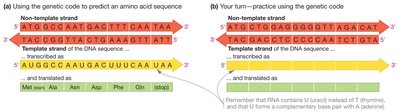
The genetic code can be used to predict the amino acid sequence of a protein from a given DNA or RNA sequence. This is essential for understanding how genetic information is expressed as functional proteins.
Types and Consequences of Mutation
Definition and Types of Mutation
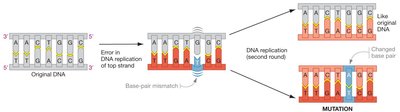
A mutation is any permanent change in the DNA sequence of an organism. Mutations can alter gene function and lead to new alleles, affecting genotype and potentially phenotype.
Point Mutations: Changes affecting one or a few nucleotides.
Chromosome-Level Mutations: Larger-scale changes affecting chromosome structure or number.
Point Mutations
Point mutations can have various effects on protein structure and function:
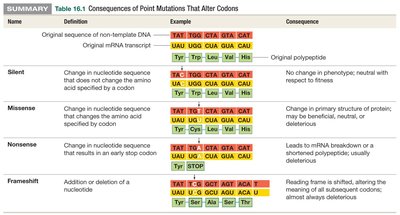
Missense Mutation: Alters a codon, resulting in a different amino acid.
Silent Mutation: Does not change the amino acid due to redundancy in the code.
Frameshift Mutation: Addition or deletion of nucleotides shifts the reading frame, altering downstream amino acids.
Nonsense Mutation: Converts a codon into a stop codon, truncating the protein.
Consequences of Point Mutations
Mutations can be classified by their effects on organismal fitness:
Beneficial: Increase fitness (rare).
Neutral: No effect on fitness (most common).
Deleterious: Decrease fitness.
Name | Definition | Example | Consequence |
|---|---|---|---|
Silent | Change in nucleotide sequence that does not change the amino acid specified by a codon | UAU → UAC (both code for Tyr) | No change in phenotype; neutral with respect to fitness |
Missense | Change in nucleotide sequence that changes the amino acid specified by a codon | UAU → UGU (Tyr → Cys) | Change in primary structure of protein; may be beneficial, neutral, or deleterious |
Nonsense | Change in nucleotide sequence that results in an early stop codon | UAU → UAA (Tyr → STOP) | Leads to mRNA breakdown or a shortened polypeptide; usually deleterious |
Frameshift | Addition or deletion of a nucleotide | UAU GCU → UAG CUA | Reading frame is shifted, altering the meaning of all subsequent codons; almost always deleterious |
Chromosome-Level Mutations
These mutations involve large-scale changes in chromosome structure or number:
Inversion: A chromosome segment breaks off, flips, and rejoins.
Translocation: A segment breaks off and attaches to a different chromosome.
Deletion: A segment is lost from the chromosome.
Duplication: A segment is present in multiple copies.
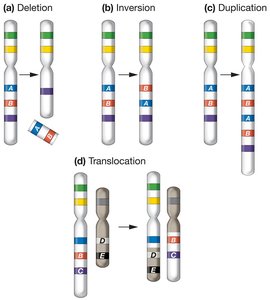
Detecting Chromosome Mutations
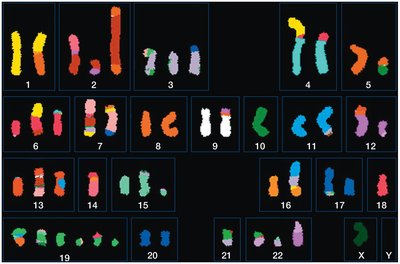
Karyotyping is a technique used to visualize chromosomes and detect large-scale mutations, such as deletions, duplications, inversions, and translocations.