 Back
BackImmunology: The Body’s Defense Mechanisms and Disease
Study Guide - Smart Notes
 Tailored notes based on your materials, expanded with key definitions, examples, and context.
Immunology: The Body’s Defense Mechanisms
Innate (Non-Specific) Defense Mechanisms
The innate immune system provides immediate, non-specific defense against pathogens. It includes physical barriers, cellular responses, and chemical mediators.
Physical Barriers: Skin and mucous membranes block pathogen entry.
Phagocytic White Blood Cells: Macrophages and neutrophils engulf and digest pathogens.
Interferons: Proteins released by virus-infected cells to inhibit viral replication in neighboring cells.
Inflammatory Response: Mobilizes immune cells to sites of infection, increases blood flow, and causes redness, heat, swelling, and pain.
Lymphatic System: Transports lymph, houses immune cells, and filters pathogens.
Specific (Adaptive) Immunity
Specific immunity targets particular pathogens using specialized cells and molecules. It is characterized by memory and specificity.
Antigens: Foreign molecules that trigger an immune response.
Antibodies: Proteins produced by B cells that bind to antigens and mark them for elimination.
Active Immunity: Acquired through exposure to pathogens or vaccination; the body produces its own antibodies.
Passive Immunity: Acquired by receiving antibodies from another source (e.g., maternal antibodies, antiserum).
Lymphocytes and Dual Defense
Lymphocytes mount a dual defense: humoral immunity (B cells) and cell-mediated immunity (T cells).
Humoral Immunity: B cells produce antibodies to fight pathogens in blood and body fluids.
Cell-Mediated Immunity: T cells attack infected body cells and coordinate immune responses.
Clonal Selection and Immune Memory
Clonal selection ensures that only lymphocytes specific to an antigen are activated and expanded.
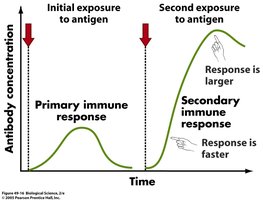
Primary Response: First exposure to antigen activates B cells, producing plasma cells (antibodies) and memory cells.
Secondary Response: Subsequent exposure activates memory cells, resulting in a faster and stronger antibody response.
Cellular Components of the Immune System
Helper T Cells
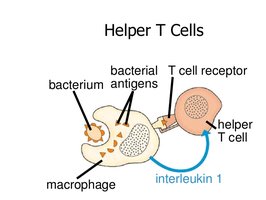
Helper T cells are central coordinators of the immune response. They activate cytotoxic T cells, macrophages, and stimulate antibody production by B cells.
Activation: Helper T cells recognize antigens presented by macrophages and release cytokines (e.g., interleukin-2) to stimulate immune responses.
Cytotoxic (Killer) T Cells
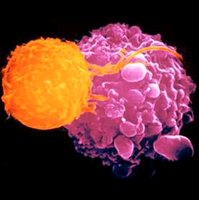
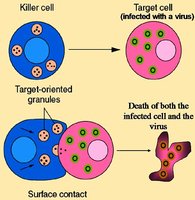
Cytotoxic T cells destroy infected or abnormal cells by recognizing self-nonself complexes and releasing proteins such as perforin.
Perforin: Forms pores in the target cell membrane, allowing enzymes to enter and induce cell death.
Role in Cancer: Cytotoxic T cells can recognize and kill cancerous cells.
Cells of the Immune System
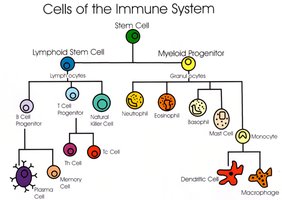
The immune system consists of various cell types derived from stem cells, each with specialized functions.
B Cells: Produce antibodies and memory cells.
T Cells: Include helper, cytotoxic, and regulatory T cells.
Macrophages: Engulf pathogens and present antigens.
Mast Cells: Release histamines during allergic reactions.
Natural Killer Cells: Destroy virus-infected and tumor cells.
Immune Responses and Disease
Autoimmune Diseases
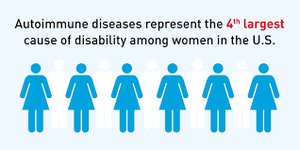
Autoimmune diseases occur when the immune system attacks the body’s own cells, leading to inflammation and tissue damage.
Examples: Lupus, Multiple Sclerosis (MS), Rheumatoid Arthritis.
Mechanism: B cells produce antibodies against self-molecules.
Allergies
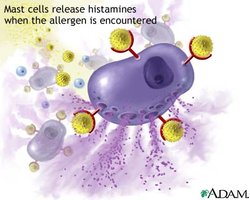
Allergies are hypersensitivity reactions to environmental antigens (allergens). Sensitization leads to antibody production, and mast cells release histamines, causing inflammation.
Mast Cells: Release histamines upon allergen exposure.
Symptoms: Sneezing, itching, swelling, and redness.
Immunodeficiency Diseases
Immunodeficiency diseases result from deficient or inactive lymphocytes, making individuals susceptible to frequent infections.
Examples: Severe Combined Immunodeficiency (SCID), Acquired Immunodeficiency Syndrome (AIDS).

HIV and AIDS
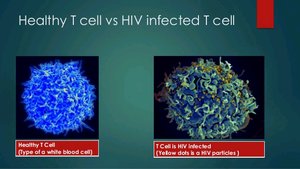
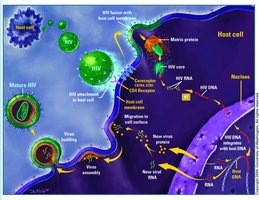
HIV targets helper T cells, suppressing both humoral and cell-mediated immunity. The virus enters T cells, replicates, and destroys them, leading to AIDS.
Mechanism: HIV proteins bind to helper T cell receptors, allowing viral RNA entry and replication.
Effects: Loss of T cells impairs immune response, increasing susceptibility to infections.
Immune Response to Covid-19 (SARS-CoV-2)
Covid-19 Virus Structure and Entry
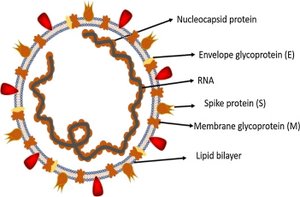
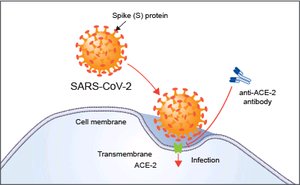
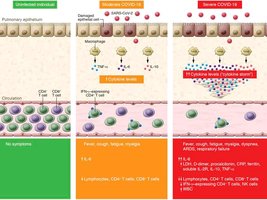
SARS-CoV-2 uses the ACE-2 receptor to enter host cells in the respiratory tract. The virus replicates inside cells, causing cell death and inflammation.
Structure: Contains spike (S) protein, envelope glycoprotein, and RNA genome.
Entry: Spike protein binds to ACE-2 receptor, facilitating infection.
Pathogenesis and Immune Response
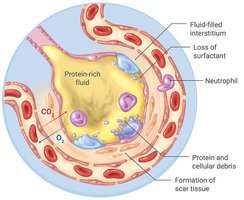
Viral replication in the respiratory tract triggers immune activation, inflammation, and fluid build-up. Severe cases may lead to pneumonia and respiratory distress.
Immune Cell Levels: Severe Covid-19 reduces B cells, T cells, and other white blood cells.
Cytokine Storm: Excessive inflammatory response can cause blood clots, nerve damage, and organ failure.
Summary Table: Types of Immune Responses
Type | Cells Involved | Function | Example |
|---|---|---|---|
Innate Immunity | Macrophages, Neutrophils | Immediate, non-specific defense | Skin barrier, phagocytosis |
Humoral Immunity | B cells, Antibodies | Targets pathogens in fluids | Vaccination, antibody production |
Cell-Mediated Immunity | T cells | Destroys infected cells | Viral infection, cancer cell destruction |
Autoimmune Disease | B cells, T cells | Attacks self-cells | Lupus, MS, Rheumatoid arthritis |
Immunodeficiency | T cells, B cells | Reduced immunity | SCID, AIDS |
Allergy | B cells, Mast cells | Hypersensitivity to allergens | Hay fever, asthma |
Key Equations and Concepts
Antibody Production Rate
Plasma cells can produce up to 2000 antibodies per second.
Clonal Selection Model
Upon antigen exposure:
B cell activation:
Antibody production:
Immune Response Timeline
Primary response: slower, less effective
Secondary response: faster, more effective
Covid-19 Pathogenesis
Virus entry:
Immune activation:
Additional info: Academic context was added to clarify mechanisms, cell types, and disease examples for completeness.
