 Back
BackInformation Flow: Genes, Chromosomes, Mutations, and Meiosis
Study Guide - Smart Notes
 Tailored notes based on your materials, expanded with key definitions, examples, and context.
Information Flow: Genes to Phenotype
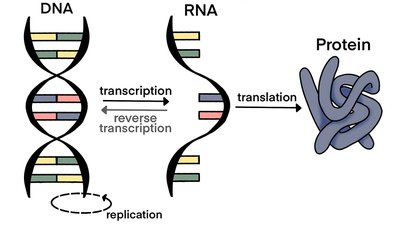
The Central Dogma of Molecular Biology
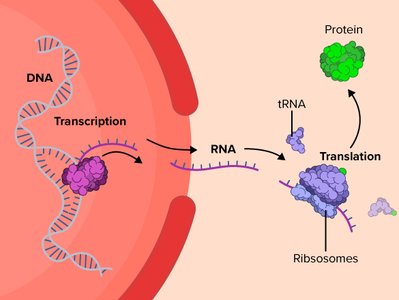
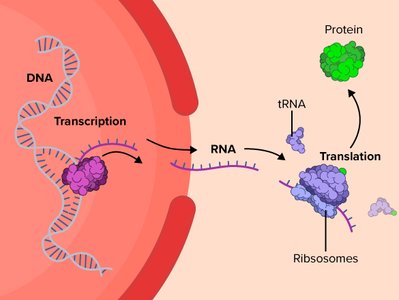
The central dogma describes the flow of genetic information within a biological system, from DNA to RNA to protein. This process is fundamental to understanding how genotypes are expressed as phenotypes.
DNA: Serves as the information storage molecule.
Transcription: DNA is transcribed into messenger RNA (mRNA) in the nucleus.
Translation: mRNA is translated into proteins in the cytoplasm.
Proteins: Function as the active cell machinery, determining cellular structure and function.
DNA, RNA, and Their Components
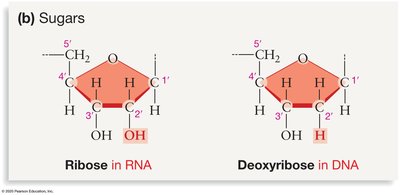
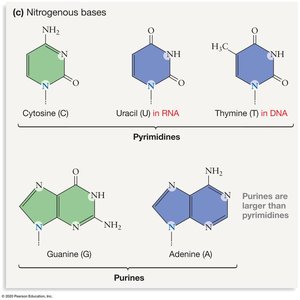
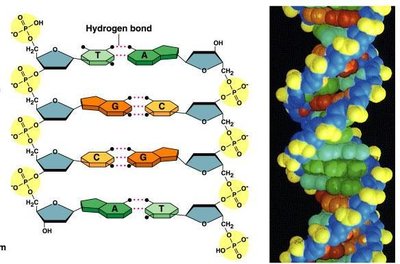
DNA and RNA are nucleic acids composed of nucleotides, each containing a phosphate group, a sugar, and a nitrogenous base. The differences between DNA and RNA are crucial for their respective functions.
Phosphate Group: Attached to the 5’ carbon of the sugar; identical in DNA and RNA.
Sugar: DNA contains deoxyribose; RNA contains ribose.
Nitrogenous Bases: DNA uses adenine (A), thymine (T), cytosine (C), and guanine (G); RNA uses adenine (A), uracil (U), cytosine (C), and guanine (G).
Transcription: DNA to mRNA
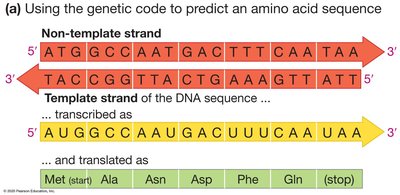
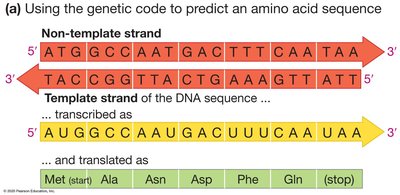
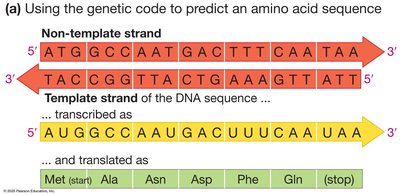
Transcription is the process by which a DNA template is used to synthesize a complementary mRNA strand. This occurs in the nucleus and involves the addition of nucleotides to the 3’ end of the growing mRNA.
Template Strand: The DNA strand used to make mRNA.
mRNA: Single-stranded, contains uracil instead of thymine, and carries genetic information to the cytoplasm.
Direction: mRNA is synthesized from 5’ to 3’.
Translation: mRNA to Protein
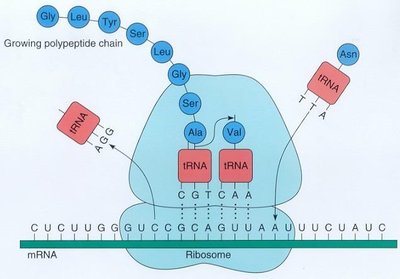
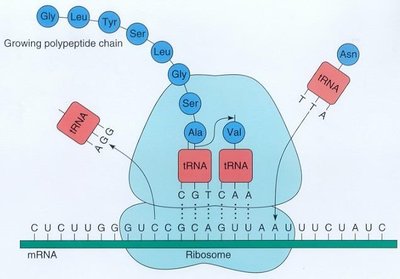
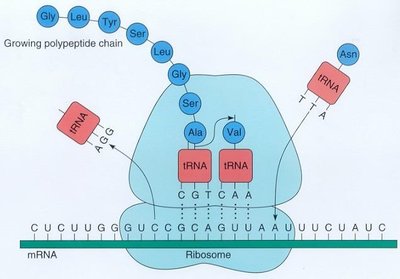
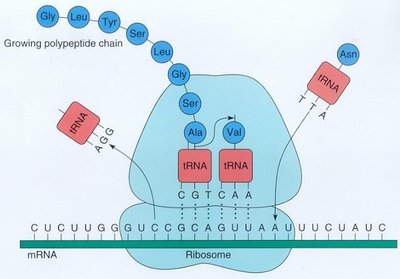
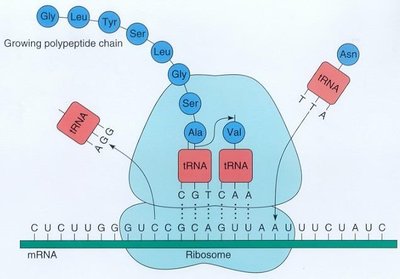
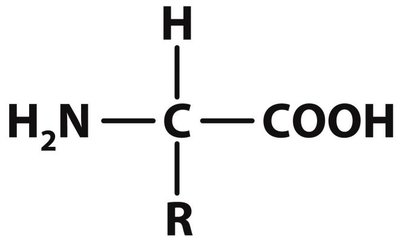
Translation is the process by which ribosomes synthesize proteins using the sequence of codons in mRNA. Each codon specifies an amino acid, and the order of amino acids determines the protein's structure and function.
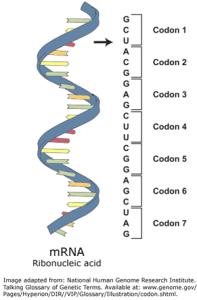
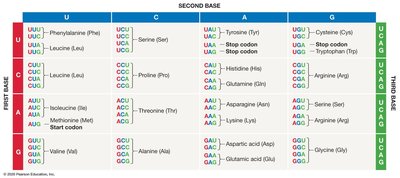
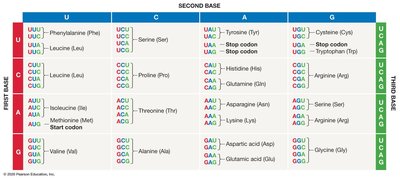
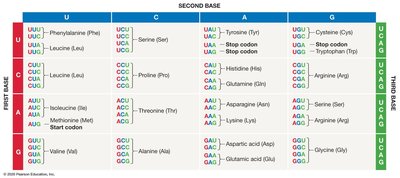
Codons: Three-base sequences in mRNA that specify amino acids.
Start Codon: AUG (methionine) initiates translation.
Stop Codons: UAA, UAG, UGA signal the end of translation.
Ribosomes: Read mRNA from 5’ to 3’ and assemble polypeptides.
Protein Structure and Function
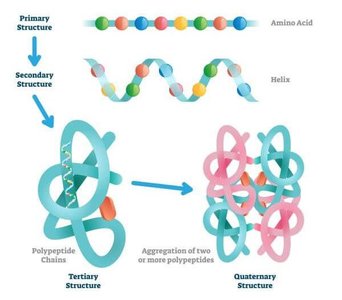
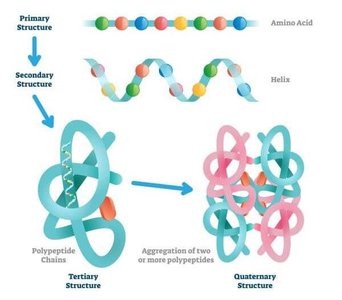
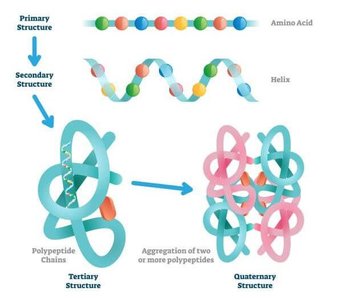
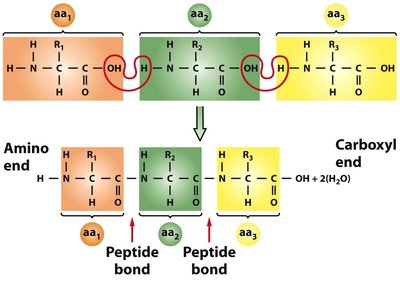
The sequence of amino acids in a polypeptide determines its three-dimensional structure and function. Proteins act as enzymes, structural components, and signaling molecules.
Primary Structure: Sequence of amino acids.
Secondary Structure: Local folding (e.g., alpha helix, beta sheet).
Tertiary Structure: Overall three-dimensional shape.
Quaternary Structure: Aggregation of multiple polypeptide chains.
Genes, Chromosomes, and Genotype
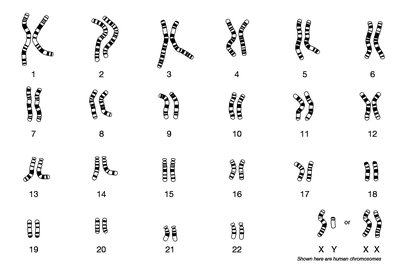
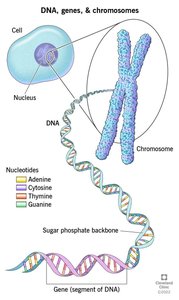
Genes are segments of DNA that code for proteins. Chromosomes are structures composed of DNA and proteins, containing many genes. The genotype is the set of alleles present in an organism, which determines its phenotype.
Gene: Section of DNA coding for a protein.
Chromosome: DNA double helix wrapped around histone proteins.
Locus: Physical location of a gene on a chromosome.
Ploidy: Number of sets of unique chromosomes in a cell (haploid n, diploid 2n).
Alleles: Different versions of the same gene.
Genotype: Combination of alleles for a gene.
Phenotype: Observable traits determined by genotype.
Mutations and Alleles
Mutations are changes in DNA sequence that can create new alleles. Point mutations may alter a single nucleotide, potentially affecting protein structure and function, and thus phenotype.
Point Mutation: Change in a single nucleotide.
Allele: Variant form of a gene resulting from mutation.
Phenotypic Effect: Mutations can lead to novel traits or diseases.
Meiosis and Chromosome Division
Meiosis is the process by which diploid cells divide to produce haploid gametes, ensuring genetic diversity and proper chromosome number in offspring.
Two Divisions: Meiosis I and Meiosis II.
Homologous Chromosomes: Carry the same genes but may have different alleles.
Gametes: Haploid cells (n) with one set of chromosomes.
Summary Table: DNA vs. RNA
Component | DNA | RNA |
|---|---|---|
Phosphate Group | Attached to 5’ sugar | Attached to 5’ sugar |
Sugar | Deoxyribose | Ribose |
Nitrogenous Bases | A, T, C, G | A, U, C, G |
Strandedness | Double-stranded | Single-stranded |
Summary Table: Genetic Code Features
Feature | Description |
|---|---|
Redundancy | Most amino acids are coded by more than one codon |
Specificity | Each codon codes for only one amino acid |
Universality | Genetic code is nearly universal among organisms |
Start Codon | AUG (Methionine) |
Stop Codons | UAA, UAG, UGA |
Equations and Formulas
Transcription:
Translation:
Ploidy Calculation:
Example: Using the Genetic Code
Given a DNA template strand, predict the mRNA sequence and the resulting amino acid sequence using the genetic code.
Summary
The flow of genetic information from DNA to RNA to protein is central to understanding how genotypes are expressed as phenotypes. Chromosomes, genes, alleles, and mutations all play critical roles in this process, and the genetic code ensures accurate translation of information into functional proteins.
