 Back
BackInheritance: Mendelian and Non-Mendelian Genetics
Study Guide - Smart Notes
 Tailored notes based on your materials, expanded with key definitions, examples, and context.
Inheritance: Mendelian and Non-Mendelian Genetics
Introduction to Inheritance
Inheritance is the process by which genetic information is passed from parents to offspring. The study of inheritance began with Gregor Mendel, whose experiments with pea plants established the foundational principles of genetics. This guide covers Mendelian inheritance, extensions to Mendel's laws, and the analysis of complex traits.
Mendelian Inheritance
Key Terms and Concepts
Gene: A segment of DNA that encodes a functional product, usually a protein.
Allele: Different forms of a gene found at the same locus on homologous chromosomes.
Genotype: The genetic makeup or allelic composition of an organism (e.g., AA, Aa, aa).
Phenotype: Observable characteristics or traits of an organism (e.g., flower color).
Homozygous: Having two identical alleles for a gene (e.g., AA or aa).
Heterozygous: Having two different alleles for a gene (e.g., Aa).
Dominant allele: An allele that masks the effect of a recessive allele in heterozygotes.
Recessive allele: An allele whose effect is masked by a dominant allele.
Gregor Mendel and His Experiments
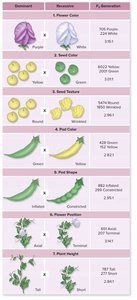
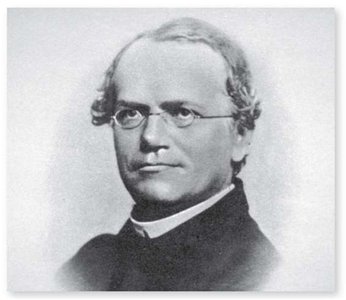
Gregor Mendel used pea plants to study inheritance patterns. He identified seven traits, each with two contrasting forms, and performed controlled crosses to observe how traits were transmitted across generations.
Monohybrid Crosses
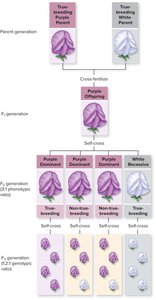
A monohybrid cross examines the inheritance of a single trait. Mendel crossed true-breeding (homozygous) plants with contrasting traits and observed the resulting generations:
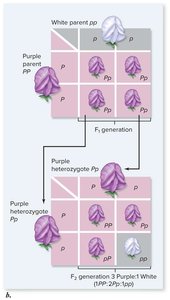
P generation: True-breeding parents (e.g., purple x white flowers).
F1 generation: All offspring showed the dominant phenotype.
F2 generation: Self-fertilization of F1 produced a 3:1 phenotypic ratio (dominant:recessive).
Genotypic ratio in F2: 1 homozygous dominant : 2 heterozygous : 1 homozygous recessive (1:2:1).
Mendel's First Law: Law of Segregation
The law of segregation states that two alleles for a gene segregate during gamete formation, and each gamete receives only one allele. Fertilization restores the diploid state.
Explains the 3:1 phenotypic ratio in the F2 generation of a monohybrid cross.
Dihybrid Crosses
A dihybrid cross examines the inheritance of two traits simultaneously. Mendel crossed plants differing in two traits (e.g., seed shape and color):
P generation: RRYY (round, yellow) x rryy (wrinkled, green).
F1 generation: All offspring were round and yellow (dominant traits).
F2 generation: Produced by self-fertilization of F1, resulting in a 9:3:3:1 phenotypic ratio.
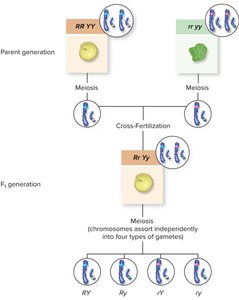
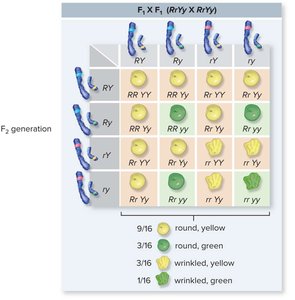
Mendel's Second Law: Law of Independent Assortment
The law of independent assortment states that alleles of different genes assort independently during gamete formation. This is due to the random alignment of homologous chromosomes during metaphase I of meiosis.
Explains the 9:3:3:1 ratio in the F2 generation of a dihybrid cross.
Test Cross
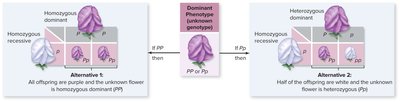
A test cross is used to determine the genotype of an individual with a dominant phenotype by crossing it with a homozygous recessive individual. The offspring phenotypes reveal the unknown genotype.
Extensions to Mendelian Inheritance
Incomplete Dominance
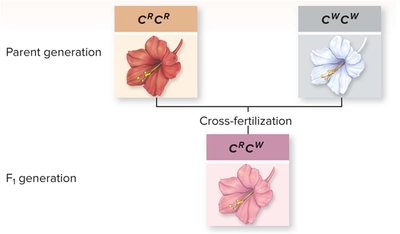
In incomplete dominance, the heterozygote displays a phenotype intermediate between the two homozygotes. The phenotypic ratio equals the genotypic ratio in the F2 generation.
Codominance
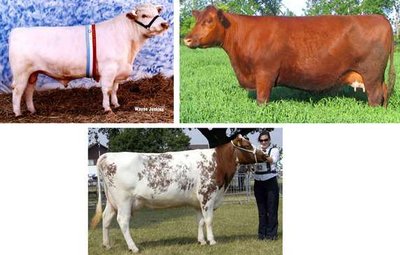
In codominance, both alleles in a heterozygote are fully expressed, resulting in offspring with a phenotype that shows aspects of both parental traits. The classic example is the AB blood type in humans.
Multiple Alleles
Some genes have more than two alleles in the population, although each individual can only possess two alleles. The ABO blood group system is a classic example, involving three alleles (IA, IB, i) and demonstrating both multiple alleles and codominance.
Epistasis
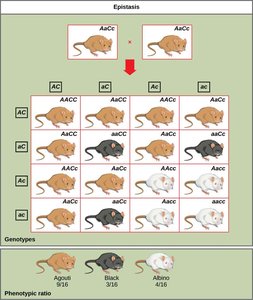
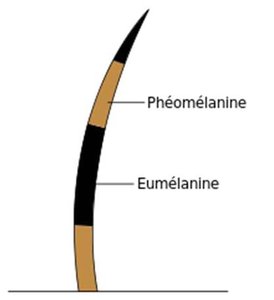
Epistasis occurs when the expression of one gene is affected by another gene at a different locus. For example, in mammals, one gene may control pigment production while another controls pigment distribution, resulting in modified phenotypic ratios.
Sex-Linked, Sex-Influenced, and Sex-Limited Traits
Sex-Linked Traits
Sex-linked traits are determined by genes located on sex chromosomes. X-linked traits are more common than Y-linked traits due to the larger size and gene content of the X chromosome. Examples include color blindness and hemophilia.

Sex Determination Systems
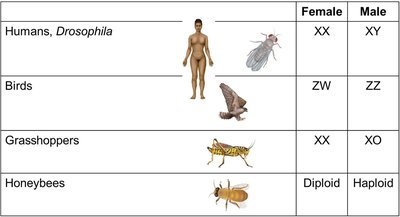
Different organisms use various systems for sex determination, including XY (humans, Drosophila), ZW (birds), XO (grasshoppers), and haplodiploidy (honeybees).
X-Linked Inheritance Example
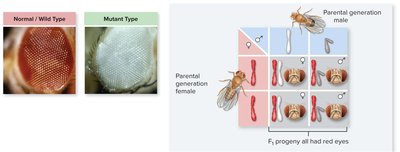
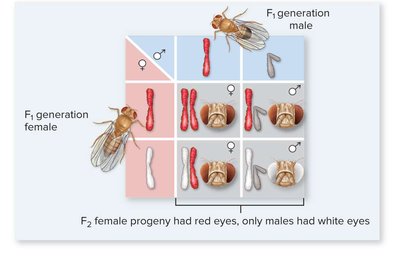
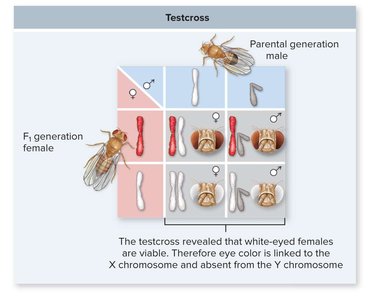
White eye color in Drosophila melanogaster is an X-linked recessive trait. Crosses reveal that the trait is inherited differently in males and females due to the presence of only one X chromosome in males.
Sex-Influenced Traits
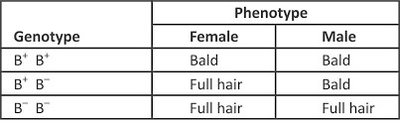
Sex-influenced traits are autosomal traits that are expressed differently in males and females due to hormonal differences. For example, pattern baldness is dominant in males but recessive in females.

Sex-Limited Traits
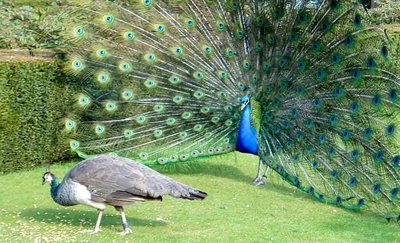
Sex-limited traits are autosomal traits expressed in only one sex, such as milk production in female mammals or antler development in male deer.

Complex Traits
Quantitative (Polygenic) Traits
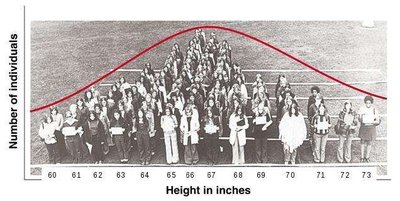
Complex traits, also known as quantitative traits, are influenced by multiple genes and environmental factors. These traits show continuous variation, such as height or weight, and are often represented by a bell-shaped curve in populations.
Genetic Risk and Disease
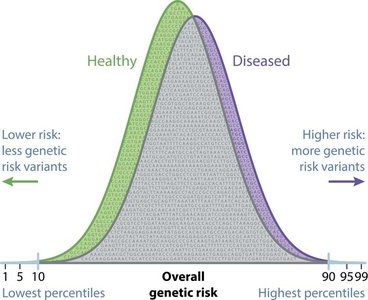
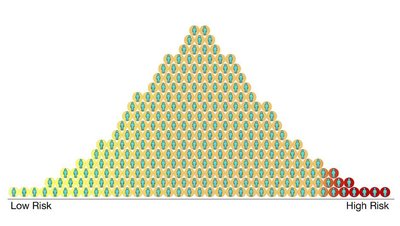
Some complex traits show discrete phenotypes, such as susceptibility to diseases like cancer or diabetes. Genetic risk is distributed across a population, with most individuals at low to moderate risk and a few at high risk.
Pedigree Analysis
Pedigree Symbols and Interpretation
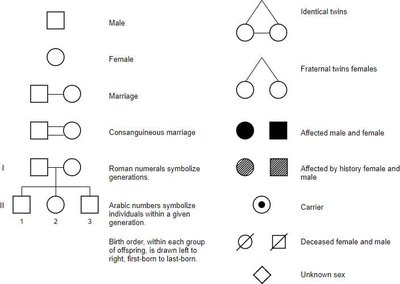
Pedigrees are diagrams that record the ancestry of individuals and are used to analyze the inheritance of genetic disorders. Standard symbols represent males, females, affected individuals, carriers, and relationships.
Autosomal Recessive Inheritance
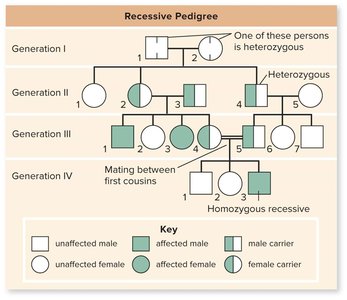
Autosomal recessive disorders often skip generations, with affected individuals typically born to carrier parents. Examples include albinism and cystic fibrosis.
Autosomal Dominant Inheritance
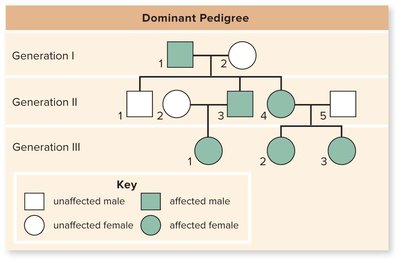
Autosomal dominant disorders appear in every generation, with affected individuals having at least one affected parent.
X-Linked Recessive Inheritance
X-linked recessive disorders affect more males than females, as males have only one X chromosome. Examples include color blindness and hemophilia.
X-Linked Dominant Inheritance
If the father is affected, all daughters (but no sons) are affected. X-linked dominant traits are generally more common in females than males.
Summary Table: Mendelian Ratios in Classic Crosses
Cross Type | Phenotypic Ratio | Genotypic Ratio |
|---|---|---|
Monohybrid (Aa x Aa) | 3:1 | 1:2:1 |
Dihybrid (AaBb x AaBb) | 9:3:3:1 | 1:2:1:2:4:2:1:2:1 |
Incomplete Dominance | 1:2:1 | 1:2:1 |
Codominance | 1:2:1 | 1:2:1 |
Additional info: This guide integrates foundational Mendelian genetics with modern extensions, including polygenic inheritance and pedigree analysis, to provide a comprehensive overview suitable for college-level biology students.
