 Back
BackIntroduction to Biology: Characteristics of Life, Cells, Viruses, Functional Groups, and Amino Acids
Study Guide - Smart Notes
 Tailored notes based on your materials, expanded with key definitions, examples, and context.
Characteristics of Living Things
Defining Life
Living organisms share a set of fundamental characteristics that distinguish them from non-living entities. These traits are essential for the maintenance, reproduction, and evolution of life.
Organization: Living things are highly organized, often at the cellular and molecular level.
Evolution of populations: Populations of organisms evolve over time through genetic changes.
DNA: All living things use DNA as their genetic material.
Reproduction: Organisms reproduce to ensure the continuation of their species.
Growth and development: Living things grow and develop according to specific instructions coded in their DNA.
Response to environment: Organisms respond to stimuli in their environment.
Metabolism: Living things carry out chemical reactions to obtain and use energy.
Homeostasis: Organisms maintain stable internal conditions.
Contain one or more cells: The cell is the basic unit of life.

Viruses: Are They Alive?
Why Viruses Are Not Considered Living Organisms
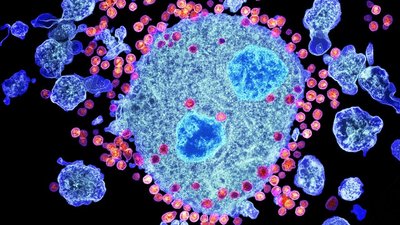
Viruses are unique biological entities that challenge the definition of life. They lack several key characteristics of living organisms.
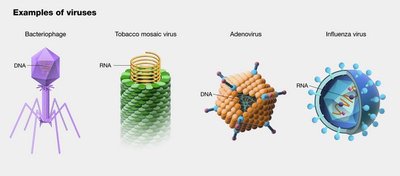
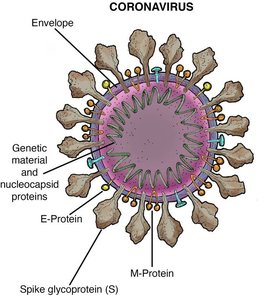
Structure: Viruses are complexes of protein and nucleic acids.
Genome: Viral genomes can be made of DNA or RNA, and may be single- or double-stranded.
Replication: Viruses replicate by hijacking the host cell's machinery, not by independent reproduction.
Missing Characteristics: Viruses lack cellular organization, metabolism, homeostasis, growth, and independent reproduction.
Size Comparisons
Viruses are much smaller than cells and organelles, which is important for understanding their biology and detection. 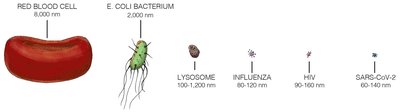
Characteristics Lacking in Viruses
Organization
Evolution of populations
DNA (some viruses have RNA genomes)
Reproduction (use host machinery)
Growth/development
Response to environment
Metabolism
Homeostasis
Contain one or more cells
SARS-CoV-2: A Case Study
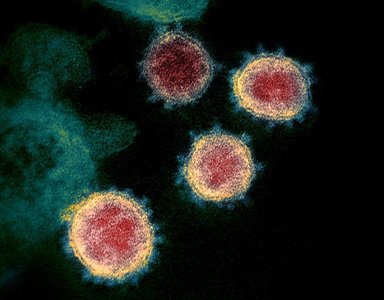
SARS-CoV-2 is the virus responsible for COVID-19. It is a highly contagious coronavirus with a single-stranded RNA genome. The virus enters human cells by binding to specific cell surface receptors. 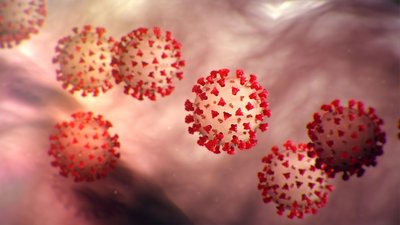
Cell Theory and Diversity
What Is a Cell?
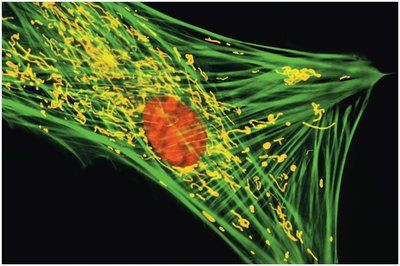
The cell is the smallest unit capable of life and reproduction, either independently or as part of a multicellular organism.
Cell Theory:
The cell is the unit of structure and function in living things.
The cell retains a dual existence as a distinct entity and as part of a larger organism.
All cells arise from pre-existing cells.
Diversity of Cells
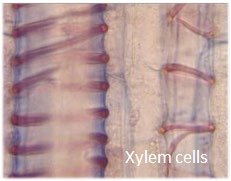
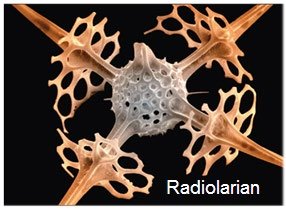
Cells are incredibly diverse in form and function, ranging from plant cells, protist cells, human cells, to bacterial cells.
Plant Cells: Have cell walls, chloroplasts, and large vacuoles.
Protist Cells: Highly variable, often single-celled eukaryotes.
Human Cells: Specialized for various functions (e.g., blood cells, neurons).
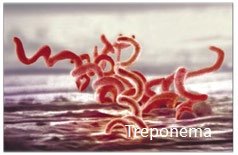
Bacterial Cells: Prokaryotic, lack a nucleus and membrane-bound organelles.
Phylogenetic Organization of Life
Domains and Kingdoms
The classification of living organisms has evolved from Aristotle's Scala Naturae to the modern three-domain system.
Early Classification: Two kingdoms (plants and animals), later five kingdoms (Monera, Protista, Plantae, Fungi, Animalia).
Current Classification: Three domains—Bacteria, Archaea, and Eukarya—based on molecular evidence, especially rRNA gene sequences.
Protists
Protists are a diverse group of eukaryotic organisms, which can be unicellular (e.g., dinoflagellates) or multicellular (e.g., algae).
Three Domains of Life
Bacteria: Prokaryotes
Archaea: Prokaryotes, many are extremophiles
Eukarya: Eukaryotes, includes protists, plants, fungi, and animals
rRNA Gene Analysis
rRNA gene sequences are highly conserved and used to establish evolutionary relationships.
All cells contain rRNA genes.
rRNA sequences evolve slowly, making them ideal for phylogenetic studies.
Analysis revealed that Archaea and Eukarya are more closely related to each other than to Bacteria.
Origin of Cells
Abiotic Synthesis and Miller-Urey Experiment
The origin of the first cells involved several key phases:
Abiotic synthesis of small organic molecules (e.g., amino acids, nitrogenous bases).
Abiotic synthesis of macromolecules (e.g., nucleic acids).
Evolution of a self-replicating molecule.
Formation of a membrane surrounding the information storage molecule.
The Miller-Urey experiment demonstrated that simple organic compounds could be synthesized from reduced atmospheric gases under conditions simulating early Earth.
Prokaryotes vs. Eukaryotes
Cellular Differences
Prokaryotic cells (Bacteria and Archaea) lack a nucleus and membrane-bound organelles, while eukaryotic cells (Eukarya) have these features.
Prokaryotes:
No nucleus
Simple internal structure
Average size: 1–5 µm diameter
Eukaryotes:
True nucleus
Complex internal structure with organelles
Average size: 10–100 µm diameter
Measurement Units
Micrometer (µm):
Nanometer (nm):
Angstrom (Å):
Functional Groups in Organic Molecules
Definition and Importance
Functional groups are specific groups of atoms within molecules that confer distinct chemical properties. They are crucial for understanding biomolecular structure and function.
'R' group: Represents the rest of the molecule, often a hydrocarbon chain.
Functional group: A group of atoms that imparts specific chemical characteristics to a molecule.
Common Functional Groups
Carbonyl: Includes aldehyde (terminal) and ketone (internal) groups.
Acetyl: A specific carbonyl group important in metabolism.
Carboxyl/Carboxylic Acid: Has acidic properties, can ionize to form carboxylate.
Hydroxyl: -OH group, not charged in aqueous solution.
Amine: Acts as a base, can pick up H+.
Amide: Polar, uncharged, formed from acid and amine.
Phosphate: Contributes negative charge, involved in energy transfer.
Sulfhydryl: -SH group, can form disulfide bonds for protein stability.
Functional Group Properties Table
Functional Group | Structure | Example | Properties |
|---|---|---|---|
Carbonyl (Aldehyde) | R-CHO | Glucose | Polar, found in sugars |
Carbonyl (Ketone) | R-CO-R' | Fructose | Polar, found in sugars |
Carboxyl | R-COOH | Acetic acid | Acidic, can ionize |
Hydroxyl | R-OH | Ethanol | Polar, not charged in aq |
Amine | R-NH2 | Glycine | Basic, can pick up H+ |
Amide | R-CONH2 | Peptide bond | Polar, uncharged |
Phosphate | R-PO4 | ATP | Negative charge, energy transfer |
Sulfhydryl | R-SH | Cysteine | Can form disulfide bonds |
Amino Acids
General Structure
Amino acids are the building blocks of proteins. Each amino acid has a central carbon (alpha carbon) bonded to an amino group, a carboxyl group, a hydrogen atom, and a unique R group.
Classification: Amino acids are classified as nonpolar, polar uncharged, acidic (negative), or basic (positive).
In solution: Amino acids can exist in ionized or non-ionized forms depending on pH.
Classes of Amino Acids Table
Class | Examples |
|---|---|
Nonpolar | Glycine, Alanine, Valine, Leucine, Isoleucine, Methionine, Phenylalanine, Tryptophan, Proline |
Polar, uncharged | Asparagine, Glutamine, Serine, Threonine, Cysteine, Tyrosine |
Acidic (Negative) | Aspartate, Glutamate |
Basic (Positive) | Arginine, Histidine, Lysine |
Example: Glycine
Glycine is both an amine and a carboxylic acid, making it an amino acid. It is the simplest amino acid, with a hydrogen as its R group. Additional info: Amino acids are essential for protein structure and function, and their properties determine protein folding and activity. ----------------------------------------
