 Back
BackLEC 1: Introduction to Biology: Properties of Life, Classification, and Phylogeny
Study Guide - Smart Notes
 Tailored notes based on your materials, expanded with key definitions, examples, and context.
Course Overview and Structure
Course Information
This course, Biology 107, introduces students to the foundational concepts of cell biology, genetics, and the classification of living organisms. The course emphasizes the structure and function of cells, mechanisms of genetic control, and the evolutionary relationships among organisms.
Instructor: Dr. Martin Srayko
Lab Coordinator: Dr. Carla Starchuk
Required Textbook: Campbell Biology, 4th Canadian Edition (or recent equivalent)
Lab Safety: Lab coats, safety glasses, full-length pants, and full-coverage shoes are mandatory.
Course Content Outline
Introduction to cell structure and function
Prokaryotic and eukaryotic cell biology
Energy conversions in cells
Compartmentalization of biochemical functions
Genetic control of cell activities
DNA replication and gene expression
Assessment Structure
Midterm Exam: 17%
Final Exam: 35%
Lab Mark: 40%
Online Quizzes: 5%
In-class ePoll: 3%
Final grades are assigned based on overall performance, not a predetermined distribution.
Properties of Life
Defining Characteristics of Living Organisms
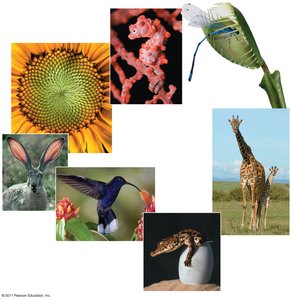
Living organisms share several fundamental properties that distinguish them from non-living matter. Understanding these properties is essential for studying biology.
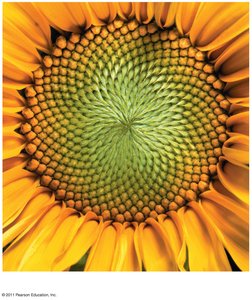
Order: Living things exhibit complex but ordered organization, from molecules to entire organisms.
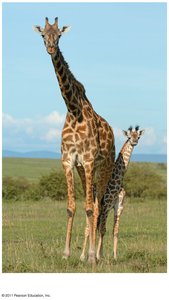
Evolutionary Adaptation: Populations of organisms evolve over generations through adaptations that enhance survival and reproduction.
Energy Processing: Organisms acquire and use energy to maintain order and support growth, development, and reproduction.
Growth and Development: Organisms increase in size and complexity, following specific instructions encoded in their DNA.
Response to Environment: Living things detect and respond to environmental stimuli.
Reproduction: Organisms reproduce, passing genetic information to their offspring.
Classification of Living Things (Taxonomy)
Why Classify Life?
Classification, or taxonomy, is the science of naming, defining, and organizing living organisms into groups based on shared characteristics. This process is essential for:
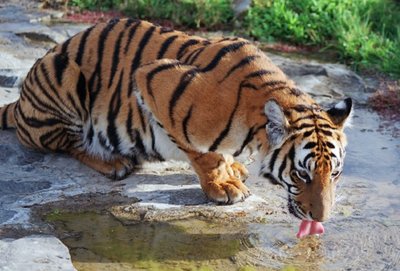
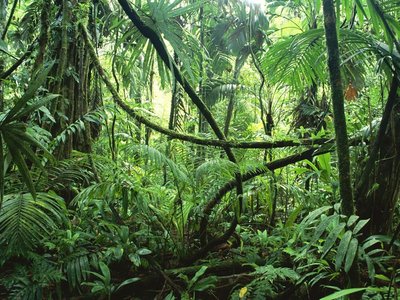
Conservation Biology: Monitoring biodiversity and identifying species at risk of extinction.
Social, Dietary, Cultural, Medical, and Economic Reasons: Understanding the roles of organisms in ecosystems and human society.
Methods of Classification
Organisms can be classified using several approaches:
Physical Structures: Comparing anatomical features (e.g., limbs, wings). However, similarities may arise from convergent evolution (analogous structures) rather than common ancestry (homologous structures).
Fossil Record: Fossils provide evidence of ancestral forms but are not available for all organisms and often lack DNA.
Genetic Similarities: Comparing DNA or protein sequences provides the most accurate measure of relatedness.
Homologous vs. Analogous Structures
Homologous Structures | Analogous Structures |
|---|---|
Similar in anatomy | Not similar in anatomy |
Inherited from a common ancestor | Not inherited from a common ancestor |
May have similar or different functions | Similar in function |
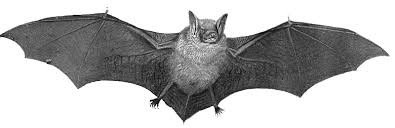
Example: The wings of bats and birds are analogous (similar function, different evolutionary origin), while the forelimbs of humans, dolphins, and bats are homologous (shared ancestry, possibly different functions).
Genetic Similarity and Phylogeny
DNA sequencing allows scientists to compare specific genes or regions of DNA to determine evolutionary relationships. The number of sequence differences reflects the degree of relatedness.
Cladogram: A branching diagram showing the order of evolutionary relationships, but not the amount of change.
Phylogram: A branching diagram where branch lengths are proportional to the amount of genetic change.
Example: If species A and B have 3 sequence differences, B and C have 9, and A and C have 10, A and B are more closely related than either is to C.
Application: Phylogenetic trees are used to study evolutionary history, track the spread of diseases, and inform conservation strategies.
How to Succeed in Biology 107
Attend all labs and complete assignments.
Take thorough notes during lectures and annotate provided slides.
Read relevant textbook chapters and practice with questions.
Be responsible for all material presented in class.
