 Back
BackIntroduction to Biology: The Study of Life, Cell Theory, and Evolution
Study Guide - Smart Notes
 Tailored notes based on your materials, expanded with key definitions, examples, and context.
Biology: The Study of Life
Fundamental Characteristics of Living Organisms
Biology is the scientific study of life and living organisms. All living organisms share five fundamental characteristics that distinguish them from non-living matter.
Cells: All organisms are composed of one or more membrane-bound cells.
Replication: All organisms are capable of reproduction.
Information: All organisms process hereditary information encoded in genes and respond to information from their environment.
Energy: All organisms acquire and utilize energy to sustain life.
Evolution: Populations of organisms are continually evolving.
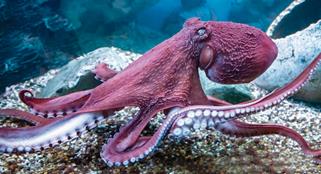
Example: Bacteria, plants, and animals all exhibit these five characteristics, demonstrating the unity of life.
The Cell Theory
Historical Development of Cell Theory
The cell theory is a foundational concept in biology, stating that all living things are composed of cells and that all cells arise from preexisting cells. This theory was developed through the pioneering work of early microscopists.
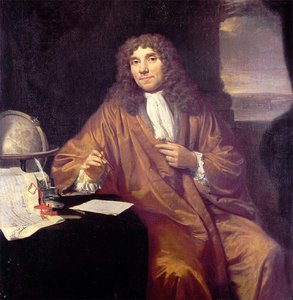
Anton van Leeuwenhoek (1632–1723): Dutch scientist who improved microscope design and was the first to observe and describe single-celled organisms, including bacteria, yeast, plant cells, and blood cells.

Robert Hooke (1635–1703): English scientist who coined the term "cell" after observing cork tissue under a microscope. His book Micrographia (1665) contained detailed illustrations of microscopic observations.
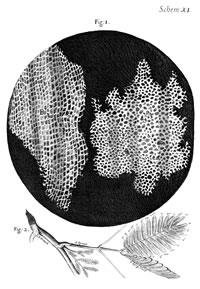
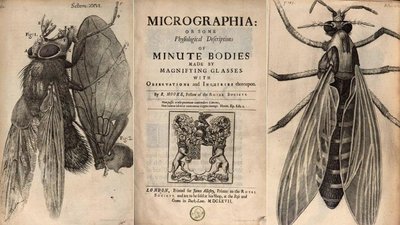
Hooke and van Leeuwenhoek's discoveries formed the basis of cell theory:
All organisms are made up of cells.
All cells come from preexisting cells.
Definition: Cell – The basic structural and functional unit of all living organisms.
Theory vs. Hypothesis
In science, a theory is a broad explanation for a wide range of phenomena, supported by a large body of evidence. A hypothesis is a testable statement that explains something observed.
Example Theory: Evolution by Natural Selection
Example Hypothesis: If ultraviolet light can damage DNA, then maybe this light can cause cancer.
Cell Theory vs. Spontaneous Generation
Cell theory states that cells arise only from preexisting cells, while the now-disproven idea of spontaneous generation suggested that living organisms could arise from non-living matter. Louis Pasteur's experiments with nutrient broth in swan-necked flasks provided strong evidence against spontaneous generation.
Pasteur's Experiment: Boiled broth in a swan-neck flask remained uncontaminated, while broth in an open flask became contaminated with microorganisms from the air.
Conclusion: Cells do not arise spontaneously; they come from other cells.
Chromosomal Theory of Inheritance
Discovery and Significance
In the early 1900s, Walter Sutton and Theodor Boveri developed the Chromosomal Theory of Inheritance, which states that chromosomes carry the units of heredity (genes).
Theodor Boveri: Demonstrated that all chromosomes are necessary for proper development in sea urchin embryos.
Walter Sutton: Showed that chromosomes occur in matched pairs and segregate during meiosis, providing a physical basis for Mendelian inheritance.
DNA: The Hereditary Material
Discovery of DNA Structure
In 1953, James Watson and Francis Crick discovered the double-helix structure of DNA, explaining how genetic information is stored and replicated.
Base Pairing: Adenine (A) pairs with Thymine (T), and Cytosine (C) pairs with Guanine (G).
This complementary base pairing allows for accurate DNA replication and transmission of genetic information.
Definition: Gene – A segment of DNA that codes for a specific protein or functional product.
The Central Dogma of Biology
The central dogma describes the flow of genetic information within a biological system:
DNA is transcribed into messenger RNA (mRNA).
mRNA is translated into proteins.
Proteins perform essential cellular functions and determine phenotype.
Equation:
Evolution by Natural Selection
Historical Perspectives and Modern Understanding
The concept of evolution has ancient roots, but Charles Darwin and Alfred Russel Wallace provided the first robust mechanism—natural selection—to explain how evolution occurs.
Evolution: Change in the characteristics of a population over time; species are related and can change through time.
Population: A group of individuals of the same species living in the same area at the same time.
Natural Selection
Natural selection is a process in which individuals with certain heritable traits survive and reproduce more successfully than others in a given environment. Over time, these traits become more common in the population.
Individuals must vary in heritable characteristics.
Certain traits increase survival and reproductive success in a specific environment.
Natural selection acts on individuals, but evolutionary change occurs in populations.
Fitness: The ability of an individual to produce surviving offspring.
Adaptation: A trait that increases an individual's fitness in a particular environment.
Mutation and Genetic Variation
Mutation is any change in the DNA sequence of a cell. It is the ultimate source of genetic variation, creating new alleles. Most mutations are neutral or deleterious, but some can be beneficial and increase in frequency due to natural selection.
Point Mutation: Change in a single base pair in DNA.
Synonymous Mutation: Does not change the amino acid sequence.
Nonsynonymous Mutation: Changes the amino acid sequence, potentially altering phenotype.
Missense Mutation: A nonsynonymous mutation that changes one amino acid to another.
Nonsense Mutation: Changes a codon to a stop codon, terminating translation prematurely.
Chromosome-level Mutations: Changes in chromosome number or structure, such as gene duplication.
Lateral (Horizontal) Gene Transfer: Transfer of genes between species.
Allele: A variant form of a gene.
Mutation and Evolutionary Processes
Mutation increases genetic diversity in populations, while evolutionary mechanisms such as natural selection, genetic drift, and gene flow shape the genetic structure of populations over time.
Most mutations are random with respect to fitness.
Beneficial mutations are rare but can have significant evolutionary effects when combined with selection.
Summary Table: Types of Mutations
Type of Mutation | Description | Effect on Protein |
|---|---|---|
Point Mutation | Change in a single base pair | May be silent, missense, or nonsense |
Synonymous | Base change does not alter amino acid | No effect (silent) |
Nonsynonymous (Missense) | Base change alters amino acid | May alter protein function |
Nonsense | Base change creates stop codon | Truncated, usually nonfunctional protein |
Chromosome-level | Change in chromosome number or structure | May duplicate or delete genes |
Lateral Gene Transfer | Genes transferred between species | Introduces new genetic material |
Conclusion
Understanding the fundamental characteristics of life, the cell theory, the molecular basis of heredity, and the mechanisms of evolution provides a strong foundation for further study in biology. These concepts explain both the unity and diversity of life on Earth.
