 Back
BackIntroduction to Mendelian Genetics: Key Concepts and Applications
Study Guide - Smart Notes
 Tailored notes based on your materials, expanded with key definitions, examples, and context.
Introduction to Genetics
Genetics is the study of heredity and the variation of inherited characteristics. This field explores how traits are passed from parents to offspring through genes, and how these traits manifest as observable characteristics.
Key Vocabulary in Genetics
Gene: A segment of DNA that contains instructions for the assembly of a particular protein, influencing specific traits (e.g., eye color).
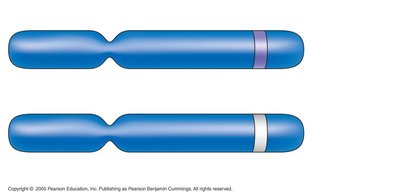
Allele: A particular version of a gene. Diploid organisms have two alleles for each gene (one on each homologous chromosome), while haploid organisms have one.
Genotype: The combination of alleles an individual possesses for a particular trait (e.g., Bb).
Phenotype: The observable characteristics of an organism, resulting from the interaction of its genotype and environment (e.g., brown eyes).
Dominant allele: An allele that produces its phenotype when present in one or two copies (e.g., AA or Aa both show the dominant trait).
Recessive allele: An allele that only produces its phenotype when present in two copies (e.g., aa).
Homozygote: An individual with two identical alleles for a gene (AA or aa).
Heterozygote: An individual with two different alleles for a gene (Aa).
Locus: The physical location of a gene on a chromosome (plural: loci).
Mendel's Laws of Inheritance
Gregor Mendel's experiments with pea plants established the foundational principles of inheritance, known as Mendel's Laws.
Law of Segregation
Each gamete (sperm or egg) carries only one allele for each gene, as allele pairs separate during gamete formation.
This explains why offspring inherit one allele from each parent for every gene.
Law of Independent Assortment
If two genes are located on separate chromosomes, their alleles will sort independently during gamete formation.
This leads to genetic variation in offspring.
Application: Mendel's Pea Flower Color Experiments
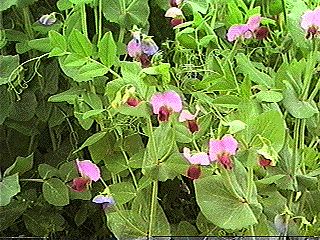
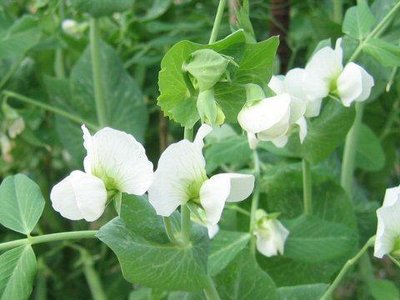
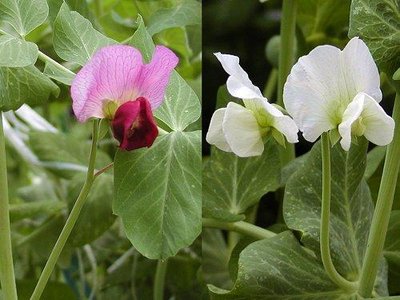
Mendel studied flower color in pea plants, observing the inheritance of purple and white flowers.
Dominance and the Molecular Basis of Traits
Dominance describes how one allele can mask the expression of another in heterozygotes. In Mendel's pea plants, the purple flower allele is dominant over the white flower allele.
Purple allele: Produces a functional transcription factor that activates the biosynthetic pathway for anthocyanin pigment, resulting in purple flowers.
White allele: Produces a nonfunctional transcription factor, so no pigment is made, resulting in white flowers.
Only one functional (purple) allele is needed to produce the pigment, so purple is dominant.
Genetic Crosses and Probability
Geneticists use probability to predict the outcomes of genetic crosses. When genes are unlinked (on different chromosomes), the probability of independent events is multiplied.
Example: The probability of rolling two sixes with dice is .
Similarly, the probability of inheriting two independent traits is the product of their individual probabilities.
Practice Problems
Problem 1: If the probability of a puppy being chinchilla-colored is and the probability of being female is , the probability of a female chinchilla puppy is .
Problem 2: For a pitbull puppy, the probability of being gray is , broken coat is , and male is $1/2$. The probability of a male with a broken, gray coat is .
Summary Table: Key Genetic Terms
Term | Definition | Example |
|---|---|---|
Gene | Segment of DNA coding for a protein | Gene for flower color |
Allele | Variant of a gene | Purple or white allele |
Genotype | Allele combination | Bb |
Phenotype | Observable trait | Purple flowers |
Dominant | Expressed with one or two copies | Purple allele |
Recessive | Expressed only with two copies | White allele |
Homozygote | Two identical alleles | AA or aa |
Heterozygote | Two different alleles | Aa |
Locus | Gene location on chromosome | Flower color gene locus |
Conclusion
Understanding the basic vocabulary and principles of Mendelian genetics is essential for studying inheritance patterns. Mastery of these concepts allows students to predict genetic outcomes and understand the molecular basis of traits.
