 Back
Introduction to the Nervous System: Structure and Function in Mammals and Other Animals
Study Guide - Smart Notes
 Tailored notes based on your materials, expanded with key definitions, examples, and context.
Animal Nervous Systems
Overview of Nervous System Structure
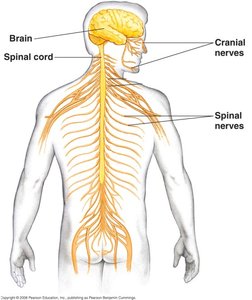
The nervous system is a complex network responsible for coordinating sensory input, motor output, and integration of information in animals. In mammals, the nervous system consists of the brain, spinal cord, and peripheral nerves, all composed of specialized cells called neurons and glia.
Brain and Spinal Cord: Central components of the central nervous system (CNS).
Nerves: Bundles of axons that transmit signals throughout the body.
Neurons: The fundamental units of the nervous system, specialized for signal transmission.
Glial Cells: Support cells that nourish, insulate, and protect neurons.
Endocrine and Nervous System Interactions
The nervous and endocrine systems often interact to regulate physiological processes.
Hypothalamus: Produces hormones and is part of the nervous system.
Adrenal Glands: Respond to nervous system inputs, linking both systems.
Cellular Components of the Nervous System
Neurons and Nerves
Neurons are specialized cells that transmit electrical and chemical signals. A nerve is a bundle of axons from multiple neurons, similar to a multi-wire cable.
Neuron: A single nerve cell.
Nerve: A bundle of axons, often compared to a cable containing many wires.

Glial Cells
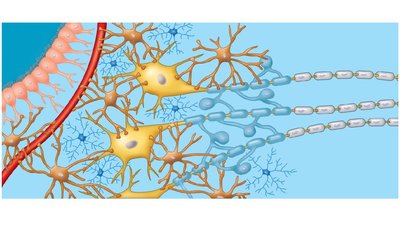
Glial cells outnumber neurons and play essential roles in the nervous system.
Nourishment: Glia provide nutrients to neurons.
Insulation: Glia insulate axons, facilitating efficient signal transmission.
Types of Glia: Include astrocytes, oligodendrocytes, microglia, Schwann cells, and ependymal cells.
Neuron Structure and Function
Parts of a Neuron
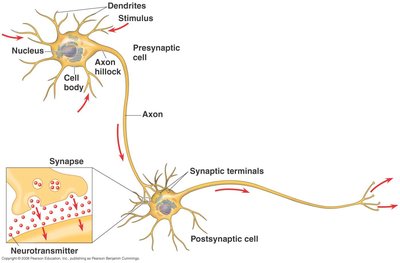
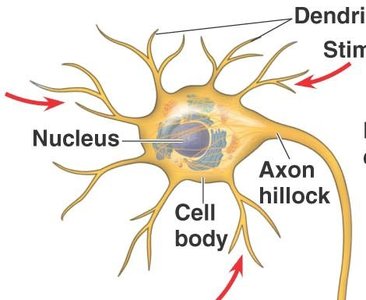
Neurons have three main structural components, each with a specific function.
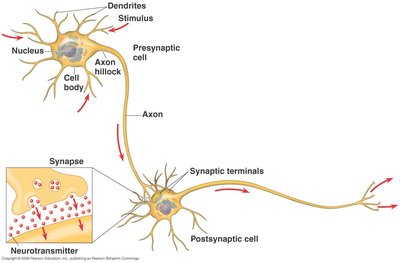
Cell Body: Contains the nucleus and receives signals from dendrites.
Dendrites: Branched extensions that receive signals and transmit them toward the cell body.
Axon: Long, unbranched extension that transmits signals from the cell body to other cells. The axon hillock is the site where the decision to "fire" an action potential is made.
Synapses
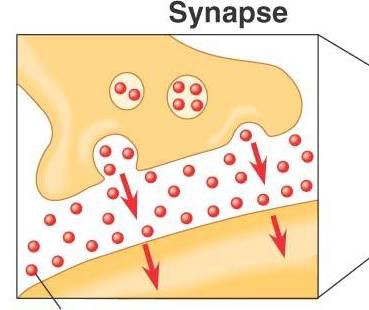
Synapses are junctions between neurons where communication occurs.
Chemical Synapses: Use neurotransmitters to transmit signals across the synaptic gap.
Electrical Synapses: Less common, involve direct electrical communication.
Types of Nervous Systems in Animals
Nerve Nets and Simple Nervous Systems
Nerve Net: Found in cnidarians (e.g., Hydra), consists of a diffuse network of interconnected neurons.
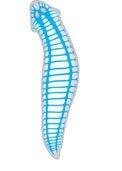
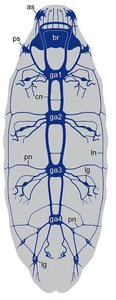
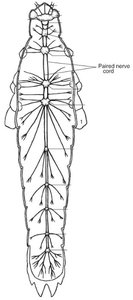
Ladder-like Nervous System: Found in flatworms, annelids, and panarthropods, features paired nerve cords and transverse nerves.
Complex Nervous Systems
Cephalopods: Have complex brains and advanced nervous systems.
Sessile Mollusks: Possess ganglia, which are clusters of nerve cells.
Vertebrates: Have a central nervous system (CNS) and peripheral nervous system (PNS).
Vertebrate Nervous System
Central and Peripheral Nervous Systems
Central Nervous System (CNS): Consists of the brain and dorsal, hollow spinal cord.
Peripheral Nervous System (PNS): Composed of sensory and motor neurons that connect the CNS to the rest of the body.
Summary Table: Nervous System Components
Component | Structure | Function |
|---|---|---|
Neuron | Cell body, dendrites, axon | Signal transmission |
Nerve | Bundle of axons | Conducts signals |
Glial Cells | Various types (astrocytes, oligodendrocytes, etc.) | Support, nourish, insulate neurons |
CNS | Brain, spinal cord | Integration and processing |
PNS | Sensory and motor neurons | Connects CNS to body |
Key Terms and Definitions
Neuron: A nerve cell specialized for transmitting electrical and chemical signals.
Nerve: A bundle of axons from multiple neurons.
Glia: Support cells in the nervous system.
Synapse: Junction between two neurons where communication occurs.
Central Nervous System (CNS): Brain and spinal cord.
Peripheral Nervous System (PNS): Sensory and motor neurons outside the CNS.
Example: Signal Transmission in a Neuron
An electrical impulse travels down the axon.
At the synapse, neurotransmitters are released to transmit the signal to the next cell.
Equations and Academic Context
Resting Membrane Potential
The resting membrane potential of a neuron is determined by the distribution of ions across the membrane.
Formula:
Action Potential
The action potential is a rapid change in membrane potential that propagates along the axon.
Formula:
Additional info:
Glial cells are essential for maintaining homeostasis, forming myelin, and providing support and protection for neurons.
Ganglia are clusters of neuron cell bodies found in invertebrates and vertebrates, serving as local processing centers.
