 Back
BackMacromolecules: Carbohydrates and Lipids in Human Biology
Study Guide - Smart Notes
 Tailored notes based on your materials, expanded with key definitions, examples, and context.
Organic Molecules & Carbon
Introduction to Organic Molecules
Organic molecules are the foundation of all living organisms and are primarily composed of carbon atoms bonded with other elements such as hydrogen, oxygen, and nitrogen. The unique bonding properties of carbon allow for the formation of a vast diversity of molecules, making it the essential building block of life.
Carbon forms strong covalent bonds, enabling the creation of large and complex molecules.
Organic molecules have no size limit and can range from small compounds to massive macromolecules.
Diversity among species is largely due to differences in their organic molecules, especially proteins and nucleic acids.
Macromolecules
Definition and Classes
Macromolecules are large molecules composed of thousands or millions of smaller subunits. They are essential for structure and function in living organisms. There are four major classes:
Carbohydrates
Lipids
Proteins
Nucleic acids
The number of possible macromolecules is virtually unlimited due to the many ways elements can combine.
Formation and Breakdown of Macromolecules
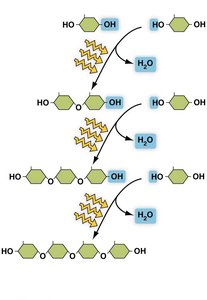
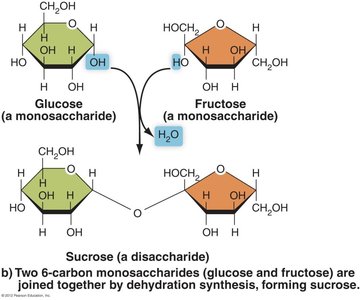
Dehydration Synthesis (Condensation Reaction): Subunits are joined together, and a molecule of water is removed for each bond formed. This process requires energy and is used to build macromolecules.
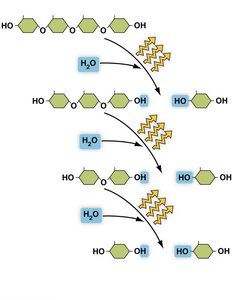
Hydrolysis Reaction: The reverse process, where water is added to break bonds between subunits, releasing energy stored in those bonds.
Carbohydrates
Structure and Function
Carbohydrates are organic molecules with a carbon backbone, and hydrogen and oxygen in a 2:1 ratio (like water). They are primarily used for energy but also serve structural roles in plants and some animals.
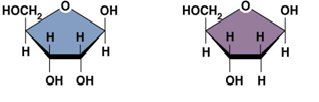
Monosaccharides: The simplest sugars, typically containing five or six carbons in a ring structure. Examples include glucose, fructose, ribose, and deoxyribose.
Disaccharides: Composed of two monosaccharides joined by dehydration synthesis. Examples include sucrose (glucose + fructose), lactose (glucose + galactose), and maltose (glucose + glucose).
Oligosaccharides: Short chains of a few monosaccharides. Some oligosaccharides are attached to proteins on cell membranes, forming glycoproteins involved in cell recognition and communication.
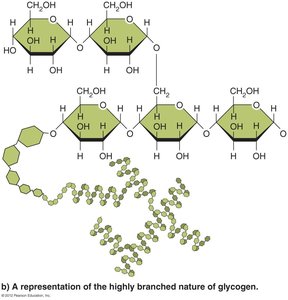
Polysaccharides: Long chains of monosaccharides, excellent for energy storage and structural support. Examples include glycogen (animal storage), starch (plant storage), chitin (animal structure), and cellulose (plant structure).
Lipids (Fats)
Overview and Classes
Lipids are a diverse group of hydrophobic molecules that do not dissolve in water. They are crucial for energy storage, cell membrane structure, and signaling. The three main subclasses are:
Triglycerides
Phospholipids
Steroids
Triglycerides
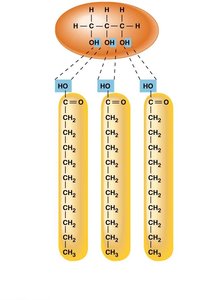
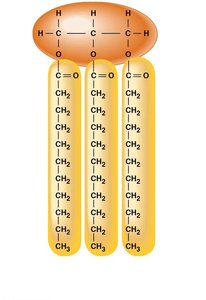
Triglycerides, also known as neutral fats, are formed by joining one glycerol molecule with three fatty acids through dehydration synthesis. They are stored in adipose tissue and serve as a major energy reserve.
Saturated Fats: Fatty acid tails have only single bonds (C–C), are straight, and pack tightly together. Solid at room temperature. Common in animal fats like butter and bacon grease. High intake is associated with cardiovascular disease.
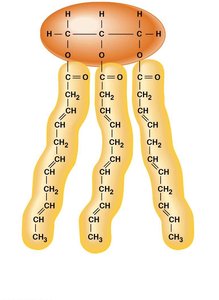
Unsaturated Fats: Fatty acid tails contain one or more double bonds (C=C), causing kinks that prevent tight packing. Liquid at room temperature (oils). Common in plant oils like vegetable oil.
Phospholipids
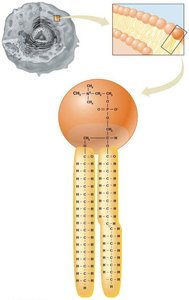
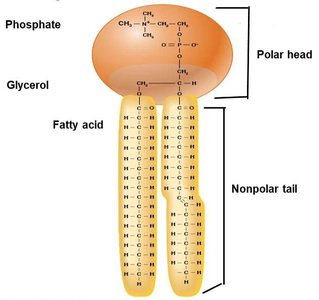
Phospholipids are modified lipids that are the primary structural component of cell membranes. They consist of a glycerol backbone, two fatty acid tails, and a negatively charged phosphate group.
The phosphate group is polar (hydrophilic), while the fatty acid tails are nonpolar (hydrophobic), giving the molecule amphipathic properties essential for membrane structure.
Steroids
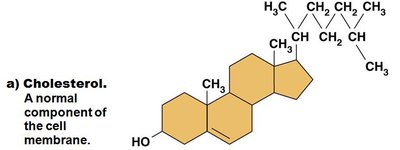
Steroids are a class of lipids with a structure distinct from other lipids. They consist of a backbone of four fused carbon rings (three six-membered and one five-membered ring) with various side groups attached. Steroids are relatively insoluble in water.
Cholesterol is a key example, serving as a component of cell membranes and a precursor for steroid hormones.
Summary Table: Carbohydrates and Lipids
Macromolecule | Subunit | Function | Examples |
|---|---|---|---|
Carbohydrates | Monosaccharides | Energy, structure | Glucose, starch, glycogen, cellulose |
Lipids | Fatty acids, glycerol | Energy storage, membranes, hormones | Triglycerides, phospholipids, cholesterol |
Key Reactions
Dehydration Synthesis:
Hydrolysis:
