 Back
BackMechanisms of Evolution and Hardy-Weinberg Equilibrium
Study Guide - Smart Notes
 Tailored notes based on your materials, expanded with key definitions, examples, and context.
Mechanisms of Evolution
Introduction to Evolutionary Change
Evolution is defined as the change in allele frequencies within a population over time. Several mechanisms can drive this change, including natural selection, genetic drift, and gene flow. Understanding these mechanisms is essential for explaining the diversity of life and the adaptation of organisms to their environments.
Key Mechanisms of Evolution
Natural Selection: The process by which individuals with advantageous heritable traits are more likely to survive and reproduce, leading to the accumulation of favorable traits in the population over generations.
Genetic Drift: Random fluctuations in allele frequencies, especially significant in small populations, which can lead to the loss of genetic variation and fixation of alleles.
Gene Flow: The movement of alleles between populations due to the migration of individuals or gametes, which can increase genetic variation within populations and reduce differences between populations.
Summary of Natural Selection
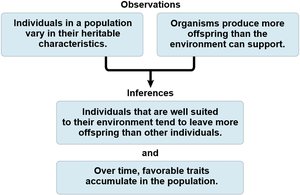
Natural selection operates based on two main observations: individuals in a population vary in their heritable characteristics, and organisms produce more offspring than the environment can support. The inferences drawn from these observations are that individuals well-suited to their environment tend to leave more offspring, and over time, favorable traits accumulate in the population.
Genetic Variation and Evolution
Genetic variation is the raw material for evolution. Without variation, populations cannot evolve in response to changing environmental conditions. Variation arises from mutations, genetic recombination, and other processes.
Population Genetics and the Hardy-Weinberg Principle
The Hardy-Weinberg equilibrium provides a mathematical model to study genetic variation in populations. It predicts genotype frequencies under the assumption that no evolution is occurring. The model is based on the following conditions: no mutation, random mating, no gene flow, infinite population size, and no selection.
Gene Pool: The total collection of alleles in a population at any one time.
Allele Frequencies: Represented by p and q for two alleles at a locus, where p + q = 1.
Calculating Allele and Genotype Frequencies
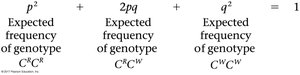
For a gene with two alleles, the Hardy-Weinberg equation is:
Where:
= frequency of homozygous dominant genotype
= frequency of heterozygous genotype
= frequency of homozygous recessive genotype
Example: Incomplete Dominance in Wildflowers
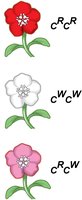
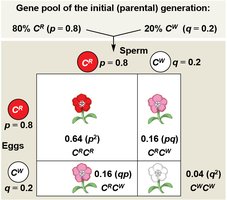
Consider a population of wildflowers with incomplete dominance for color: red (), white (), and pink (). If the population consists of 320 red, 160 pink, and 20 white flowers, the allele frequencies can be calculated using the Hardy-Weinberg equation.
Conditions for Hardy-Weinberg Equilibrium
No sexual selection (random mating)
No genetic drift (large population size)
No gene flow (no migration)
No mutation
No natural selection
Genetic Drift
Definition and Effects
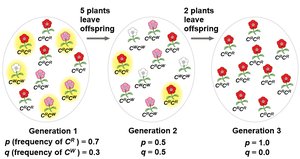
Genetic drift refers to random changes in allele frequencies, which are more pronounced in small populations. It can lead to the loss of genetic variation and fixation of alleles, including harmful ones.
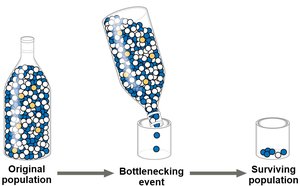
Bottleneck Effect: A sudden reduction in population size due to environmental events, resulting in a loss of genetic diversity.
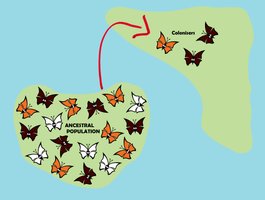
Founder Effect: When a small group of individuals establishes a new population, leading to different allele frequencies compared to the original population.
Gene Flow
Definition and Consequences
Gene flow is the transfer of alleles between populations due to the movement of individuals or gametes. It can increase genetic variation within populations and reduce differences between populations, potentially preventing local adaptation or enhancing adaptation by introducing new alleles.
Modes of Selection
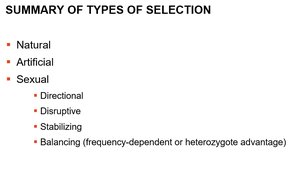
Types of Selection
Natural Selection: Differential survival and reproduction due to environmental pressures.
Artificial Selection: Human-mediated selection for desired traits.
Sexual Selection: Selection for traits that increase mating success.
Natural selection can take several forms:
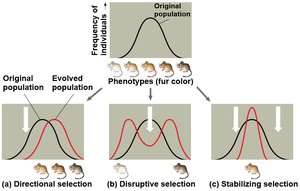
Directional Selection: Favors one extreme phenotype.
Disruptive Selection: Favors both extreme phenotypes over intermediate forms.
Stabilizing Selection: Favors intermediate phenotypes and reduces variation.
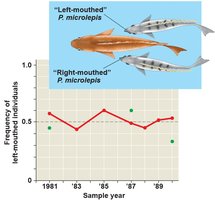
Balancing Selection: Maintains multiple alleles in the population (e.g., frequency-dependent selection, heterozygote advantage).
Balancing Selection
Balancing selection occurs when natural selection maintains stable frequencies of two or more phenotypic forms. Examples include frequency-dependent selection and heterozygote advantage.
Sexual Selection
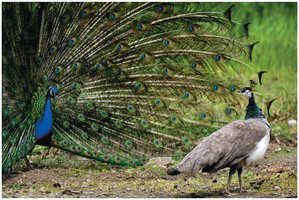
Sexual selection is a form of natural selection where individuals with certain traits are more likely to obtain mates. This leads to non-random mating and can result in pronounced sexual dimorphism.
Limitations of Natural Selection
Why Natural Selection Cannot Fashion Perfect Organisms
Selection can only act on existing variation; mutations are random and not goal-directed.
Evolution is limited by historical constraints; organisms cannot escape their ancestry.
Adaptations are often compromises due to competing functional demands.
Chance events, natural selection, and environmental changes interact to shape evolutionary outcomes.
Summary Table: Mechanisms of Evolution and Their Effects on Genetic Diversity
Mechanism | Effect on Diversity Within Population | Effect on Diversity Between Populations |
|---|---|---|
Genetic Drift | Decreases | Increases |
Gene Flow | Increases | Decreases |
Selection | Can increase or decrease (usually decreases) | Can increase or decrease |
Practice Problems and Applications
Use the Hardy-Weinberg equation to determine if a population is evolving by comparing observed and expected genotype frequencies.
Identify which Hardy-Weinberg condition is violated in scenarios involving gene flow, non-random mating, or selection.
Classify examples of selection as directional, disruptive, or stabilizing based on changes in phenotype distribution.
Additional info: This guide covers core concepts from chapters on evolution, population genetics, and mechanisms of evolutionary change, suitable for introductory college biology courses.
