 Back
BackMeiosis and Mendelian Genetics: Mechanisms of Inheritance and Genetic Diversity
Study Guide - Smart Notes
 Tailored notes based on your materials, expanded with key definitions, examples, and context.
Meiosis: Cell Division for Sexual Reproduction
Introduction to Sexual and Asexual Reproduction
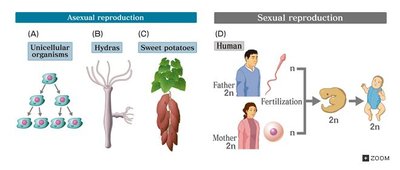
Sexual reproduction involves the combination of genetic material from two parents, resulting in genetically unique offspring. In contrast, asexual reproduction produces genetically identical offspring from a single parent. The process of meiosis is essential for sexual reproduction, as it reduces the chromosome number by half, ensuring genetic stability across generations.
Organization of Human Chromosomes
Autosomes: The 22 pairs of chromosomes that do not determine sex.
Sex Chromosomes: The X and Y chromosomes that determine biological sex (XX for females, XY for males).
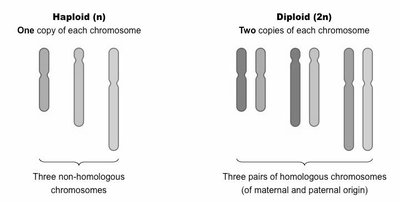
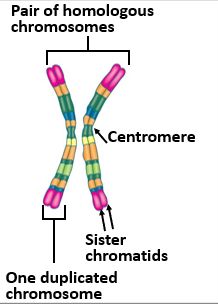
Homologous Chromosomes: Chromosomes with the same genes at the same loci, but possibly different alleles, inherited from each parent.
Locus (pl. loci): The specific location of a gene on a chromosome.
Alleles: Different versions of a gene found at the same locus.
Haploid vs Diploid Cells
Body cells (somatic cells) are typically diploid (2n), containing two sets of chromosomes, while sex cells (gametes) are haploid (n), containing one set of chromosomes. Meiosis ensures that gametes have half the chromosome number of somatic cells, preventing chromosome doubling in each generation.
The Human Life Cycle and the Role of Meiosis
Overview of the Human Life Cycle
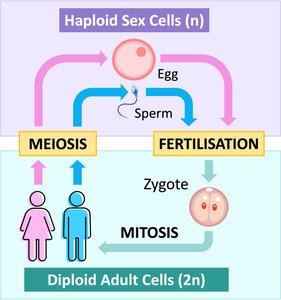
Humans alternate between diploid and haploid stages. Diploid adults produce haploid gametes via meiosis. Fertilization restores the diploid state in the zygote, which grows by mitosis into a new adult.
Phases of Meiosis
Meiosis I: Reduction Division
Meiosis I separates homologous chromosomes, reducing the chromosome number by half. This is known as reduction division, as diploid cells become haploid.
Prophase I: Homologous chromosomes pair and exchange genetic material (crossing over).
Metaphase I: Homologous pairs align at the metaphase plate.
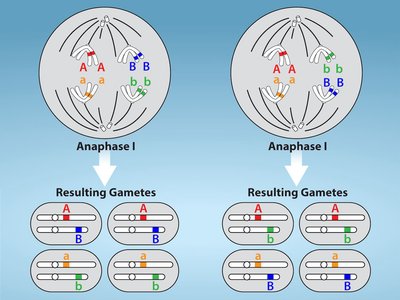
Anaphase I: Homologous chromosomes separate to opposite poles.
Telophase I and Cytokinesis: Two haploid cells are formed.
Meiosis II: Separation of Sister Chromatids
Meiosis II resembles mitosis, where sister chromatids are separated, resulting in four haploid cells from the original diploid cell.
Prophase II, Metaphase II, Anaphase II, Telophase II: Similar to mitosis, but starting with haploid cells.
Comparing Meiosis and Mitosis
Similarities and Differences
Similarities: Both involve DNA replication, chromosome alignment, and separation.
Differences: Meiosis involves two divisions, produces four haploid cells, and introduces genetic diversity; mitosis involves one division, produces two diploid cells, and maintains genetic identity.
Genetic Diversity in Meiosis
Mechanisms Generating Genetic Variation
Independent Assortment: Homologous chromosomes are randomly distributed to gametes, creating many possible combinations.
Crossing Over: Homologous chromosomes exchange genetic material during prophase I, increasing genetic diversity.
Random Fertilization: Any sperm can fertilize any egg, further increasing genetic variation.
Mathematical Rule for Independent Assortment
The number of possible chromosome combinations due to independent assortment is , where n is the haploid number of chromosomes.
For humans: possible combinations.
Errors in Meiosis: Nondisjunction and Chromosomal Disorders
Nondisjunction
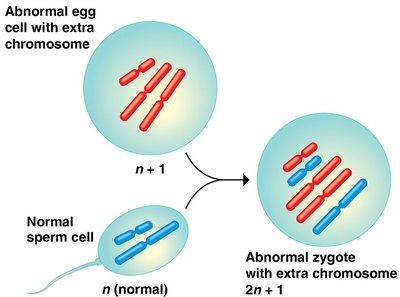
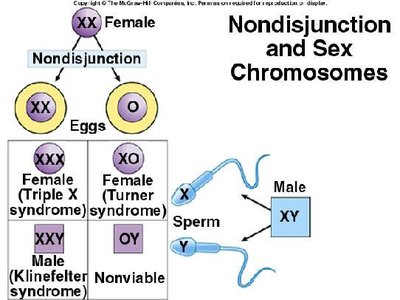
Nondisjunction occurs when chromosomes fail to separate properly during meiosis, resulting in gametes with abnormal chromosome numbers. This can happen in either meiosis I or II.
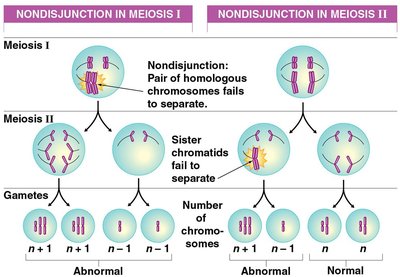
Consequences of Nondisjunction
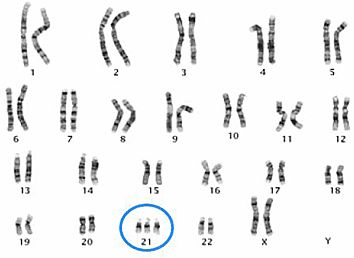
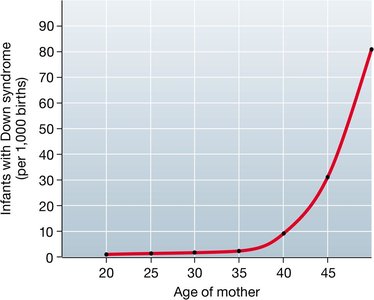
Trisomy: An extra chromosome (e.g., Trisomy 21, Down syndrome).
Monosomy: A missing chromosome (e.g., Turner syndrome, XO).
Sex Chromosome Aneuploidies
Sex Chromosomes | Syndrome | Major Symptoms | Population Frequency |
|---|---|---|---|
XXY | Klinefelter syndrome (male) | Sterile; underdeveloped testes; secondary female characteristics | 1 in 2000 |
XYY | Jacobs syndrome (male) | Slightly taller than average | 1 in 2000 |
XXX | None (female) | Slightly taller than average; slight risk of learning disabilities | 1 in 1000 |
XO | Turner syndrome (female) | Sterile; immature sex organs | 1 in 5000 |
Polyploidy and Chromosome Structure Alterations
Polyploidy
Polyploidy is the condition of having more than two complete sets of chromosomes. It is common in plants and can lead to the formation of new species.
Alterations of Chromosome Structure
Deletion: Loss of a chromosome segment.
Duplication: Repetition of a chromosome segment.
Inversion: Reversal of a chromosome segment.
Translocation: Movement of a segment to a nonhomologous chromosome.
Gametogenesis: Formation of Gametes
Spermatogenesis
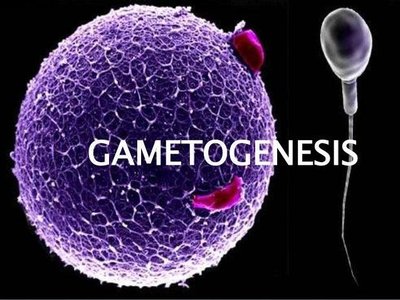
Spermatogenesis is the process by which sperm cells are produced in males. It begins at puberty and continues throughout life, producing four haploid sperm from each diploid precursor cell.
Oogenesis
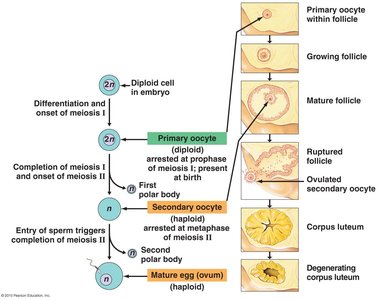
Oogenesis is the process by which egg cells are produced in females. It begins before birth, pauses, and completes upon fertilization, producing one mature egg and polar bodies from each precursor cell.
Sexual Dimorphism in Gametogenesis
Females: Meiosis initiated once in a finite population of cells; one gamete per meiosis; meiosis arrested and completed upon fertilization.
Males: Meiosis initiated continuously; four gametes per meiosis; meiosis and differentiation proceed without arrest.
Review: Chromosome Terminology
Chromosome: Linear DNA molecule with associated proteins.
Sister Chromatids: Duplicated chromosomes joined at the centromere.
Centromere: Region where sister chromatids are joined.
Homologous Chromosomes: Chromosomes with the same genes from different parents.
Mendelian Genetics: Patterns of Inheritance
Key Terms
Characteristic: Observable feature (e.g., flower color).
Trait: Variant of a characteristic (e.g., violet or white flowers).
Phenotype: Observable traits of an organism.
Genotype: Genetic makeup of an organism.
Homozygous: Two identical alleles for a gene.
Heterozygous: Two different alleles for a gene.
Dominant/Recessive: Dominant alleles mask recessive alleles in heterozygotes.
Wild type/Mutant: Most common allele/variant allele.
Mendel’s Experiments and Laws
Law of Dominance: Dominant alleles mask recessive alleles.
Law of Segregation: Allele pairs separate during gamete formation.
Law of Independent Assortment: Alleles of different genes assort independently during gamete formation (applies to genes on different chromosomes).
Punnett Squares
Punnett squares are diagrams used to predict the probability of offspring genotypes and phenotypes from a genetic cross.
Monohybrid and Dihybrid Crosses
Monohybrid Cross: Examines inheritance of a single trait.
Dihybrid Cross: Examines inheritance of two traits simultaneously; phenotypic ratio for two heterozygotes is typically 9:3:3:1.
Calculating Probabilities
Multiplication Rule: Probability of independent events occurring together is the product of their probabilities.
Addition Rule: Probability of either of two mutually exclusive events is the sum of their probabilities.
Dominant vs. Recessive Alleles and Human Disorders
Loss-of-function Alleles: Usually recessive; reduced or absent gene product (e.g., cystic fibrosis).
Gain-of-function Alleles: Usually dominant; increased or new gene activity (e.g., Huntington disease).
Disorder Type | Examples |
|---|---|
Recessive | Cystic Fibrosis, Gaucher Disease, Pompe Disease, Tay Sachs Disease, Phenylketonuria, Sickle Cell Disease |
Dominant | Huntington Disease, Hypercholesterolemia, Neurofibromatosis Type I, Achondroplasia, Marfan Syndrome |
Example: In Pompe disease, a loss-of-function mutation in the alpha-glucosidase gene leads to glycogen accumulation. Homozygous dominant individuals have normal enzyme activity, heterozygotes have reduced activity, and homozygous recessive individuals lack enzyme activity, resulting in disease.
Additional info: Mendel’s experiments used discontinuous traits, which simplified the discovery of inheritance laws. Continuous traits (e.g., height) are influenced by multiple genes and environmental factors.
