 Back
BackChapter 13: Meiosis
Study Guide - Smart Notes
 Tailored notes based on your materials, expanded with key definitions, examples, and context.
Meiosis and Its Role in Sexual Reproduction
Introduction to Meiosis
Meiosis is a specialized type of cell division that reduces the chromosome number by half, producing four unique haploid gametes from a diploid parent cell. This process is essential for sexual reproduction and ensures genetic diversity among offspring.
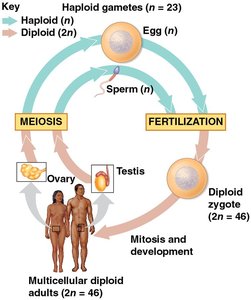
Somatic cells are diploid (2n), containing two sets of chromosomes (46 in humans).
Gametes (egg and sperm) are haploid (n), containing one set of chromosomes (23 in humans).
Fertilization restores the diploid number, forming a zygote.
Comparison: Mitosis vs. Meiosis
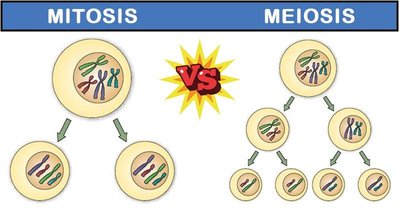
While both mitosis and meiosis are forms of cell division, their outcomes and purposes differ significantly.
Mitosis produces two genetically identical diploid cells for growth and repair.
Meiosis produces four genetically unique haploid cells for sexual reproduction.
Key Vocabulary and Concepts
Chromosome Structure and Terminology
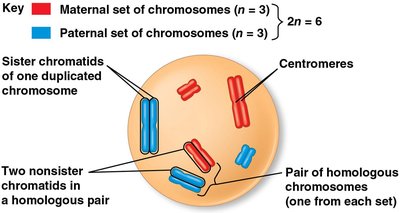
Sister chromatids: Identical copies of a chromosome, joined at the centromere, formed during DNA replication (S phase).
Homologous chromosomes: Chromosome pairs (one from each parent) with the same genes but possibly different alleles.
Autosomes: Non-sex chromosomes (22 pairs in humans).
Sex chromosomes: X and Y chromosomes determining biological sex.
Sexual Life Cycles and Meiosis
Overview of Sexual Life Cycles
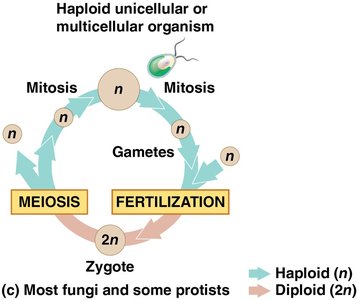
Sexual life cycles alternate between haploid and diploid stages, with meiosis and fertilization as key events. The timing and structure of these cycles vary among animals, plants, fungi, and protists.
Animals: Gametes are the only haploid cells; fertilization produces a diploid zygote that grows by mitosis.
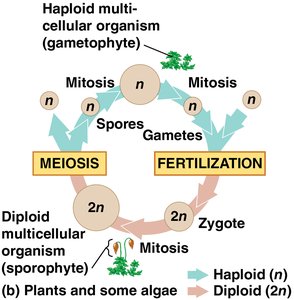
Plants and some algae: Exhibit alternation of generations, with both multicellular diploid (sporophyte) and haploid (gametophyte) stages.
Fungi and some protists: The only diploid stage is the zygote; most of the life cycle is haploid.
Mechanisms of Meiosis
Phases of Meiosis
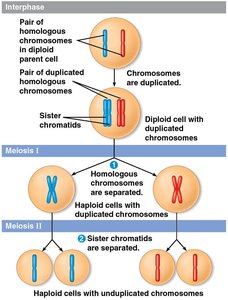
Meiosis consists of two sequential divisions: Meiosis I and Meiosis II. Each division has distinct phases that ensure the reduction of chromosome number and the generation of genetic diversity.
Meiosis I: Homologous chromosomes separate, reducing the chromosome number by half.
Meiosis II: Sister chromatids separate, similar to mitosis.
Meiosis I: Reductional Division
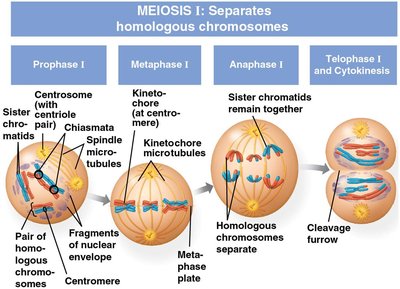
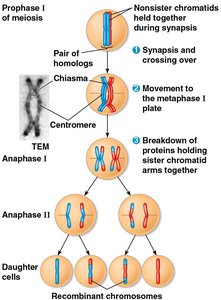
Prophase I: Homologous chromosomes pair (synapsis) and exchange genetic material (crossing over).
Metaphase I: Homologous pairs align at the metaphase plate.
Anaphase I: Homologous chromosomes separate to opposite poles.
Telophase I and Cytokinesis: Two haploid cells form, each with duplicated chromosomes.
Meiosis II: Equational Division
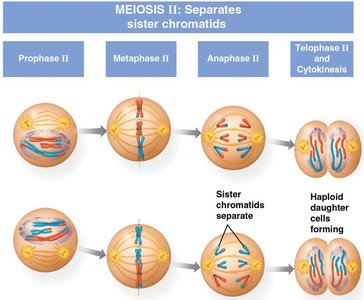
Prophase II: Chromosomes condense in two haploid cells.
Metaphase II: Chromosomes align at the metaphase plate.
Anaphase II: Sister chromatids separate.
Telophase II and Cytokinesis: Four unique haploid cells are produced.
Genetic Variation in Meiosis
Origins of Genetic Variation
Meiosis introduces genetic diversity through several mechanisms, which are crucial for evolution and adaptation.
Mutation: Changes in DNA sequence create new alleles.
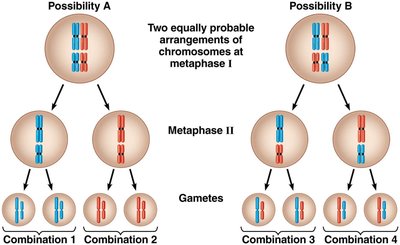
Independent assortment: Random orientation of homologous pairs during metaphase I leads to varied combinations of chromosomes in gametes.
Crossing over: Exchange of genetic material between non-sister chromatids during prophase I creates recombinant chromosomes.
Random fertilization: Any sperm can fertilize any egg, further increasing genetic combinations.
Summary Table: Mitosis vs. Meiosis
Feature | Mitosis | Meiosis |
|---|---|---|
Number of divisions | 1 | 2 |
Number of daughter cells | 2 | 4 |
Chromosome number in daughter cells | Diploid (2n) | Haploid (n) |
Genetic identity | Identical to parent | Genetically unique |
Role | Growth, repair | Sexual reproduction |
Practice Question
Question: Homologous chromosomes separate during…
A. Meiosis I (Correct answer)
B. Meiosis II
C. Telophase
D. They don’t ever separate
E. During DNA replication
Additional info: The separation of homologous chromosomes during anaphase I of meiosis is a key event that reduces the chromosome number by half, distinguishing meiosis from mitosis, where sister chromatids separate.
