 Back
BackChapter 5 Study Guide
Study Guide - Smart Notes
 Tailored notes based on your materials, expanded with key definitions, examples, and context.
Membrane Structure and Function
Fluid-Mosaic Model of the Plasma Membrane
The plasma membrane is a dynamic structure that separates the cell from its environment and regulates the movement of substances in and out. The fluid-mosaic model describes the membrane as a fluid bilayer of phospholipids with embedded proteins, carbohydrates, and cholesterol.
Phospholipid bilayer: Composed of amphipathic phospholipids with hydrophilic (polar) heads facing outward toward water and hydrophobic (nonpolar) tails facing inward, away from water.
Mosaic of proteins: Integral and peripheral proteins are interspersed throughout the bilayer, along with carbohydrates (glycoproteins, glycolipids) and cholesterol.
Fluidity: The membrane is flexible, allowing lateral movement of components.
Amphipathic nature: Enables the formation of a stable barrier between aqueous environments.
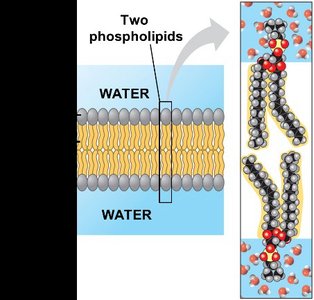
Membrane Fluidity
Membrane fluidity is influenced by the types of fatty acids in phospholipids and the presence of cholesterol.
Saturated fatty acids: Straight tails allow tight packing, decreasing fluidity.
Unsaturated fatty acids: Kinked tails prevent tight packing, increasing fluidity.
Cholesterol: At moderate temperatures, cholesterol decreases fluidity by restraining phospholipid movement; at low temperatures, it prevents solidification by disrupting packing.
Example: Thermophilic bacteria in hot springs have more saturated fatty acids to prevent excessive fluidity.
Plasma Membrane Components
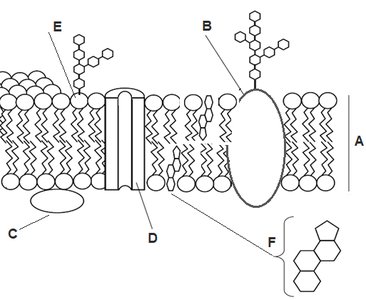
The plasma membrane contains various components, each with specific functions:
Label | Structure | Description |
|---|---|---|
A | Phospholipid bilayer | Hydrophobic tails face each other; hydrophilic heads exposed to water |
B | Integral (transmembrane) protein with carbohydrate | Embedded in membrane; involved in cell recognition |
C | Peripheral protein | Loosely bound to membrane surface |
D | Integral (transmembrane) protein | Can transport substances in/out of cell |
E | Phospholipid with attached carbohydrate | Glycolipid |
F | Cholesterol | Steroid found in animal cell membranes |
Functions of Membrane Proteins
Membrane proteins perform a variety of essential functions:
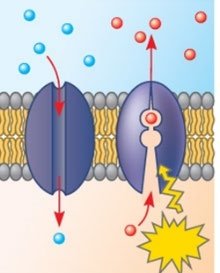
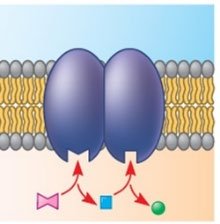
Transport: Channels or pumps assist with passive or active transport of ions and molecules.
Cell-cell recognition: Glycoproteins provide cell "signature" (ID tags).
Enzymatic activity: Proteins catalyze steps in metabolic pathways.
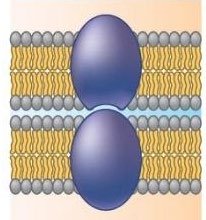
Intercellular joining: Proteins join adjacent cells via gap or tight junctions.
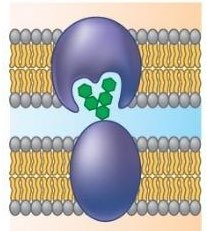
Signal transduction: Receptors bind signaling molecules to relay messages and trigger cellular responses.
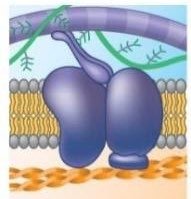
Attachment: Proteins anchor the cytoskeleton and extracellular matrix (ECM).
Glycoproteins and Glycolipids
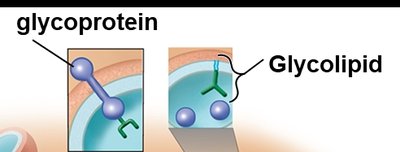
Glycoproteins and glycolipids are important for cell recognition and signaling.
Glycoproteins: Proteins with carbohydrate chains attached; serve as cell ID tags.
Glycolipids: Lipids with carbohydrate chains; also involved in cell recognition.
Membrane Synthesis and Orientation
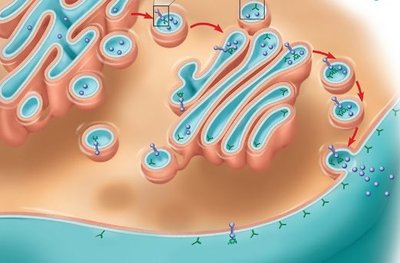
Membrane proteins and lipids are synthesized in the endoplasmic reticulum (ER) and modified in the Golgi apparatus. Carbohydrate chains are oriented so that they face outward on the plasma membrane.
Membrane Transport
Selective Permeability
The plasma membrane is selectively permeable, allowing only certain molecules to pass through.
Type of Molecule | How Easily It Crosses | Examples |
|---|---|---|
Small non-polar | Easily | O2, CO2, lipids |
Small polar | Slowly | Water, glycerol |
Ions/large polar | Cannot | Na+, Cl-, glucose, proteins |
Passive Transport
Passive transport does not require energy and moves substances down their concentration gradient.
Simple diffusion: Molecules move directly across the membrane without help.
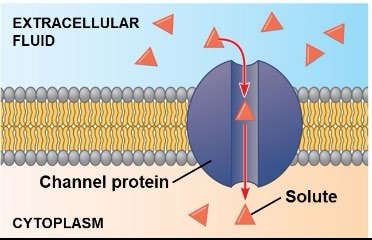
Facilitated diffusion: Molecules require assistance from transport proteins (channel or carrier proteins).


Osmosis and Tonicity
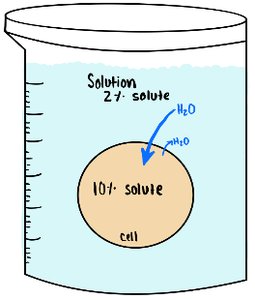
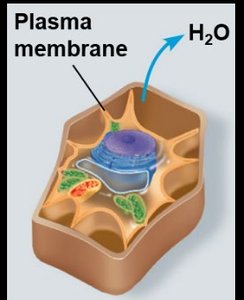
Osmosis is the facilitated diffusion of water across a membrane. Water moves toward higher solute concentration. Tonicity describes the ability of a solution to cause a cell to gain or lose water.
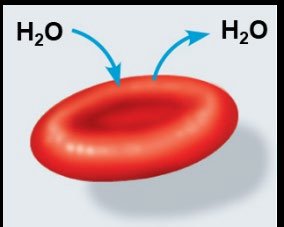
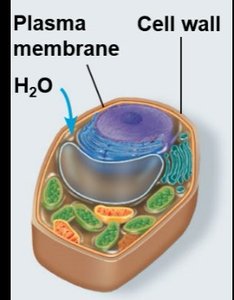
Hypotonic: Solution has lower solute concentration than cell; water moves into cell.
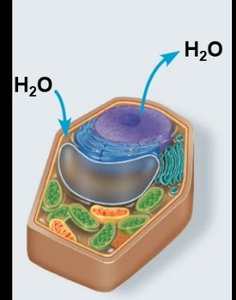
Isotonic: Solution has equal solute concentration; no net water movement.
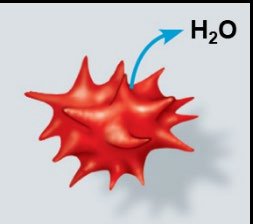
Hypertonic: Solution has higher solute concentration; water moves out of cell.


Water Balance in Animal and Plant Cells
Water balance is crucial for cell survival. Animal cells prefer isotonic environments, while plant cells prefer hypotonic environments due to their rigid cell walls.
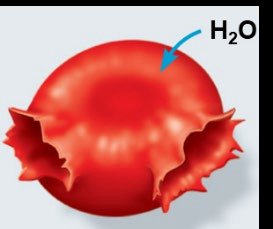
Animal cells: In hypotonic solutions, cells may burst; in hypertonic, they shrivel.
Plant cells: In hypotonic solutions, cells become turgid (ideal); in hypertonic, they undergo plasmolysis.
Active Transport
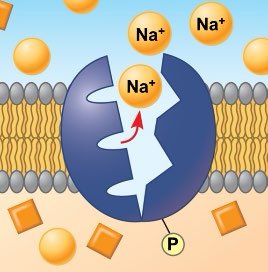
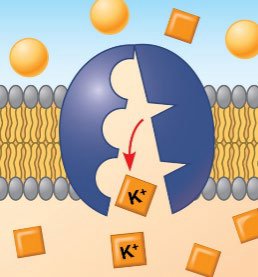
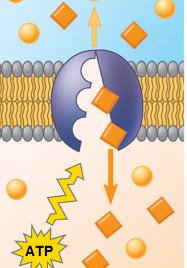
Active transport requires energy (usually ATP) to move substances against their concentration gradient.
Sodium-potassium pump: Moves 3 Na+ out and 2 K+ into the cell, maintaining electrochemical gradients.
Electrogenic pump: Generates voltage across the membrane.
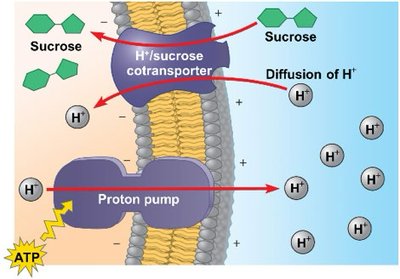
Proton pump: Moves H+ ions, used in plants, fungi, and prokaryotes.
Cotransport: Couples the movement of one substance down its gradient with another against its gradient.

Bulk Transport
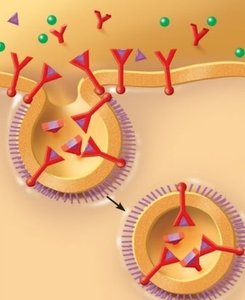
Bulk transport moves large molecules or particles via vesicles.
Exocytosis: Secretion of molecules by fusion of vesicles with the plasma membrane.
Endocytosis: Uptake of molecules by forming new vesicles from the plasma membrane.
Phagocytosis: "Cellular eating" of large particles.
Pinocytosis: "Cellular drinking" of fluids.
Receptor-mediated endocytosis: Specific uptake of molecules via receptor binding.
Cell Signaling
Types of Cell Signaling
Cell signaling allows cells to communicate and coordinate activities. There are several types:
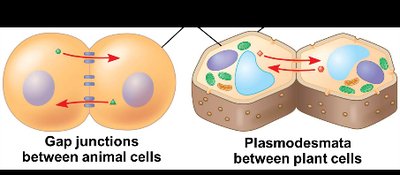
Direct contact: Cells communicate via gap junctions (animals) or plasmodesmata (plants).
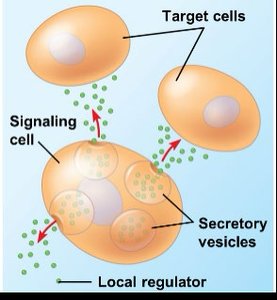
Paracrine signaling: Local regulators affect nearby cells.
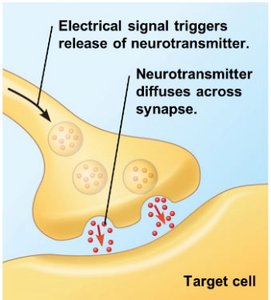
Synaptic signaling: Nerve cells release neurotransmitters into synapses.
Endocrine signaling: Hormones travel through the bloodstream to distant target cells.

Stages of Cell Signaling
Cell signaling involves three main stages:
Reception: Signaling molecule (ligand) binds to receptor protein, activating it.
Transduction: Activated receptor triggers a cascade of molecular interactions (often phosphorylation).
Response: Cellular activity is regulated, such as gene expression or enzyme activation.
Example: Epinephrine signaling pathway involves GPCR, G-protein, adenylyl cyclase, cAMP, and protein kinase A, leading to glycogen breakdown and increased blood sugar.
Key Equations:
Concentration gradient:
Sodium-potassium pump:
Osmosis:
Additional info: Most signaling pathways are highly conserved across species, and different cell types can respond differently to the same signal.
