 Back
BackMendel and the Gene Idea: Patterns of Inheritance
Study Guide - Smart Notes
 Tailored notes based on your materials, expanded with key definitions, examples, and context.
Mendel and the Gene Idea
Historical Context and Mendel's Contributions
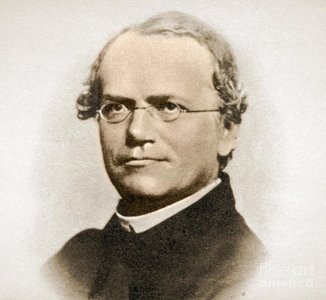
Gregor Mendel is recognized as the father of genetics due to his pioneering work on the inheritance of traits in pea plants. Before Mendel, the prevailing theory was blended inheritance, which suggested that parental traits mixed in offspring. Mendel's experiments refuted this, establishing the particulate theory of inheritance, where traits are inherited as discrete units (genes).
Inheritance: The transmission of traits from parents to offspring.
Blended inheritance: The outdated idea that parental traits blend in offspring.
Particulate inheritance: Traits are inherited as discrete units (genes).
Model organisms: Species used in research due to their experimental advantages and broad applicability of findings.
Experimental Advantages of Mendel's Model Organism
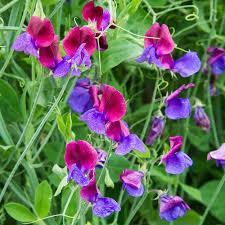
Mendel used the garden pea (Pisum sativum) for his experiments, which offered several advantages:
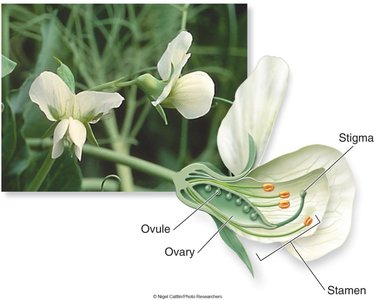
Controlled mating: Peas can self-pollinate or be cross-pollinated by hand.
Short generation time: Rapid life cycle allows for multiple generations in a short period.
Large number of offspring: Facilitates statistical analysis of inheritance patterns.
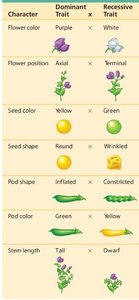
Multiple characters with distinct traits: Traits such as seed color, shape, and flower color are easily distinguishable.
Edibility: Practical for cultivation and study.
Mendel's Experimental Design
Mendel performed monohybrid and dihybrid crosses to trace inheritance patterns:
Monohybrid cross: Examines inheritance of a single trait (e.g., seed color).
Dihybrid cross: Examines inheritance of two traits simultaneously (e.g., seed color and shape).
Key Terms in Mendelian Genetics
Gene: A heritable factor that determines a trait.
Allele: Alternative forms of a gene.
Genotype: The genetic makeup of an organism (e.g., YY, Yy, yy).
Phenotype: The observable trait (e.g., yellow or green seeds).
Homozygous: Having two identical alleles for a gene (e.g., YY or yy).
Heterozygous: Having two different alleles for a gene (e.g., Yy).
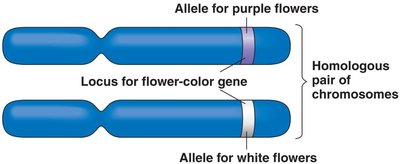
Locus: The specific location of a gene on a chromosome.
Mendel's Laws of Inheritance
Law of Dominance
If two alleles for a gene differ, only the dominant allele is expressed in the phenotype, while the recessive allele is masked in heterozygotes.
Dominant allele: Expressed in the phenotype when present (e.g., yellow seed color).
Recessive allele: Masked in the presence of a dominant allele (e.g., green seed color).
Law of Segregation
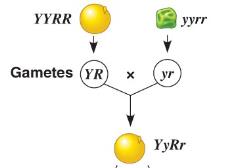
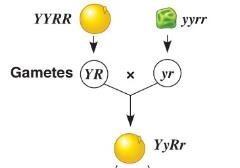
The two alleles for each gene segregate during gamete formation, so each gamete carries only one allele for each gene. This is a direct consequence of homologous chromosome separation during meiosis.
Explains why offspring inherit one allele from each parent.
Heterozygotes produce two types of gametes, each with one allele.
Punnett Squares and Predicting Ratios
Punnett squares are used to predict the genotypic and phenotypic ratios of offspring from genetic crosses.
Monohybrid cross (Yy x Yy):
Genotypic ratio: 1 YY : 2 Yy : 1 yy
Phenotypic ratio: 3 yellow : 1 green
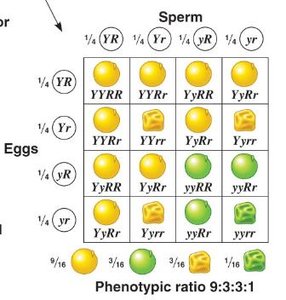
Law of Independent Assortment
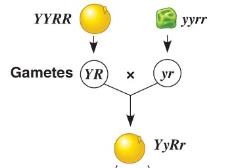
Alleles of different genes assort independently during gamete formation. This law applies when genes are located on different chromosomes or far apart on the same chromosome.
Explains the inheritance of multiple traits (dihybrid crosses).
Results in new combinations of traits in offspring.
Applications and Examples
Human Mendelian Traits
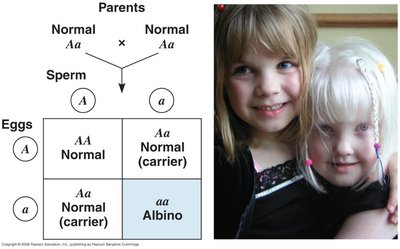
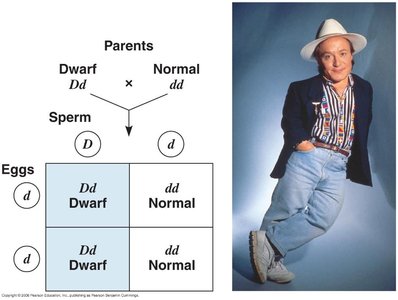
Many human traits follow Mendelian inheritance patterns, such as albinism (recessive) and achondroplasia (dominant).
Albinism: Caused by the absence of a normal allele (aa genotype).
Achondroplasia: Caused by the presence of a dominant disease-causing allele (Dd or DD genotype).
Non-Mendelian Patterns of Inheritance
Overview
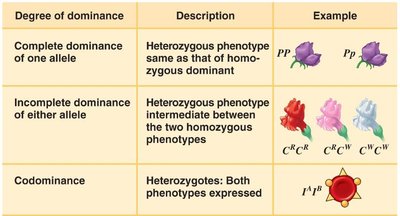
Some inheritance patterns deviate from Mendel's laws due to complexities such as incomplete dominance, codominance, and sex-linked inheritance.
Incomplete dominance: Heterozygote phenotype is intermediate between the two homozygotes (e.g., pink flowers from red and white parents).
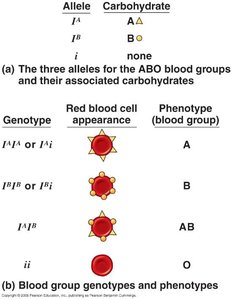
Codominance: Both alleles are fully expressed in heterozygotes (e.g., ABO blood groups).
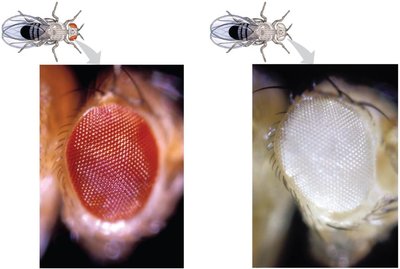
Sex-linked inheritance: Genes located on sex chromosomes show unique patterns due to differences in chromosome number between sexes.
Sex-Linked Traits
Sex-linked traits are associated with genes on the X or Y chromosomes. Males and females differ in their number of sex chromosomes, leading to unique inheritance patterns.
Examples include red-green color blindness and hemophilia in humans.
Summary Table: Mendelian vs. Non-Mendelian Inheritance
Pattern | Description | Example |
|---|---|---|
Complete Dominance | Heterozygote phenotype same as homozygous dominant | Purple flower color in peas |
Incomplete Dominance | Heterozygote phenotype intermediate between homozygotes | Pink flowers from red and white parents |
Codominance | Both alleles expressed in heterozygotes | ABO blood groups |
Sex-linked | Gene located on sex chromosome | Red-green color blindness |
Key Equations and Concepts
Genotypic ratio (monohybrid cross):
Phenotypic ratio (monohybrid cross):
Phenotypic ratio (dihybrid cross):
Practice Problems
Predict the genotypes and phenotypes of offspring from various crosses using Punnett squares.
Apply Mendel's laws to human traits and solve inheritance problems involving dominance, recessiveness, and non-Mendelian patterns.
