 Back
BackMicrobial Life, Plant, and Fungal Diversity: Study Notes
Study Guide - Smart Notes
 Tailored notes based on your materials, expanded with key definitions, examples, and context.
Microbial Life: Prokaryotes and Protists
Introduction to Microbial Life
Microorganisms, including prokaryotes and protists, are essential components of Earth's biosphere and play critical roles in human health and ecological processes. The human body hosts trillions of microbial cells, which can influence susceptibility to diseases and various health conditions.
Microbial communities can affect immune responses and are linked to diseases such as asthma, allergies, and digestive disorders.
Disruption of these communities may contribute to complex conditions, including autism.
Prokaryotes: Diversity and Characteristics
Prokaryotes are unicellular organisms lacking a nucleus and membrane-bound organelles. They are classified into two domains: Bacteria and Archaea.
Prokaryotic cells are generally smaller than eukaryotic cells.
Their collective biomass exceeds that of all eukaryotes combined.
Prokaryotes are found in nearly every environment on Earth and have significant ecological and medical impacts.
Prokaryotic Cell Shapes
Cocci: Spherical cells
Bacilli: Rod-shaped cells
Spirilla: Short, rigid spiral cells
Spirochetes: Long, flexible spiral cells
Cell Wall Structure and Gram Staining
Most prokaryotes possess a cell wall, which can be classified by the Gram stain technique:
Gram-positive bacteria: Thick peptidoglycan layer, stain purple
Gram-negative bacteria: Thin peptidoglycan layer, outer membrane, stain pink
Other features: Capsules (protection/adhesion), flagella (movement), fimbriae (attachment)
Adaptation and Nutritional Diversity
Rapid reproduction and genetic variation enable prokaryotes to adapt quickly to environmental changes.
Some form endospores to survive harsh conditions.
Prokaryotes display diverse nutritional strategies:
Phototrophs: Use sunlight for energy
Chemotrophs: Obtain energy from chemicals
Biofilms and Environmental Roles
Biofilms: Complex microbial communities attached to surfaces, often resistant to removal.
Bioremediation: Use of prokaryotes to clean up pollutants in soil, water, and air.
Prokaryotic Evolution: Bacteria and Archaea
Genetic studies reveal that Archaea are more closely related to Eukarya than to Bacteria.
The three domains of life: Bacteria, Archaea, Eukarya.
Archaea: Extremophiles and Other Habitats
Extreme halophiles: Thrive in high-salt environments
Extreme thermophiles: Thrive in high-temperature environments
Methanogens: Produce methane in anaerobic conditions
Bacterial Diversity
Proteobacteria: Gram-negative, diverse metabolism (e.g., Thiomargarita namibiensis)
Gram-positive bacteria: Includes antibiotic producers (e.g., Streptomyces)
Cyanobacteria: Photosynthetic, oxygen-producing (e.g., Anabaena)
Chlamydias: Intracellular parasites (e.g., Chlamydia trachomatis)
Spirochetes: Spiral-shaped pathogens (e.g., Treponema pallidum)
Pathogenic Bacteria and Toxins
Exotoxins: Secreted proteins causing disease (e.g., Staphylococcus aureus)
Endotoxins: Released from Gram-negative bacteria upon cell death
Bacterial toxins can be used as biological weapons (e.g., botulinum toxin from Clostridium botulinum)
Protists: Diversity and Classification
Protists are mostly unicellular eukaryotes found in aquatic or moist environments. They exhibit diverse nutritional modes:
Autotrophic (algae): Photosynthetic
Heterotrophic (protozoans): Ingest food
Mixotrophic: Both photosynthetic and heterotrophic
Protist Supergroups
SAR: Stramenopila (diatoms, brown algae, water molds), Alveolata (dinoflagellates, ciliates), Rhizaria (foraminiferans, radiolarians)
Excavata: Includes Giardia, Trichomonas, Trypanosoma, Euglena
Unikonta: Amoebozoans (amoebas, slime molds), fungi, and animals
Archaeplastida: Red algae, green algae, and land plants
Evolution of Multicellularity
Multicellularity evolved independently in several eukaryotic lineages, including brown algae, fungi, animals, and plants.
Specialization of cells enabled increased complexity and diversity.
The Evolution of Plant and Fungal Diversity
Plant Evolution and Adaptations
Plants evolved from green algal ancestors and adapted to terrestrial life through a series of key innovations.
Advantages of land: More sunlight, abundant CO2, initially fewer pathogens/herbivores
Challenges: Water retention, structural support, reproduction without water, anchorage, resource acquisition
Major Events in Plant Evolution
Origin of land plants
Origin of vascular plants (with lignin-hardened tissues)
Origin of seed plants (with pollen and seeds)
Plant Diversity
Nonvascular plants (bryophytes): Mosses, hornworts, liverworts
Seedless vascular plants: Lycophytes (club mosses), monilophytes (ferns and relatives)
Seed plants: Gymnosperms (seeds in cones), angiosperms (seeds in ovaries/flowers)
Alternation of Generations
Plant life cycles alternate between haploid gametophyte and diploid sporophyte generations.
Seedless Vascular Plants and Fossil Fuels
Ancient seedless vascular plants formed vast coal forests during the Carboniferous period.
Fossil fuels (coal, oil, natural gas) originated from these and marine organisms.
Burning fossil fuels releases greenhouse gases, contributing to climate change.
Pollen and Seeds: Adaptations for Land
Pollen grains transport sperm without water.
Seeds protect and nourish the embryo, aiding dispersal and survival.
Angiosperm Reproduction: The Flower
Flowers are reproductive structures housing male (stamens) and female (carpels) organs.
Pollination and fertilization occur within flowers.
Ovaries develop into fruits, which aid in seed dispersal.
Fruits and Seed Dispersal
Fruits are ripened ovaries that protect seeds and facilitate dispersal by wind, animals, or other mechanisms.
Importance of Angiosperms
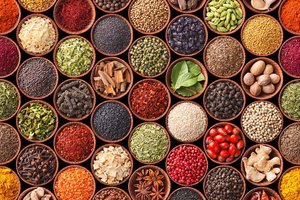
Angiosperms provide most of the world's food, including grains, fruits, and spices.
Pollination and Angiosperm Evolution
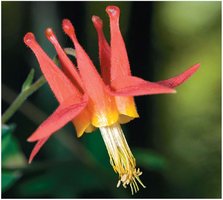
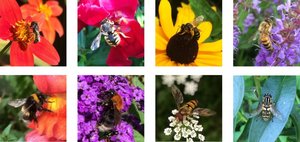
Flowers attract animal pollinators with color and scent.
Pollinators are rewarded with nectar and pollen, facilitating cross-pollination and genetic diversity.
Plant Diversity and Food Security
Loss of plant biodiversity threatens food security and the availability of valuable genes for crop improvement.
Conservation of wild and local plant species is vital for future agriculture.
Diversity of Fungi
Fungi are heterotrophic eukaryotes that absorb nutrients after external digestion. They play essential ecological and economic roles.
Fungal bodies consist of hyphae (threadlike filaments) forming a mycelium.
Mycorrhizae: Symbiotic associations between fungi and plant roots, enhancing nutrient uptake.
Fungal Reproduction
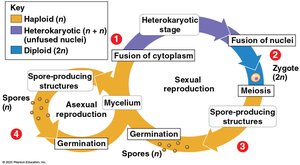
Fungi reproduce by spores, both sexually and asexually.
Sexual reproduction involves fusion of hyphae, a heterokaryotic stage, nuclear fusion, and meiosis.
Fungal Classification
Zygomycetes: Black bread mold
Glomeromycetes: Form mycorrhizae with plants
Ascomycetes: Sac fungi
Basidiomycetes: Club fungi (mushrooms)
Ecological and Practical Roles of Fungi
Decomposers: Break down organic matter, recycle nutrients
Symbionts: Mycorrhizae, lichens (fungi + algae/cyanobacteria)
Bioremediation: Decompose pollutants
Food and biotechnology: Mushrooms, cheese, bread, alcohol, antibiotics, biofuels
Parasitic Fungi
About 30% of fungi are parasites or pathogens of plants and animals.
Examples: Corn smut (plants), ringworm, athlete's foot, yeast infections (humans)
