 Back
BackMicroevolution: Mechanisms and Applications
Study Guide - Smart Notes
 Tailored notes based on your materials, expanded with key definitions, examples, and context.
Microevolution and the History of Evolutionary Thought
Introduction to Microevolution
Microevolution refers to changes in the gene pool of a population over time. It is a foundational concept in evolutionary biology, explaining how populations adapt and evolve through small genetic changes. Understanding microevolution requires knowledge of both historical perspectives and modern genetic principles.
Historical Perspectives on Evolution
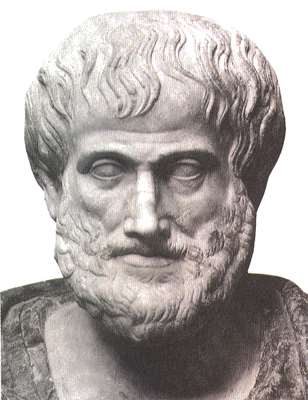
Aristotle (300 B.C.): Viewed species as perfect and unchanging, a belief that dominated Western thought until the 1800s.
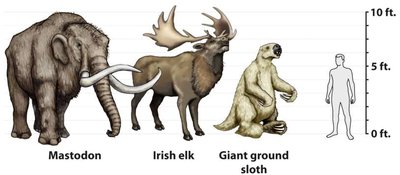
Fossil Discoveries (1700s): Revealed a succession of different life forms, providing evidence for extinction and change over time.
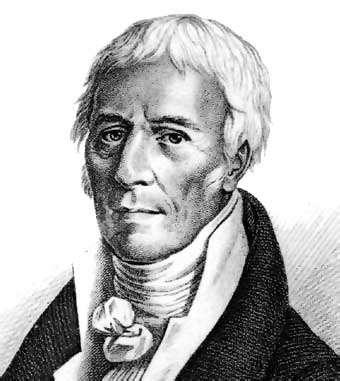
Jean Baptiste Lamarck (1800): Proposed that individuals change their traits during their lifetime and pass these changes to offspring. This mechanism was later shown to be incorrect.
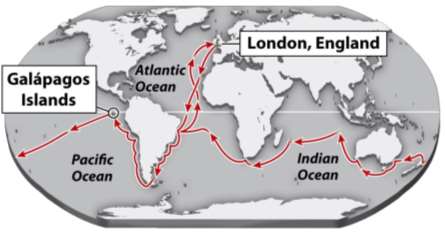
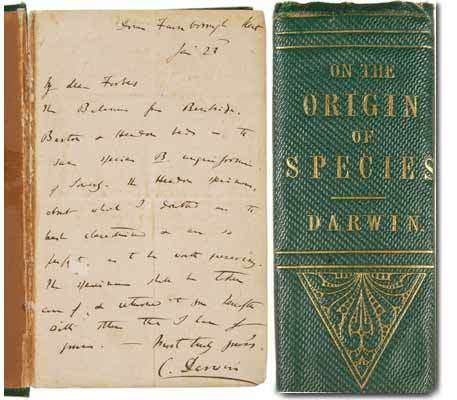
Charles Darwin (1800s): English naturalist who traveled globally, collecting evidence for evolution. His work, On the Origin of Species, established natural selection as the primary mechanism for evolution.
Microevolution: Concepts and Detection
Gene Pool and Population
Population: A group of individuals of the same species living together in a defined area.
Gene Pool: The total collection of genes and their alleles in a population.
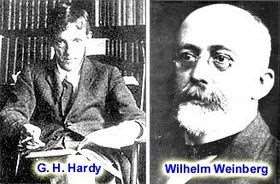
Hardy-Weinberg Equilibrium
The Hardy-Weinberg equilibrium describes a non-evolving population where allele and genotype frequencies remain constant from generation to generation, provided certain conditions are met:
Very large population size
No gene flow between populations
No mutations
Random mating
No natural selection
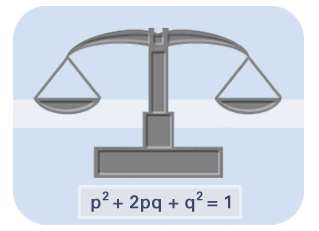
The equilibrium is mathematically represented as:
where p is the frequency of the dominant allele and q is the frequency of the recessive allele.
Calculating Allele and Genotype Frequencies
Allele frequencies:
Genotype frequencies: (homozygous dominant), (heterozygous), (homozygous recessive)
To determine if microevolution is occurring, compare observed genotype frequencies with those expected under Hardy-Weinberg equilibrium. If they differ, evolution is taking place.
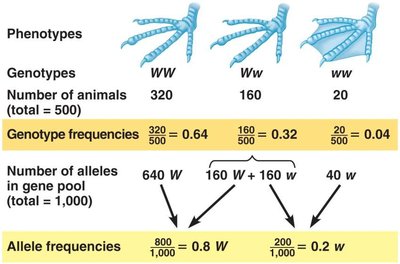
Example Problem: Hardy-Weinberg Calculations
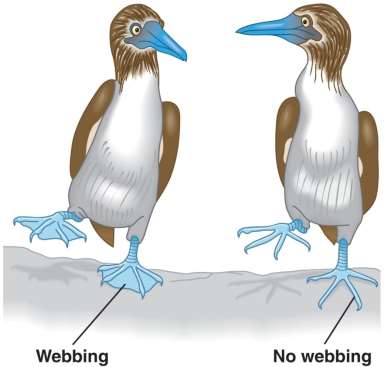
Given a population with known genotype counts, calculate allele frequencies and expected genotype frequencies using the Hardy-Weinberg equations.
Compare expected and observed values to test for microevolution.
Shortcut method: frequency of homozygous dominant frequency of heterozygotes; frequency of homozygous recessive $+ \frac{1}{2}$ frequency of heterozygotes.
Mechanisms of Microevolution
Mutation
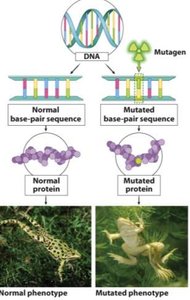
Mutation is the alteration of the base-pair sequence of DNA, creating new alleles and introducing genetic variation. Mutations must occur in germ cells to affect evolution.
Genetic Drift
Genetic drift is the random change in allele frequencies, especially significant in small populations. It can lead to loss of genetic diversity.
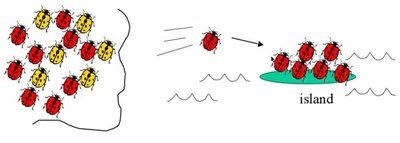
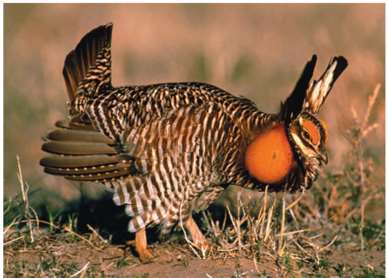
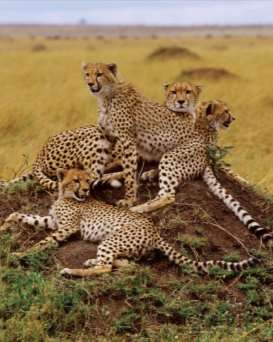
Founder Effect: When a few individuals colonize a new area, the new population's gene pool may differ from the original.
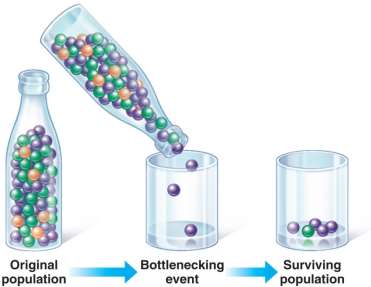
Bottleneck Effect: A drastic reduction in population size due to a random event, resulting in a loss of genetic variation.
Gene Flow
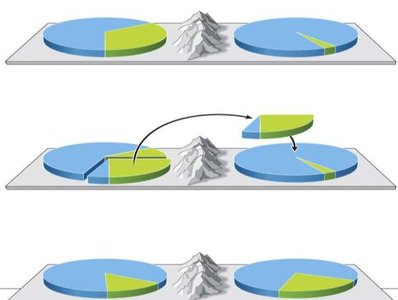
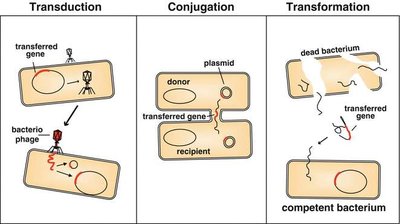
Gene flow is the transfer of genetic material between populations, which can introduce new alleles and increase genetic diversity. It can occur through migration or horizontal gene transfer (e.g., transformation, conjugation, transduction in bacteria).
Natural Selection
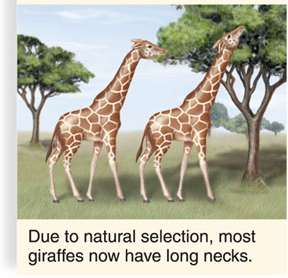
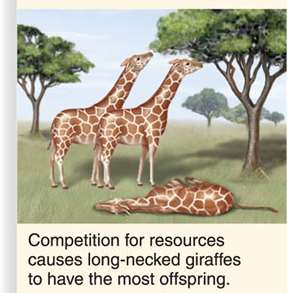
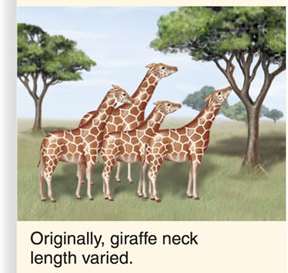
Natural selection is the process by which individuals with advantageous heritable traits have greater reproductive success. It requires:
Variation in traits
Heritability of traits
Selective pressure (differential survival and reproduction)
Natural selection can result in:
Directional selection: Favors one extreme phenotype
Stabilizing selection: Favors intermediate phenotypes
Disruptive selection: Favors both extreme phenotypes over intermediates
Sexual and Artificial Selection
Sexual selection: A form of natural selection where traits increase mating success, often driven by female choice.
Artificial selection: Human-driven breeding to enhance desirable traits in plants and animals.
Limits of Natural Selection
Environments change over time
Mutations rarely produce perfect genes
Multiple alleles may confer similar fitness
Summary Table: Mechanisms of Microevolution
Mechanism | Description | Effect on Population |
|---|---|---|
Mutation | Random changes in DNA sequence | Introduces new alleles |
Genetic Drift | Random changes in allele frequencies | Reduces genetic variation, especially in small populations |
Gene Flow | Movement of alleles between populations | Increases genetic diversity |
Natural Selection | Non-random increase in advantageous alleles | Leads to adaptation |
Additional info: Microevolution is a key process underlying adaptation and speciation, and its study is essential for understanding conservation, agriculture, and medicine (e.g., antibiotic resistance).
