 Back
BackNutrition and Energy Flow in Biological Systems
Study Guide - Smart Notes
 Tailored notes based on your materials, expanded with key definitions, examples, and context.
Nutrition and Energy Flow
Overview of Nutrition in Biology
Nutrition is a fundamental aspect of biology, encompassing the processes by which organisms obtain and utilize energy and nutrients for growth, maintenance, and reproduction. The study of nutrition includes understanding the chemical basis of food, the energy transformations within organisms, and the health implications of dietary choices. 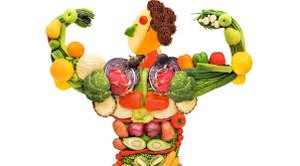
Photosynthesis and Energy Flow
Chemical Formula for Photosynthesis
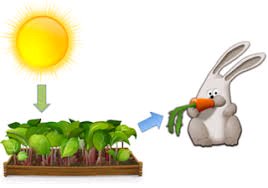
Photosynthesis is the process by which photosynthetic autotrophs convert solar energy into chemical energy, producing organic compounds from carbon dioxide and water. - **Photosynthesis Equation:** - **Key Point:** This process is essential for sustaining life on Earth, as it provides the energy and organic molecules required by all other organisms.
Autotrophs and Heterotrophs
- **Autotrophs:** Organisms that produce their own food from inorganic sources (e.g., plants, algae, some bacteria). - **Photosynthetic Autotrophs:** Use sunlight to convert CO2 and H2O into organic compounds. - **Heterotrophs:** Organisms that must consume organic compounds produced by autotrophs or other heterotrophs. - **Producers:** Autotrophs at the base of the energy pyramid. - **Consumers:** Heterotrophs occupying higher trophic levels. 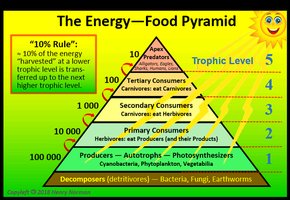
Organism Categories
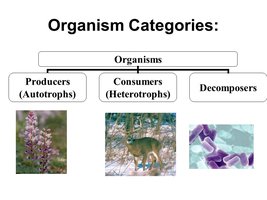
Organisms are classified based on their nutritional strategies:
Producers (Autotrophs): Synthesize their own food.
Consumers (Heterotrophs): Obtain food by consuming other organisms.
Decomposers: Break down dead organic matter, recycling nutrients.
Types of Diets in Animals
Herbivores, Carnivores, and Omnivores
Animals are classified by their dietary habits: - **Herbivores:** Eat plants (e.g., giraffes, snails).  - **Carnivores:** Eat meat (e.g., lions, hawks).
  - **Omnivores:** Eat both plants and animals (e.g., humans, crows).
Nutritional Needs of Animals
Three Main Nutritional Needs
Animals require: 1. **Fuel:** To power cellular activities. 2. **Organic Molecules:** For building cellular structures. 3. **Essential Nutrients:** Raw materials that cannot be synthesized by the organism and must be obtained from the diet. 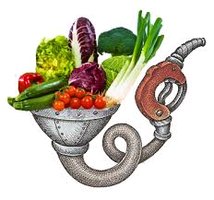
Digestive Processes
Digestion involves four main steps: 1. **Ingestion:** Intake of food. 2. **Digestion:** Mechanical and chemical breakdown of food. 3. **Absorption:** Uptake of nutrient molecules into cells. 4. **Elimination:** Removal of undigested material.
Macromolecule Breakdown
- **Proteins:** Broken down into amino acids. - **Carbohydrates:** Broken down into monosaccharides and disaccharides. - **Nucleic acids:** Broken down into nucleotides. - **Fats:** Broken down into glycerol and fatty acids. 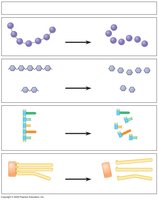
Energy and Metabolism
Calories and Kilocalories
- **Calorie (cal):** Energy needed to raise 1 gram of water by 1°C. - **Kilocalorie (kcal):** 1,000 calories; used to measure food energy. - **Dietary Calories:** Proteins, carbohydrates, and fats are the main sources. - **Fat:** Provides more than twice the energy per gram compared to carbohydrates or proteins. 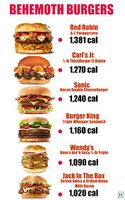
Basal Metabolic Rate (BMR)
- **BMR:** The energy required by a resting animal each day. - **Metabolic Rate:** BMR plus energy for physical activity. - **Energy Storage:** Excess energy is stored as glycogen or fat. 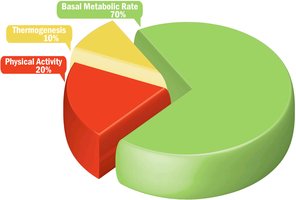
Exercise and Caloric Burn
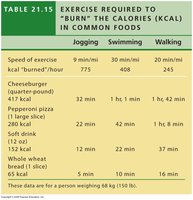
Food Item | Jogging | Swimming | Walking |
|---|---|---|---|
Cheeseburger (417 kcal) | 32 min | 1 hr 1 min | 1 hr 42 min |
Pepperoni pizza (280 kcal) | 22 min | 41 min | 1 hr 8 min |
Soft drink (152 kcal) | 12 min | 22 min | 37 min |
Whole wheat bread (65 kcal) | 5 min | 10 min | 16 min |
Carbohydrates: Simple vs. Complex
Simple Carbohydrates
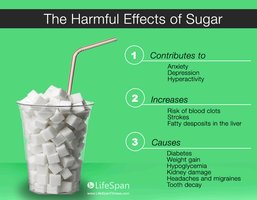
- **Definition:** Sugars that are quickly digested and absorbed, causing rapid changes in blood glucose. - **Sources:** Milk, added sugars in processed foods. - **Health Implications:** Excess consumption can lead to obesity, diabetes, and other health issues. 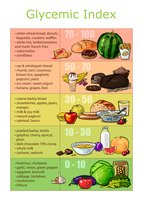
Complex Carbohydrates
- **Definition:** Carbohydrates that take longer to digest and are higher in dietary fiber. - **Sources:** Whole grains, fruits, vegetables. - **Benefits:** Provide sustained energy and support digestive health.
Essential Nutrients
Undernourishment vs. Malnourishment
- **Undernourishment:** Not enough calories. - **Malnourishment:** Missing essential nutrients. 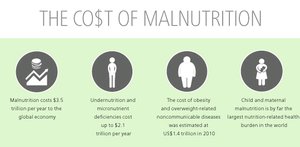
Essential Fatty Acids
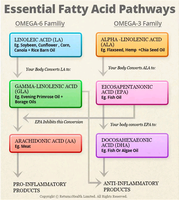
- **Definition:** Fatty acids that cannot be synthesized by the body and must be obtained from the diet. - **Sources:** Fish, nuts, seeds, avocados. 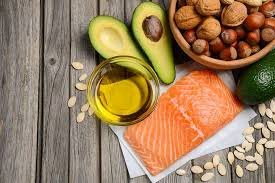
Saturated vs. Unsaturated Fats
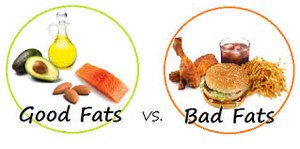
- **Saturated Fats:** Only single bonds; raise LDL cholesterol and increase heart disease risk. - **Unsaturated Fats:** One or more double bonds; generally healthier. 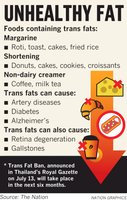
Trans Fats
- **Definition:** Artificial fats made by hydrogenating vegetable oils. - **Health Effects:** Increase LDL (bad cholesterol), decrease HDL (good cholesterol), raise risk of cardiovascular disease. - **Food Labels:** Look for "hydrogenated vegetable oils" to identify trans fats. 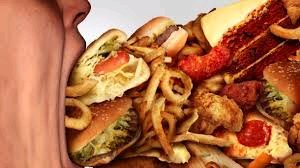
Cholesterol: HDL vs. LDL
LDL (Low-Density Lipoprotein)
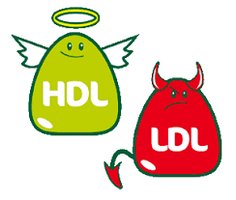
- **"Bad" Cholesterol:** Contributes to fatty buildups in arteries (atherosclerosis), increasing risk for heart attack and stroke.
HDL (High-Density Lipoprotein)
- **"Good" Cholesterol:** Absorbs cholesterol and carries it to the liver for removal, lowering risk for heart disease. 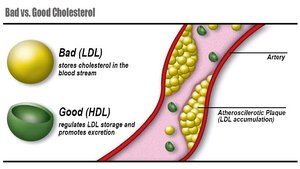
Summary Table: Types of Nutrients and Their Functions
Nutrient | Function | Sources |
|---|---|---|
Carbohydrates | Energy supply | Grains, fruits, vegetables |
Proteins | Building blocks for tissues | Meat, beans, dairy |
Fats | Energy storage, cell membranes | Oils, nuts, fish |
Vitamins | Regulate metabolism | Fruits, vegetables, dairy |
Minerals | Structural and functional roles | Salt, dairy, vegetables |
Additional info:
Recommended Dietary Allowances (RDA) are guidelines for daily nutrient intake.
Essential amino acids must be obtained from protein-rich foods.
Vitamins and minerals are crucial for metabolic processes and preventing deficiency diseases.
Trace elements (e.g., iron, zinc) are required in small amounts for health.
