 Back
BackOrganismal Reproduction: Asexual and Sexual Life Cycles in Biology
Study Guide - Smart Notes
 Tailored notes based on your materials, expanded with key definitions, examples, and context.
Organismal Reproduction
Asexual Reproduction
Asexual reproduction is a mode of reproduction in which a single parent gives rise to offspring that are genetically identical to itself and to each other, forming clones. This process is primarily driven by mitosis, and is common in many organisms including plants, fungi, and some animals. Asexual reproduction offers rapid population growth but lacks genetic diversity.
Definition: Offspring arise from a single parent without the fusion of gametes.
Genetic Identity: Offspring are clones of the parent.
Pros: Rapid reproduction, no need for a mate, stable environments favor clones.
Cons: Lack of genetic variation, vulnerability to environmental changes.
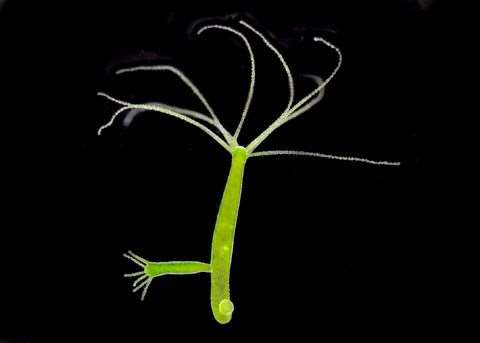
Budding
Budding is a form of asexual reproduction where a new organism develops from an outgrowth or bud due to cell division at one particular site. The new organism remains attached as it grows, separating from the parent only when it is mature.
Example: Hydra and yeast.
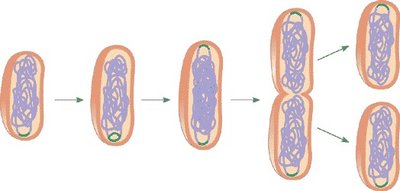
Binary Fission
Binary fission is a common method of asexual reproduction in prokaryotes, where the organism splits into two equal halves, each becoming a new organism. It involves the replication of DNA followed by division of the cytoplasm.
Example: Bacteria.
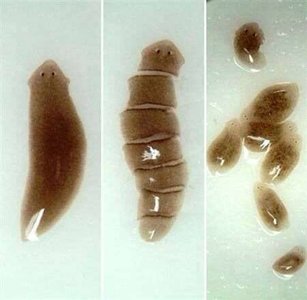
Fragmentation
Fragmentation is a process where an organism breaks into fragments, each capable of growing into a complete individual. This method is seen in some plants, fungi, and animals like planarians.
Example: Planarian worms.
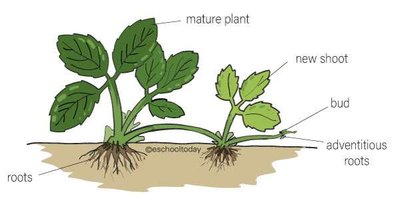
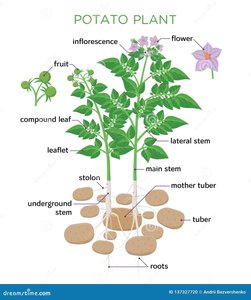
Stolon
Stolons are horizontal stems that grow at the soil surface or just below ground and give rise to new plants at nodes. This is a vegetative propagation method in plants.
Example: Strawberry plants.
Tuber
Tubers are enlarged structures in some plant species used as storage organs for nutrients. They can give rise to new plants through vegetative reproduction.
Example: Potato plant.
Bulb
Bulbs are underground storage organs consisting of a short stem surrounded by fleshy leaves. They can reproduce vegetatively to form new plants.
Example: Onion, tulip.
Sexual Reproduction
Sexual reproduction involves two parents, each contributing genetic material to produce offspring with unique genetic combinations. This process increases genetic diversity and involves meiosis and fertilization (syngamy).
Definition: Offspring inherit genetic material from both parents.
Genetic Diversity: Offspring are not genetically identical to parents or each other (except identical twins).
Pros: Genetic variation, adaptability to changing environments.
Cons: Slower reproduction, requires finding a mate.
Types of Life Cycles
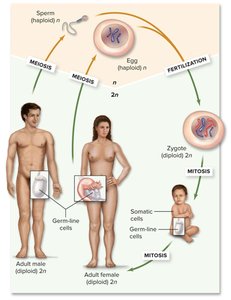
Diplontic Life Cycle
In the diplontic life cycle, the majority of the organism's life is spent in the diploid state. Diploid organisms undergo meiosis to produce haploid gametes, which fuse during fertilization to form a diploid zygote. The haploid stage does not undergo mitosis.
Example: Animals.
Haplontic Life Cycle
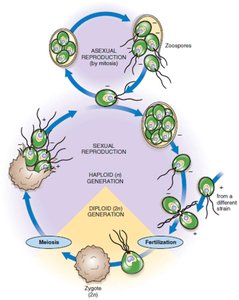
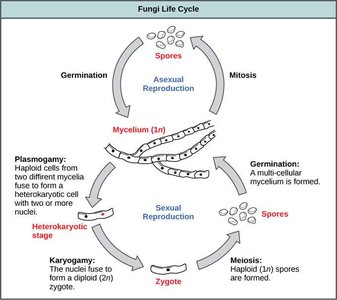
In the haplontic life cycle, the organism spends most of its life in the haploid state. Haploid organisms undergo mitosis to produce gametes, which fuse to form a diploid zygote. The diploid stage undergoes meiosis immediately, returning to the haploid state.
Example: Fungi and some algae (e.g., Chlamydomonas).
Haplodiplontic Life Cycle (Alternation of Generations)
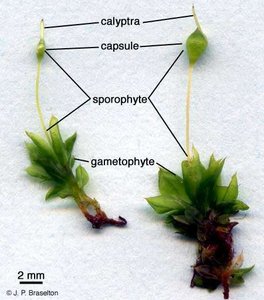
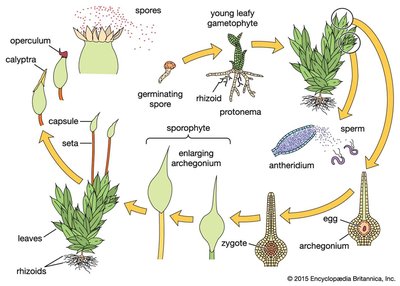
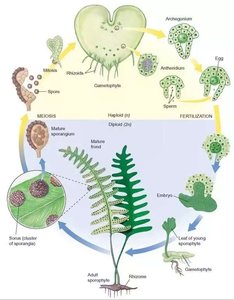
The haplodiplontic life cycle, also known as alternation of generations, involves alternating between diploid (sporophyte) and haploid (gametophyte) stages. Both stages can undergo mitosis after meiosis and fertilization. This cycle is characteristic of plants and some algae.
Gametophyte (n): Produces gametes by mitosis.
Sporophyte (2n): Produces spores by meiosis.
Example: Mosses, ferns, flowering plants.
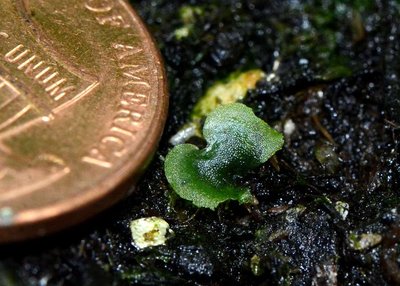
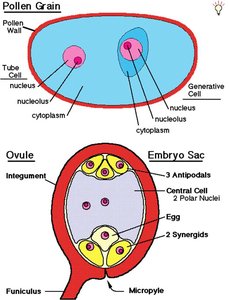
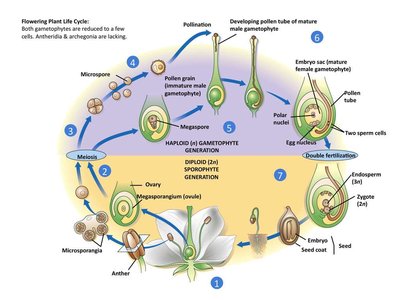
Dominant Phase in Plant Life Cycles
Different plant groups have varying dominant phases in their life cycles. The gametophyte is dominant in mosses, while the sporophyte is dominant in ferns and flowering plants.
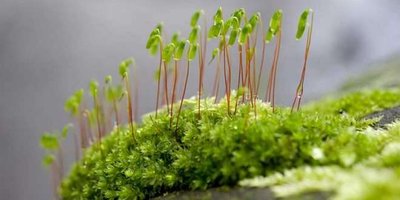
Moss: Gametophyte is free-living and dominant; sporophyte is dependent.
Fern: Sporophyte is free-living and dominant; gametophyte is free-living but reduced.
Flowering Plant: Sporophyte is dominant and free-living; gametophyte is dependent and reduced.

Summary of Plant Life Cycles
All plant life cycles are diplohaplontic, featuring alternation of generations between haploid and diploid stages. This cycle ensures genetic diversity and adaptation to various environments.
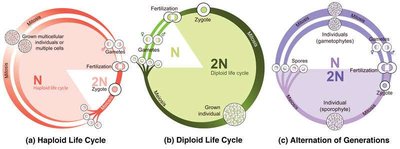
Life Cycle Examples and Applications
Understanding life cycles is crucial for studying organismal reproduction, genetics, and evolutionary biology. The alternation of generations is a key concept in plant biology, while diplontic and haplontic cycles are important in animal and fungal biology, respectively.
Table: Comparison of Life Cycle Types
Life Cycle Type | Dominant Stage | Examples |
|---|---|---|
Diplontic | Diploid | Animals |
Haplontic | Haploid | Fungi, some algae |
Haplodiplontic | Both (alternation) | Plants, some algae |
Key Terms and Definitions
Mitosis: Cell division resulting in two identical daughter cells.
Meiosis: Cell division producing haploid gametes or spores.
Syngamy (Fertilization): Fusion of gametes to form a zygote.
Gametophyte: Haploid stage producing gametes.
Sporophyte: Diploid stage producing spores.
Clone: Genetically identical organism produced by asexual reproduction.
Equations and Formulas
Meiosis and fertilization are central to sexual reproduction:
Meiosis:
Fertilization:
Additional info: Academic context was added to clarify the differences between life cycle types, dominant phases, and the importance of genetic diversity in reproduction.
