 Back
Patterns of Inheritance: Beyond Mendelian Genetics
Study Guide - Smart Notes
 Tailored notes based on your materials, expanded with key definitions, examples, and context.
Patterns of Inheritance
Introduction
Inheritance patterns in living organisms are often more complex than the simple Mendelian genetics first described in pea plants. While Mendel’s principles of segregation and independent assortment remain foundational, many traits are influenced by multiple genes, alleles, or environmental factors, resulting in a wide variety of inheritance patterns.
Extending Mendelian Genetics for a Single Gene
Complexities Beyond Simple Dominance
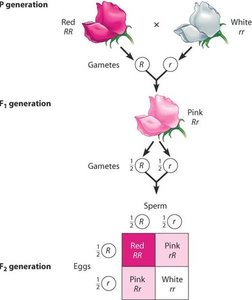
Incomplete Dominance: The heterozygote displays a phenotype intermediate between the two homozygotes. For example, crossing red and white snapdragons produces pink flowers in the F1 generation.
Codominance: Both alleles in a heterozygote are fully expressed, as seen in human blood types (e.g., AB blood group).
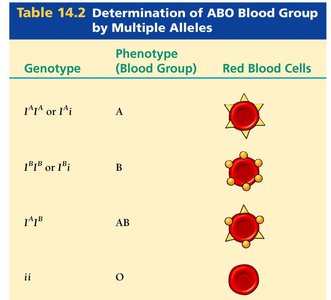
Multiple Alleles: More than two alleles exist for a gene within a population, such as the IA, IB, and i alleles for human ABO blood groups.
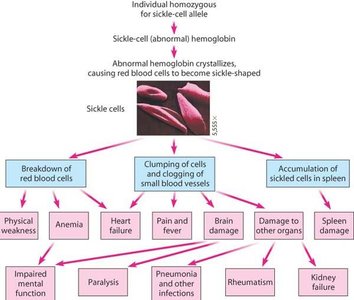
Pleiotropy: A single gene influences multiple phenotypic traits, as observed in diseases like sickle-cell anemia.
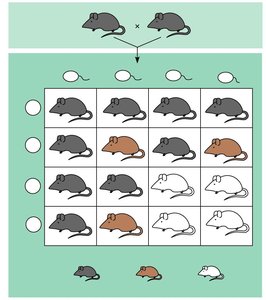
Epistasis: A gene at one locus affects the expression of a gene at another locus, such as coat color in mice.
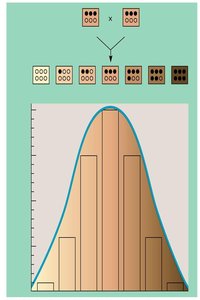
Polygenic Inheritance: Multiple genes contribute additively to a single trait, resulting in continuous variation (e.g., human skin color).
Incomplete Dominance
In incomplete dominance, the F1 hybrid phenotype is intermediate between the parental phenotypes. For example, crossing red-flowered (RR) and white-flowered (rr) snapdragons yields pink-flowered (Rr) offspring. The F2 generation shows a 1:2:1 ratio for both genotype and phenotype.
Multiple Alleles and Blood Types
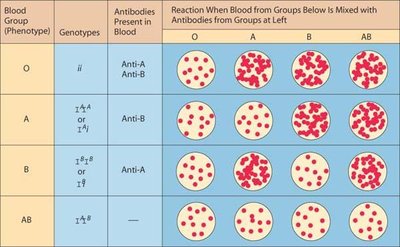
Most genes exist in more than two allelic forms. The ABO blood group in humans is determined by three alleles (IA, IB, i), which encode enzymes that attach specific carbohydrates (antigens) to red blood cells. The combination of alleles determines the blood type and the presence of antibodies in the plasma.
Immune Response and Blood Transfusions
If a recipient receives blood with foreign antigens, their immune system produces antibodies that cause agglutination (clumping) of the donor cells, which can be fatal. This is why blood type compatibility is critical for transfusions.
Pleiotropy
Pleiotropy occurs when one gene influences multiple phenotypic traits. For example, the gene responsible for sickle-cell anemia causes a range of symptoms, including anemia, pain, organ damage, and increased susceptibility to infections.
Epistasis
Epistasis describes a situation where a gene at one locus affects the expression of a gene at another locus. In mice, one gene determines pigment color (B = black, b = brown), while another gene (C = pigment, c = no pigment) determines whether pigment is deposited. If the mouse is homozygous recessive for the second gene (cc), no pigment is deposited, regardless of the first gene.
Polygenic Inheritance
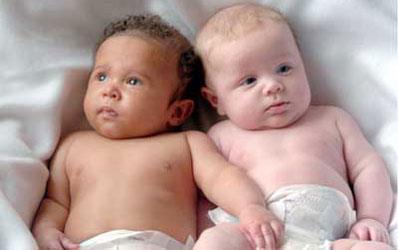
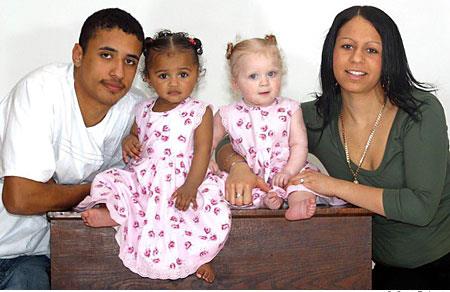
Polygenic inheritance involves the additive effect of two or more genes on a single phenotype, resulting in continuous variation. Human skin color is a classic example, controlled by at least three genes, each with two alleles. The combined effect produces a wide range of skin tones in the population.
Examples of Polygenic Inheritance
Skin Color: Controlled by multiple genes, leading to a spectrum of phenotypes.
Height: Another trait influenced by many genes, resulting in continuous variation.
Nature and Nurture: Environmental Impact on Phenotype
Gene-Environment Interactions
The phenotype of an organism is often influenced by both genetic and environmental factors. For example, hydrangea flowers of the same genotype can be blue-violet or pink depending on soil acidity. Such traits are called multifactorial.

Multifactorial Disorders: Many diseases, such as heart disease and cancer, are influenced by both genetic and environmental factors. The genetic contribution to these disorders is often complex and not fully understood.
Genetic Testing and Counseling
Genetic Counseling
Genetic counselors use family histories and genetic tests to help prospective parents assess the risk of inherited disorders in their children. Carrier testing and risk assessment are available for many genetic diseases.
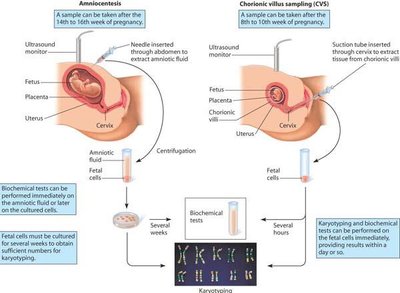
Fetal Testing
Several techniques are used to test for genetic disorders in fetuses:
Amniocentesis: Removal and testing of amniotic fluid.
Chorionic Villus Sampling (CVS): Sampling of placental tissue.
Ultrasound and Fetoscopy: Visual assessment of fetal health.
Newborn Screening
Some genetic disorders can be detected at birth through routine screening, allowing for early intervention and management.
Additional info: The notes above expand on the provided content with definitions, examples, and academic context to ensure a comprehensive understanding of complex inheritance patterns.
