 Back
BackPatterns of Inheritance: Mendelian and Non-Mendelian Genetics
Study Guide - Smart Notes
 Tailored notes based on your materials, expanded with key definitions, examples, and context.
Patterns of Inheritance (Genetics)
Introduction to Mendelian Genetics
Genetics is the study of heredity and the variation of inherited characteristics. Gregor Mendel, through his experiments with pea plants, established the foundational principles of inheritance, which are still applied in modern biology to solve genetic problems and understand how traits are passed from one generation to the next.
Mendel, Characters, and Traits
Gregor Mendel was a monk who studied the inheritance of traits in pea plants, using statistical analysis to interpret his results.
Characters are heritable features (e.g., flower color), while traits are variants of a character (e.g., purple or white flowers).
Mendel's "heritable factors" are now known as genes.
Pea Plant Sexual Reproduction
Pea flowers contain both male and female reproductive organs, allowing for self-fertilization or controlled cross-fertilization.
Each pea in a pod is a seed and represents a unique offspring (sibling), not a clone.
Mendel’s Experiments and Generations
True-breeding plants produce offspring identical to themselves when self-pollinated.
P generation: Parental generation (e.g., purple x white flowers).
F1 generation: First filial generation; all offspring showed the dominant trait (purple).
F2 generation: Second filial generation; recessive trait (white) reappeared.
Mendel’s Conclusions
Each trait is determined by two "factors" (now called alleles).
Alleles separate during gamete formation (Law of Segregation).
Alleles recombine during fertilization.
Punnett squares can be used to predict genetic outcomes.
Traits, Alleles, and Genetic Notation
Alleles: Different versions of a gene (e.g., P = purple, p = white).
Genotype: The genetic makeup (e.g., PP, Pp, pp).
Phenotype: The observable trait (e.g., purple or white flowers).
Central Dogma: DNA → RNA → Protein
Meiosis and Heredity
Alleles are located at the same locus on homologous chromosomes.
Homologous chromosomes (and thus alleles) separate during meiosis, so gametes carry only one allele per gene.
Diploid organisms have two alleles per gene; gametes are haploid and have one.
Solving Monohybrid Crosses
Monohybrid crosses track the inheritance of a single trait.
Write allele and genotype keys.
Determine parental genotypes.
Determine gametes produced by each parent.
Show fertilization using a Punnett square.
Practice Problem Example: Monohybrid Cross
If a white-flowered plant (pp) is crossed with a homozygous purple-flowered plant (PP):
All F1 offspring will be Pp (purple phenotype).
Genotype ratio: 100% Pp; Phenotype ratio: 100% purple.
Practice Problem Example: F1 Cross
Crossing two heterozygotes (Pp x Pp):
Genotype ratio: 1 PP : 2 Pp : 1 pp
Phenotype ratio: 3 purple : 1 white
The Test Cross
Used to determine if an individual with a dominant phenotype is homozygous or heterozygous.
Cross the individual with a homozygous recessive (pp); analyze offspring phenotypes.
Summary: Mendel and the Law of Segregation
Mendel’s experiments established that organisms inherit two alleles per trait, which segregate during gamete formation and recombine at fertilization.
These principles apply to many genetic problems, including human traits and diseases.
Solving Dihybrid Crosses
Dihybrid crosses track the inheritance of two traits simultaneously.
Write allele and genotype keys.
Determine parental genotypes.
Determine all possible gametes for each parent (use the FOIL method for heterozygotes).
Show fertilization using a 4x4 Punnett square.
Practice Problem Example: Dihybrid Cross
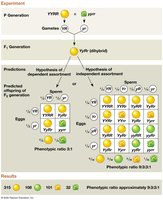
YYRR (yellow, round) x yyrr (green, wrinkled): All F1 are YyRr (yellow, round).
F1 cross (YyRr x YyRr): Phenotype ratio is 9:3:3:1 (yellow round : yellow wrinkled : green round : green wrinkled).
Law of Independent Assortment
Alleles of different genes assort independently during gamete formation if they are on different chromosomes.
This leads to genetic variation in offspring.
Rules of Probability in Genetics
Probability rules can be used to predict the likelihood of specific genotypes or phenotypes in offspring, especially in complex crosses.
For independent events, multiply probabilities; for mutually exclusive events, add probabilities.
Pedigree Analysis
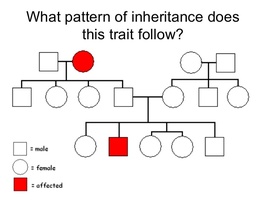
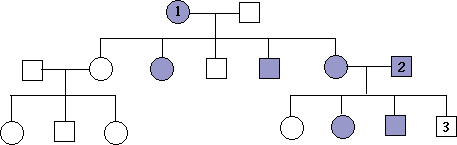
Pedigrees are diagrams that show the inheritance of a trait through generations of a family. They are used to determine the mode of inheritance (dominant, recessive, etc.) and to predict genotypes of family members.
Beyond Mendel: Extensions of Mendelian Genetics
Multiple Alleles and Blood Groups
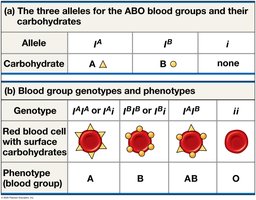
Some genes have more than two alleles in the population (e.g., ABO blood groups: IA, IB, i).
Blood type is determined by the combination of these alleles.
Allele | Carbohydrate |
|---|---|
IA | A |
IB | B |
i | none |
Genotype | Phenotype (Blood Group) |
|---|---|
IAIA or IAi | A |
IBIB or IBi | B |
IAIB | AB |
ii | O |
Types of Dominance
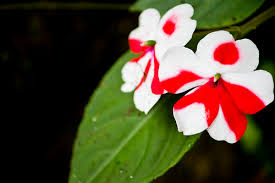
Incomplete dominance: Heterozygotes show a blending of traits (e.g., red x white flowers produce pink offspring).
Codominance: Both alleles are fully expressed in heterozygotes (e.g., AB blood type).
Polygenic Inheritance and Pleiotropy
Polygenic inheritance: Multiple genes influence a single phenotype (e.g., skin color).
Pleiotropy: One gene affects multiple phenotypes (e.g., sickle cell anemia, dwarfism).
Nature vs. Nurture
Both genetic and environmental factors influence phenotypes (e.g., hydrangea flower color varies with soil pH).
Additional info: The above notes expand on the brief points in the original material, providing definitions, examples, and context for each concept. Tables and images are included only where they directly reinforce the explanation.
