 Back
BackPatterns of Inheritance: Mendelian Genetics and Its Extensions
Study Guide - Smart Notes
 Tailored notes based on your materials, expanded with key definitions, examples, and context.
Chapter 9: Patterns of Inheritance
Introduction to Genetics
Genetics is the scientific study of heredity and variation in living organisms. The field explores how traits are passed from parents to offspring and how genetic information is expressed. The popularity of genetic testing highlights the importance of understanding our genetic makeup.
Mendel’s Laws
Ancient Roots of Genetics
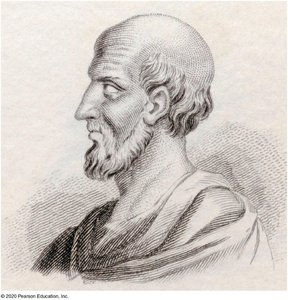
Pangenesis Theory: Proposed by Hippocrates, this theory suggested that particles called "pangenes" travel from all parts of the body to the gametes. This idea is incorrect because reproductive cells are not composed of particles from somatic cells, and changes in somatic cells do not affect gametes.
Blending Hypothesis: Suggested that offspring are a blend of parental traits. This was rejected because it could not explain the reappearance of traits after skipping generations.
The Science of Genetics Begins: Mendel’s Experiments
Gregor Mendel, working in an abbey garden, laid the foundation for modern genetics through his experiments with pea plants. He identified heritable features (characters) and their variants (traits), and hypothesized the existence of discrete units of inheritance—now known as genes and alleles.
Character: A heritable feature that varies among individuals (e.g., flower color).
Trait: A variant of a character (e.g., purple or white flowers).
Allele: Alternative versions of a gene that account for variations in inherited characters.



Key Traits Studied by Mendel
Character | Dominant Trait | Recessive Trait |
|---|---|---|
Flower color | Purple | White |
Flower position | Axial | Terminal |
Seed color | Yellow | Green |
Seed shape | Round | Wrinkled |
Pod shape | Inflated | Constricted |
Pod color | Green | Yellow |
Stem length | Tall | Dwarf |

Mendel’s Law of Segregation
Mendel developed four key hypotheses to explain inheritance patterns:
There are alternative versions of genes (alleles).
Each organism inherits two alleles for each gene, one from each parent.
If alleles differ, the dominant allele determines the organism’s appearance; the recessive allele has no noticeable effect.
Allele pairs segregate during gamete formation, so each gamete carries only one allele for each gene (Law of Segregation).


Genotype and Phenotype
Genotype: The genetic makeup of an organism (e.g., PP, Pp, or pp).
Phenotype: The observable traits of an organism (e.g., purple or white flowers).
Homozygous: Two identical alleles for a gene (e.g., PP or pp).
Heterozygous: Two different alleles for a gene (e.g., Pp).
Homologous Chromosomes and Alleles
Homologous chromosomes carry alleles for the same genes at the same loci. During meiosis, the segregation of homologous chromosomes explains Mendel’s law of segregation.

Mendel’s Law of Independent Assortment
This law states that allele pairs segregate independently during gamete formation. It is revealed by dihybrid crosses, where two characters are tracked at once.
Monohybrid cross: Cross between individuals heterozygous for one character.
Dihybrid cross: Cross between individuals heterozygous for two characters.

Extensions and Variations on Mendel’s Laws
Incomplete Dominance
In incomplete dominance, the phenotype of heterozygotes is intermediate between the phenotypes of the two homozygotes. For example, crossing red and white snapdragons produces pink offspring.
Codominance and Multiple Alleles
Some genes have more than two alleles, and in codominance, both alleles are fully expressed in heterozygotes. The ABO blood group system in humans is an example, with three alleles (IA, IB, i) producing four blood types.
Pleiotropy
Pleiotropy occurs when one gene influences multiple phenotypic traits. Sickle-cell disease is an example, affecting hemoglobin structure, red blood cell shape, and resistance to malaria.
Polygenic Inheritance
Polygenic inheritance involves the additive effects of two or more genes on a single phenotypic character, such as human height or skin color.
Environmental Effects
Many traits are influenced by both genetic and environmental factors. Mendel minimized environmental variation in his experiments by using controlled conditions.
The Chromosomal Basis of Inheritance
Chromosome Theory of Inheritance
This theory states that genes occupy specific loci on chromosomes, and chromosome behavior during meiosis accounts for Mendel’s laws of segregation and independent assortment.
Linked Genes and Crossing Over
Genes located close together on the same chromosome (linked genes) tend to be inherited together. Crossing over during meiosis can separate linked genes, producing recombinant offspring. Recombination frequencies are used to create genetic linkage maps.
Sex Chromosomes and Sex-Linked Genes
Sex Determination
In mammals, males have XY and females have XX sex chromosomes.
Other species may use different systems, and in some reptiles, environmental temperature determines sex.
Sex-Linked Inheritance
Genes located on sex chromosomes are called sex-linked genes. X-linked recessive disorders are more common in males, as they have only one X chromosome. Examples include hemophilia and color blindness.
Y Chromosome and Human Evolution
The Y chromosome is passed from father to son and can be used to trace paternal ancestry and study human evolution.
Human Genetics and Genetic Testing
Pedigree Analysis
Family pedigrees are used to track inheritance patterns of traits and disorders in humans, helping to determine genotypes and predict risks for offspring.
Single-Gene Disorders
Disorder | Type | Major Symptoms |
|---|---|---|
Albinism | Recessive | Lack of pigment in skin, hair, eyes |
Cystic fibrosis | Recessive | Excess mucus, infections, early death if untreated |
Phenylketonuria (PKU) | Recessive | Accumulation of phenylalanine, developmental disabilities |
Sickle-cell disease | Recessive | Sickled red blood cells, tissue damage |
Tay-Sachs disease | Recessive | Lipid accumulation in brain, mental deficiency, blindness |
Achondroplasia | Dominant | Dwarfism |
Huntington’s disease | Dominant | Uncontrollable movements, cognitive decline |
Hypercholesterolemia | Dominant | High cholesterol, heart disease |
Genetic Testing and Screening
Modern technologies such as carrier screening, fetal testing (amniocentesis, chorionic villus sampling), and newborn screening provide information for reproductive decisions but raise ethical considerations.
Summary Table: Key Terms and Concepts
Term | Definition |
|---|---|
Allele | Alternative form of a gene |
Genotype | Genetic makeup of an organism |
Phenotype | Observable traits of an organism |
Homozygous | Two identical alleles for a gene |
Heterozygous | Two different alleles for a gene |
Pleiotropy | One gene affects multiple traits |
Polygenic inheritance | Multiple genes affect one trait |
Codominance | Both alleles are fully expressed |
Incomplete dominance | Heterozygote phenotype is intermediate |
Linked genes | Genes located close together on a chromosome |
Sex-linked gene | Gene located on a sex chromosome |
Additional info: This summary integrates and expands upon the provided slides and textbook images, ensuring a comprehensive, exam-ready overview of Mendelian genetics and its extensions for college biology students.
